Iran Reports New Railway Lines, Transit Corridors Construction

An official from the Construction and Development Company has announced the construction of 3,000 kilometers of railway lines along Iran’s transit corridors. Abbas Khatibi, Deputy for the Construction and Development of Railways, Ports, and Airports at the Construction and Development Company, has said that approximately 3,600 kilometers of rail lines are currently under construction and about 3,000 kilometers of this total are being built as part of the country’s transit corridors. He added the projects such as Chabahar-Zahedan, Zahedan-Younesi, Dorud-Khorramabad-Andimeshk, Rasht-Astara, Kermanshah-Khosravi, and the Shiraz-Bushehr railway are active construction projects situated within these corridors. He emphasized that the construction of these projects is part of the company’s mandate. They have been prioritized under the Sixth and Seventh Development Plans, with several designated as “driving force” (key strategic) projects currently under construction. He added that the most significant project is the Chabahar-Zahedan railway—spanning approximately 635 kilometers—with the 480-kilometer Chabahar-Khash section set to be inaugurated and become operational by the end of the current year. The Deputy for Construction and Development of Railways, Ports, and Airports at the Construction and Development Company noted that the Kermanshah-Islamabad railway line—part of the East-West corridor—is another project currently being actively pursued. He added that this 115-kilometer route is under construction and is scheduled to become operational by the end of the year 1406. Khatibi emphasized that work on this project is being carried out in accordance with the mandates of high-level policy documents. - Kayhan
28/09/2026
Iraq Seeks US Exemption for Iranian Airlines amid Flight Disruptions

Iraq is holding talks with the United States to secure an exemption from a ban on Iranian airlines that has disrupted travel for patients, students and pilgrims, the Iraqi government said on Saturday. All Iraqi airports enforced the ban this week, causing major disruption at the airport in the holy city of Najaf, the main destination for Iranian flights to Iraq, AFP reported. “The Iraqi government is holding direct talks with the American side to exempt certain Iraqi airports from these measures,” the prime minister’s media office said. An exemption would allow flights to resume “for humanitarian reasons, including medical treatment, education, religious visits, and for the interest of civilians,” it added. Iranian airlines mainly carry Iraqi pilgrims to Iran’s holy cities and Iranians visiting sacred sites in Iraq. The flights also serve Iraqi students studying in Iran and patients seeking medical treatment there.
Several Iraqis told AFP that enforcement of the US sanctions had left them scrambling for alternatives, with some fearing they would lose access to treatment in Iran, while others were stranded there with little choice but to make the more than 12-hour journey home by land. Iraq has joined several countries, including the United Arab Emirates, in enforcing the US ban after Treasury Secretary Scott Bessent said on Wednesday that Iranian airlines would be “shut down.” Relations between Iraq and neighboring Iran, both predominantly Shiite countries, have long been close because of religious ties as well as political and economic interests. Iraqi airlines stopped flying to Iran at the start of the Middle East war in February. Meanwhile, Ramin Kashef-Azar, head of Imam Khomeini International Airport City Company, said on Saturday that apart from previously canceled flights to destinations including the UAE, Iraq and Georgia, no new flight cancellations by foreign countries had been announced. He added that there had been no flights to Saudi Arabia even before the latest restrictions were announced. Flights were currently operating to Turkey, China, Malaysia, Vietnam, Afghanistan and Pakistan, among other destinations, he said, adding that aviation officials were in talks to reopen suspended routes. The developments came as Washington moved to tighten pressure on Iran’s aviation sector. On Sept. 8, the US Treasury Department sanctioned 27 Iranian airlines as part of a broader campaign announced on Aug. 24, warning that foreign companies supporting Iran’s aviation industry could face sanctions and restrictions on access to the US financial system. - Iran Daily
28/09/2026
Report: Iranian Airlines Operating 24 Intl. Flights Daily
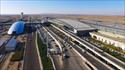
Flights schedule at Imam Khomeini Airport indicated that Iranian airlines operating at least 24 international flights. The flight schedule for Imam Khomeini Airport City shows domestic airlines are conducting at least 24 outbound and inbound flights to 11 international destinations. Regarding outbound flights from Imam Khomeini Airport, the following airlines are operating (or have operated) flights: Zagros (Tehran-Ankara); Taban and Varesh (Tehran-Istanbul); Airtour (Tehran-Yerevan/Armenia and Tehran-Izmir); Ata (Tehran-Istanbul); Iran Air (Tehran-Istanbul); Caspian (Tehran-Istanbul); and Mahan (Tehran-Beijing, Tehran-Shanghai, Tehran-Guangzhou, and Tehran-Ho Chi Minh City). Inbound flights, airlines including Varesh, Ata, Zagros, Meraj, Mahan, Caspian, Saha, Airtour, and Taban are operating flights from cities such as Dushanbe (Tajikistan), Istanbul, Tashkent (Uzbekistan), Moscow, and Ankara. Previously, the U.S. government had coerced nations into accepting sanctions against Iranian airlines; while some countries halted flights to/from Iran under U.S. pressure, others refused to do so. - Kayhan
28/09/2026
Iran’s Economy Will Have Nothing Left within 2 Weeks after Its Final Oil Deliveries: Bessent

Iran’s beleaguered economy will soon have “nothing to trade” in about two weeks after it makes its final oil deliveries, Treasury Secretary Scott Bessent claimed. Bessent assessed that the Islamic Republic is becoming desperate to make a deal because of its collapsing economy, hastened by Operation Economic Outcast, and warned that its problems will get dramatically worse in two weeks.
“I am confident, given that there’s only 15 million more barrels of Iranian oil on the water, that Iran will have nothing left to trade for anything,” Bessent told Fox News’ “Sunday Morning Futures.”
“Probably within the next two weeks, they are going to make their final deliveries of oil to China, and then they will have nothing,” Bessent added. “It is an empty set. And I believe that they are feeling the pressure here, and that’s why they want a deal.”
Since the Memorandum of Understanding with Iran collapsed in July, the US has implemented a sweeping blockade around the regime, cutting off vessels from entering or leaving the war-torn nation.
Bessent announced Operation Economic Outcast last month, in which the administration mounted an even more aggressive push to tighten the screws on the regime by targeting foreign countries and companies doing business with it.
Last week, top Iranian officials pushed for their seven-day ceasefire proposal in which they would open up the Strait of Hormuz in exchange for the US unfreezing roughly US$12 billion in frozen assets, lifting the blockade and easing sanctions.
But President Trump rejected that deal, telling reporters that it was not acceptable. “The straits are open,” Bessent insisted. “We’re averaging now 15 to 22 million barrels a day… It was at about 20 [million] pre-conflict.”
Since early March, the Strait of Hormuz, where nearly one-fifth of the world’s seaborne oil supplies once flowed through annually, has faced disruptions by Iran’s sporadic attacks against vessels. But the Trump administration has claimed that the US military is escorting ships through a route close to the shores of Oman.
“They are isolated from the world,” Bessent said. “They are a pariah state. And my job is to make sure that, when they come with a deal, that they want to stick to it. They did not stick to the MOU.”
“Next time, if there is a deal, and that’s at President Trump’s discretion, they will stick to it, because they are on their knees.” - New York Post
28/09/2026
Iran's President Launches Tourism Projects
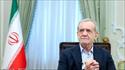
President Masoud Pezeshkian on Sunday inaugurated 246 tourism and cultural heritage projects online, creating 3,200 jobs, as Iran marked the start of Tourism Week. Pezeshkian called for broader cultural, tourism and trade ties with neighboring countries, saying US restrictions made stronger regional relations necessary to put Iran on a path toward development and growth, according to his website, president.ir. He also said regulations that hinder tourism businesses would be revised and stressed the need for balanced development of tourism infrastructure in line with population distribution. "Despite the wartime conditions prevailing in the country over the past two years, significant steps have been taken to develop tourism infrastructure across the country, but balanced development remains essential," Pezeshkian said. Since late February, Iran has been operating under wartime conditions and a maritime blockade from the south following a 40-day U.S.-Israeli war. Already under decades of Western sanctions, Iran also faces a new wave of U.S. sanctions targeting its aviation sector. Israel also launched a 12-day war against Iran in June 2024. Pezeshkian said sanctions imposed on Iran should be turned into an opportunity to expand regional ties and create jobs, adding that neighboring countries represented an important capacity for Iran and that broader engagement could open new ways to serve the country. At the ceremony, Tourism and Cultural Heritage Minister Mohammad-Reza Salehi Amiri said 1,471 projects had been completed over the past two years under Pezeshkian's government, which began in August 2024, creating 19,000 direct jobs. - Iran Daily
28/09/2026
Saudi East-West Pipeline Building Up Volumes, Loading Yet to Resume
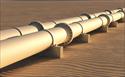
Saudi Arabia is building up crude pumping volumes through its East-West Pipeline that runs to its Red Sea export hub of Yanbu, although crude tanker loadings have yet to resume, according to industry sources, satellite imagery and shipping data.
Saudi Arabia resumed operations on the pipeline this week after a drone attack shut the facility earlier this month, adding to hopes of an increase in oil flows from the Middle East disrupted by the US-Iran war. The latest comments and data suggest slower progress in resuming shipments, given that loading had been scheduled for Tuesday.
Crude is heading through the pipeline into Saudi Arabia's refineries on the Red Sea coast, an industry source said, although crude loading has yet to resume into tankers. Two other sources also said tanker loading has yet to resume.
State oil giant Saudi Aramco did not immediately reply to a request for comment.
STILL BUILDING UP VOLUMES, SOURCES SAY
Aramco has told European refiners the company is still building a 'critical mass' of volumes at Yanbu before it resumes crude deliveries, another source said. Specialists need to undertake pressure tests to enable oil to start to build up through the pipeline, which is expected to take days, a security source said.
The latest Copernicus Sentinel satellite imagery, taken on Tuesday afternoon, showed a Very Large Crude Carrier (VLCC) berthed at Yanbu's North Terminal and a Suezmax tanker at the South Terminal, also known as Al Muajjiz.
Data from commodities intelligence firm Kpler shows around six crude tankers are due to load at Yanbu from September 24-27 - four Aframaxes, one Suezmax and one VLCC. Two ships that were due to load on September 23 did not load, the data showed.
Drone attacks, which Saudi Arabia has blamed on Iraqi militia, forced the kingdom to shut the pipeline on September 11, halting crude loadings at Yanbu.
Saudi Arabia restarted operations on the East-West Pipeline on Tuesday, three sources familiar with the matter said, although it may take six weeks or more for the system to return to full capacity.
Since the conflict in the Middle East disrupted oil flows through the Strait of Hormuz, Riyadh has rerouted about 4 million barrels per day of crude via the East-West Pipeline to Yanbu, equivalent to about 4% of global supply.
Three pumping stations serving the pipeline were damaged in the September 11 drone attacks, according to satellite imagery and industry sources.
28/09/2026
GCC Secretary-General Calls for Stronger Regional Convergence
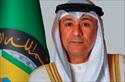
Advancing regional convergence and connectivity across energy, trade, transport and the digital economy constitutes a vital pathway to support economic growth. This is according to GCC Secretary-General Jasem Albudaiwi, who said there is need to bolster resilience and unlock new investment horizons so as to contribute to shared prosperity for the peoples of the region and future generations, a Saudi Press Agency (SPA) report said.
Albudaiwi's remarks came during his participation in a symposium titled "Regional Convergence for Energy, Trade, and Connectivity," organised jointly by the GCC General Secretariat and the United Nations Development Programme (UNDP) on the sidelines of the 81st session of the United Nations General Assembly in New York.
Rapid shifts
"Rapid shifts in international trade routes, energy systems, and technologies are reshaping how economies interconnect, at a time when capital flows increasingly gravitate towards regions capable of offering opportunity, resilience, and stability," Albudaiwi stated. "These structural transitions present both challenges and significant opportunities for GCC states."
He highlighted that while the GCC region sits at a pivotal crossroads of global commerce, energy, and investment flows, geography alone cannot guarantee enduring prosperity. He emphasised that integrating markets, infrastructure, and institutional capacities—coupled with robust regional cooperation—is essential to transforming strategic advantages into tangible, practical gains that directly benefit populations.
"The GCC's track record offers proven, practical models in this regard, foremost among them the GCC Interconnection Grid, which has demonstrated the capacity of regional cooperation to bolster system resilience and deliver substantial economic and strategic dividends, while aligning regional initiatives with national priorities and the interests of participating states," Albudaiwi pointed out.
Actionable priorities
Furthermore, the secretary-general outlined three actionable priorities for the forthcoming phase: formulating a structured post-UNGA process to develop a clear roadmap anchored in national priorities; identifying key corridors, priority sectors, and bankable investment opportunities across energy, trade, transport, and digital connectivity; and expanding partnerships to encompass governments, multilateral financial institutions, sovereign wealth funds, and the private sector, while leveraging the UNDP's role to facilitate collaboration and provide technical expertise.
"These collective efforts must be grounded in national ownership, voluntary engagement, and mutual benefit, building upon existing initiatives to prevent duplication while focusing on areas capable of delivering tangible, measurable results," Albudaiwi underlined.
Concluding his address, the GCC secretary-general affirmed that the true value of this initiative will be measured by the depth of economic integration it achieves, the new investment avenues it unlocks, and the high-impact projects it delivers to reinforce growth and resilience. He underscored that the region possesses the resources, strategic location, institutions, and ambition required to drive this agenda forward, modernising infrastructure and trade while securing sustainable growth and shared prosperity for generations to come.
28/09/2026
OQ, Oman's Research Authority Join Forces to Advance Innovation, Tech

The Research and Innovation Authority and OQ Global Energy Investment Group have signed a strategic Memorandum of Cooperation (MoC) to strengthen research partnerships, knowledge exchange and the development of advanced technologies.
The agreement was signed by Dr. Saif Al Haddabi, Chairman of the Research and Innovation Authority, and Azzan Al Abdullatif, Chief Executive Officer for Business Development at OQ.
The partnership aims to connect national research capabilities with industrial-sector needs and translate research outcomes into practical solutions with economic value, supporting sustainable development.
Key areas of cooperation include establishing and activating the National Centre for Research and Development in Water Fields, sharing research data and outcomes, and developing national expertise through joint innovation programmes.
The agreement will also leverage OQ Group’s business incubators and accelerators, alongside the “EJAAD” platform, to address industrial and research challenges and support innovation.
The two sides will explore future research projects in alternative energy, biodiesel and genetic resources, while supporting capacity-building programmes and international participation for students and researchers.
The cooperation will further seek to strengthen links between national innovation centres and OQ Group’s science and innovation initiatives and centres, creating opportunities to advance research, technology transfer and industrial applications.
28/09/2026
PPI Jumps in Oman as Refined Petroleum Costs Surge
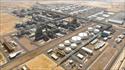
Oman’s producer prices surged 32.7 percent in the second quarter from a year earlier, reversing a decline in the previous quarter as crude oil, natural gas and refined petroleum prices climbed, official data showed.
Mining and quarrying prices rose 31 percent, led by a 31.9 percent increase in crude oil and natural gas prices, according to data from the National Centre for Statistics and Information reported by Oman News Agency.
The increase marked a sharp turnaround from the first quarter, when Oman’s Producer Price Index fell 3.9 percent year on year. Mining and quarrying prices declined 11.3 percent in the period, while crude oil and natural gas prices dropped 11.6 percent.
The increase comes as Oman continues efforts to diversify its economy away from hydrocarbons. The International Monetary Fund expects real gross domestic product growth of about 3.7 percent in 2026, driven by higher oil production, while nonhydrocarbon growth is projected at 2.5 percent, with stronger expansion expected in 2027.
“The prices of stone and sand products also rose by 0.5 percent, while the prices of metal ore products fell by 14.3 percent,” ONA reported.
It added: “The prices of the manufacturing group recorded an increase of 40.3 percent, driven by a rise in the prices of the group of other transportable goods by 55.3 percent, and the highest percentages of which were the prices of refined petroleum products by 88.2 percent and chemical products by 21.4 percent.”
Prices of metal products, machinery and equipment rose 31.7 percent. Within the group, products made from iron, steel or aluminum increased 48.9 percent, while prices of power transformers, electricity distribution equipment and cables rose 39.8 percent.
Food, utilities prices also rise
“Prices of food products, beverages and textiles also rose 2.8 percent, with footwear recording the largest increase in the group at 6.7 percent, followed by woven fabrics at 2.8 percent,” ONA stated.
Water prices rose 4.4 percent, while electricity prices increased 13 percent in the second quarter from a year earlier.
The sharp increase in producer prices contrasts with relatively contained consumer-price pressures. The IMF said average inflation was 1 percent in 2025 before rising to 2.8 percent year on year in January-May 2026, driven mainly by higher food and transportation prices.
Oman’s fiscal and external positions are also expected to strengthen this year, according to the IMF, supported by higher oil revenues and continued fiscal discipline. The fund projects the fiscal surplus to widen to 4.5 percent of GDP in 2026 from 0.6 percent in 2025.
28/09/2026
Egyptian Startups Discovering Saudi Market Challenges
The rush by Egyptian startups to expand into Saudi Arabia has largely reversed after some companies entered the Kingdom too early, burned through capital and underestimated the differences between the two markets, according to F6 Ventures co-founder and General Partner Dina El-Shenoufy.
The trend peaked in 2022 and 2023, when economic uncertainty and currency devaluation in Egypt drove founders to seek revenue diversification, El-Shenoufy told Arab News.
Investors also encouraged portfolio companies to enter Saudi Arabia, particularly when Saudi or other GCC investors were on their capitalization tables.
“Many of them regretted it very much because many of them went and burned so much money, only to realize that the markets are very different,” she said.
Saudi expansion risks
Saudi Arabia is a large market with strong purchasing power, high card penetration and consumer familiarity with online services, but its culture, customer targeting and marketing language differ sharply from Egypt, she said.
Those characteristics can make the Kingdom particularly attractive for business-to-consumer companies, while also raising the cost of getting expansion wrong.
El-Shenoufy said successful Egyptian companies can still find growth opportunities in Saudi Arabia, provided they have secured their domestic operations, built a financial cushion and allowed time to understand the local market.
The greater risk lies with companies treating expansion as an escape from challenges at home.
Companies that remain unstable in Egypt and view Saudi expansion as a quick escape tend to struggle most, she said.
A recent Egyptian startup that reversed its expansion efforts is Rabbit. In April 2025, the Cairo-based quick-commerce company announced its Saudi market entry, establishing a regional headquarters and local team in Riyadh.
Within six weeks of launching in the capital, its network of dark stores covered half the city, and the company was targeting the delivery of 20 million items across Saudi Arabia by 2026.
FWDstart has since reported that Rabbit exited the market, although the company has not formally confirmed the withdrawal or disclosed the reasons behind it. Rabbit did not respond to Arab News’ request for a comment.
The reversal came despite co-founder and CEO Ahmad Yousry telling Arab News in June 2025 that early Saudi customers were ordering at a similar frequency to Rabbit’s more established Egyptian users.
He acknowledged, however, that the unit economics of the two markets were “quite different.”
Pressure has not been limited to Egyptian companies expanding abroad. Tabby paused commercial operations in Egypt in February 2023, less than six months after launching there.
The buy now, pay later provider attributed the decision to macroeconomic developments that complicated its interest-free payment model.
Investment approach
F6 Ventures’ Saudi fund consequently focuses more heavily on Saudi founders or long-term residents who understand the market, El-Shenoufy said.
She added that both Egypt and Saudi Arabia are large enough for some locally focused businesses to reach venture-scale growth and provide a potential route to exit.
Startups emerging from smaller markets such as Tunisia, by contrast, must demonstrate an ability to expand internationally much earlier.
The Saudi strategy forms part of a wider investment operation separated from Flat6Labs in a restructuring about a year ago.
Flat6Labs retained its entrepreneur-support and ecosystem-development activities, while F6 Ventures took on the group’s investment and fund-management functions.
The split reflects how the early-stage market has evolved over the group’s 15-year history. Flat6Labs began with tickets equivalent to US$10,000 to US$15,000, investing through standardized cohorts and providing founders with shared legal, office and advisory services.
The approach allowed it to make seed investments at scale when many teams consisted only of founders with an idea.
Founder assessment
F6 Ventures no longer invests at the idea stage. Even pre-seed companies must now have at least a minimum viable product, not because it eliminates investment risk, but because it demonstrates founders’ commitment and ability to execute, El-Shenoufy said.
Early revenue can provide further evidence that a team understands its route to market and product-market fit.
“We look at all the signs that this founder is able to execute,” she said. The firm then examines the product, addressable market and capacity to scale without requiring proportionate increases in capital.
About 80 percent to 90 percent of that assessment is consistent across countries, with the remainder shaped by local market size and consumer behavior, she said. F6 Ventures seeks the possibility of at least a tenfold exit when evaluating an investment.
AI scrutiny
Artificial intelligence is also changing that assessment, although El-Shenoufy rejects treating it as a standalone investment category.
“AI is not a sector,” she said, describing the technology as a tool that cuts across industries. “Not because I care about AI, but because I care about efficiency.”
F6 Ventures considers how companies use AI to lower costs, work faster and improve their products, while applying greater scrutiny to businesses whose offerings could soon be replaced by the technology.
Merely attaching an AI label to an existing algorithm does not strengthen an investment case, she said.
Profitability discipline
The firm also continues to emphasize unit economics at the pre-seed and seed stages, despite the limited financial history available.
Investment analysis considers potential profitability at the gross-profit and earnings before interest, taxes, depreciation and amortization levels.
“There’s a difference between achieving profitability and knowing you can,” El-Shenoufy said.
A company may deliberately increase spending to enter its next phase of growth, she added, but those periods of higher cash burn must be controlled and intentional instead of what she described as “dipping into the abyss.”
F6 Ventures’ latest Saudi institutional fund, launched in 2023, has completed its investment period and moved into the divestment stage, El-Shenoufy said.
The group had previously made at least 40 investments through an earlier accelerator arrangement in Jeddah.
28/09/2026
New Wells Brought Online at Libya’s Al-Sabah Field
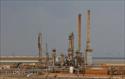
Five new wells brought online at Zueitina Oil’s Al-Sabah field - adding 2,000 barrels per day to production
Libya’s Zueitina Oil Company reported that its technical teams completed final preparations at the Al-Sabah field and successfully brought five new wells into active operation.
This boosted production by more than 2,000 barrels of oil per day, following confirmation that the operational network was fully ready.
The company said this step aligns with approved plans to increase daily production rates and enhance field operational capabilities, supporting its strategy to develop reservoirs and improve operational efficiency
28/09/2026
DHL Starts Flight Service from Bahrain

DHL Express has expanded its regional aviation network with the launch of its first direct freighter service between Bahrain and South Africa.
The inaugural weekly flight operated by a DHL Express Boeing 767 freighter arrived at OR Tambo International Airport in Johannesburg, opening a crucial air corridor that boosts capacity between the GCC, Africa, and global markets.
The service uses DHL’s Bahrain hub as a gateway to connect Sub-Saharan Africa with Asia, the Middle East, and beyond, addressing growing demand in sectors such as healthcare, technology, manufacturing, and e-commerce.
“As global trade routes diversify and economic ties between Africa and the Middle East continue to strengthen, we are seeing powerful tailwinds creating new opportunities for businesses,” said DHL Express Sub-Saharan Africa vice-president of operations and aviation Anthony Beckley.
“While this first direct flight is a significant network milestone, its real value lies in the opportunities it creates for customers.”
Bahrain serves as a central hub for DHL’s dedicated intra-regional air fleet in the Middle East, linking the kingdom directly to key global gateways, including Hong Kong, Leipzig, and Cincinnati.
“Bahrain’s position at the crossroads of Africa and the Middle East makes it an ideal hub for customers seeking faster, more reliable access across these growing trade corridors,” added DHL Express Mena vice-president of aviation Richard Gale.
“We are pleased to add this direct Johannesburg connection as economic ties between Africa and the GCC deepen.”
28/09/2026