Iranian Minister Meets Pakistani PM after Joint Trade Committee Talks
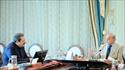
Minister of Industry, Mine and Trade Mohammad Atabak has met with Pakistani Prime Minister Shehbaz Sharif in Islamabad following the conclusion of the 10th Iran-Pakistan Joint Trade Committee meeting.
Pakistan’s ministers for commerce, petroleum, maritime affairs, finance, and economic affairs, as the two countries seek to strengthen economic and trade cooperation, attended the meeting on Wednesday.
During the Joint Trade Committee meeting earlier today, the Iranian minister and Pakistani officials committed to finalizing a bilateral free trade agreement in the near future. The two sides also agreed to expand direct contacts, increase exchanges of business delegations and improve the effectiveness of their barter trade mechanism. They further decided to establish joint committees to enhance the management of border markets and boost bilateral trade in agriculture, livestock, transportation and logistics. - IRNA
09/08/2026
Iran Seeks Greater Industrial Cooperation with BRICS
Iran said on Thursday it was ready to expand project-based industrial cooperation with BRICS members in strategic sectors including steel, mining, petrochemicals, machinery, pharmaceuticals, medical equipment and knowledge-based industries, as the bloc's industry ministers met in Jaipur, India. Mohammad Sadegh Mofateh, Iran's deputy industry, mine and trade minister for commercial affairs, made the remarks at the 10th BRICS Industry Ministers' Meeting, held under India's 2026 BRICS presidency.
The meeting focused on industrial development, support for small and medium-sized enterprises, innovation, logistics and industrial cooperation, with participants also adopting a joint declaration. BRICS, originally formed by Brazil, Russia, India and China, has expanded to include Egypt, Ethiopia, Iran, the United Arab Emirates, Saudi Arabia and Indonesia as full members. "Iran is ready to expand its project-based cooperation with BRICS countries in strategic sectors including steel, mining, petrochemicals, machinery, pharmaceuticals, medical equipment and knowledge-based industries," he said. He said Iran supported the joint declaration adopted at the meeting, whose theme was "Building for Resilience, Innovation, Cooperation and Sustainability."
"The Islamic Republic of Iran fully supports the joint declaration and believes BRICS participation in the new industrial revolution provides an effective framework for strengthening industrial cooperation, promoting innovation, enhancing supply chain resilience and advancing sustainable industrial development," Mofateh said. He said BRICS countries should move beyond dialogue toward practical cooperation. "BRICS has the capacity to become a model of industrial partnership based on complementary economies, joint investment, technological cooperation and value creation," he said. He identified digital transformation, smart manufacturing, industrial standardization and the development of flexible logistics networks as key areas for cooperation between Iran and BRICS members. "Iran's strategic geographic location at the intersection of major East-West and North-South transport corridors enables the country to serve as a reliable bridge connecting production, energy, transport and regional markets," he said.
He also welcomed the establishment of a BRICS working group on the photovoltaic industry and said Iran supported closer cooperation in renewable energy technologies, photovoltaic production, energy storage and technology exchange. On the sidelines of the meeting, Mofateh held talks with Chinese and Indian officials on expanding economic ties. In a meeting with China's Vice Minister of Commerce Li Chenggang, he called for upgrading bilateral relations toward joint investment, industrial partnerships and value chain development, while stressing the importance of finalizing and signing a revised trade agreement between the two countries. In talks with India's Deputy Minister of Industry Amardeep Singh Bhatia, Mofateh called for reactivating the Iran-India joint trade committee to help address barriers to bilateral commerce. He also highlighted the importance of expanding banking services for Iranian traders and establishing a regular shipping line between Indian ports and Iran's Chabahar port to support trade and investment. - Iran Daily
09/08/2026
Iran, Kyrgyzstan Emphasize Expansion of Trade, Mining, Energy, Transit Coop.
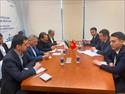
In the meeting between Iran's Minister of Industry, Mining and Trade and Kyrgyzstan's Minister of Economy and Trade, both sides emphasized the development of trade exchanges, joint investment, and the expansion of industrial, mining, energy, transport, and free zone cooperation with the aim of elevating the level of economic relations between the two countries.
According to IRNA from the Ministry of Industry, Mining and Trade, in the meeting between "Seyyed Mohammad Atabak", Minister of Industry, Mining and Trade, and Sydykov Bakyt Tolomushevich, Minister of Economy and Commerce of Kyrgyzstan, the two sides, while emphasizing the extensive capacities for economic cooperation, stressed the development of trade relations and investment within the framework of regional agreements, including the Eurasian Economic Union and the Shanghai Cooperation Organization.
The two sides also emphasized the development of joint production for export to third-country markets, increased cooperation in the export of knowledge-based products, pharmaceuticals and medical equipment, expansion of cooperation between free zones, and development of investment in the industry and mining sectors.
In the mining and energy sector, referring to Kyrgyzstan's mineral capacities, the readiness of Iran for cooperation in exploration, extraction, processing, provision of technical and engineering services, modernization of mining industries, and transfer of technical knowledge was announced.
In the transport and transit sector, the two sides emphasized the activation of the Bandar Abbas–Osh railway route, establishment of direct flights, reduction of transit costs, and completion of regional corridors.
Emphasis was also placed on the importance of participation in the "Belt and Road" initiative and utilizing Iran's transit capacities to connect Kyrgyzstan to regional and international markets.
Furthermore, the development of banking, logistics, and transport infrastructure, holding a joint banking committee, using national currencies, establishing joint investment funds, and utilizing modern financing methods were among other issues agreed upon by the two parties. - Tehran Times
09/08/2026
US Sanctions Dubai Crypto Exchange Shelbit & Others Over Iran Sanctions Evasion

The United States on Friday imposed sanctions on six entities and one individual linked to Iran’s Islamic Revolutionary Guard Corps, including the Dubai‑based crypto exchange Shelbit, its founder Siavash Kayvanpour, and the Iranian exchange Nobitex, after a Reuters investigation revealed a US$4 billion sanctions‑evasion scheme.
The sanctions come amid Iran’s recent attacks on commercial vessels in the Strait of Hormuz and are part of the U.S. Treasury’s effort to cut the regime’s illicit financial lifelines, with the Rewards for Justice program offering up to US$15 million for information that disrupts the IRGC’s money‑laundering networks.
Treasury Secretary Scott Bessent said the U.S. will “hunt down and dismantle the illicit financial networks that keep the regime afloat,” and the action is authorized under Executive Orders 13902 and 13224, following a series of sanctions on Iran’s shadow banking system earlier this year.
The move follows a Reuters report that Shelbit had processed millions of dollars for the IRGC and other state‑linked groups, and the exchange, which had been offline for months, reactivated only after the investigation, claiming no involvement in money laundering or terrorism financing. - Forth
09/08/2026
Iranian Parliament Reviews Bill to Restrict Strait of Hormuz Transit
Iran’s parliament is reviewing a draft bill that would significantly tighten state control over navigation in the Strait of Hormuz and the Persian Gulf, including by banning vessels linked to the United States, Israel and other countries Tehran designates as hostile, the semi-official Tasnim News Agency reported Thursday.
Tasnim cited Abbas Salimi, a member of parliament’s presiding board, as saying the preliminary text of the Strategic Action for the Security and Sustainable Development of the Strait of Hormuz and the Persian Gulf is being reviewed by parliament’s National Security and Foreign Policy Committee.
Under the draft, vessels belonging to the United States, Israel and other countries Iran considers hostile would be barred from transiting the Strait of Hormuz.
The proposal would also prohibit the passage of military and civilian cargo linked to Israel, as well as vessels or cargo deemed to have supported operations against what Iran calls the “Axis of Resistance.”
Countries and individuals deemed responsible for causing damage to Iran would be denied permission to transit the Strait of Hormuz and the Persian Gulf until compensation is paid, according to the draft.
The bill also proposes heavy penalties for violations, including fines of up to 20% of a vessel’s cargo value.
Under the proposal, the government would be required to work with the armed forces to oversee navigation, monitor vessel movements and ensure security and environmental protection in the Persian Gulf.
Salimi said the bill remains under expert review and that parliament has invited specialists to submit recommendations before the text is finalized, according to Tasnim.
The draft comes amid heightened tensions over navigation through the Strait of Hormuz following months of regional confrontation involving Iran, the United States and Israel. During that period, Iranian officials repeatedly warned that they could restrict maritime traffic through the strategic waterway if Tehran’s security interests were threatened.
The proposal also comes as Tehran and Muscat continue negotiations on a new framework for managing navigation through the strait. The process followed an Iran-US memorandum of understanding reached in June to end the conflict, under which Iran and Oman were tasked with negotiating new arrangements for maritime traffic through the strategic waterway.
Earlier Thursday, Tasnim cited an informed Iranian Foreign Ministry source as saying the proposed framework would initially retain the existing northern and southern shipping lanes before phasing them out in favor of a centrally managed corridor.
Under the plan, inbound vessel traffic would be managed by Iran, while outbound traffic would be jointly managed by Iran and Oman after the transition, according to the report. Ships transiting the strait would pay fees for maritime services—including insurance, bunkering and environmental protection—rather than cargo-based transit tolls.
The source also rejected reports that Tehran and Muscat were divided over proposed charges of 7% or 3% of a vessel’s cargo value, saying the fees would instead depend on the scope of maritime services provided. - Anadolu
09/08/2026
US Senate Passes Russia, Iran Sanctions Bill
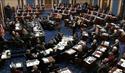
In a development that could have significant implications for India, the US Senate voted overwhelmingly to approve a bill to punish Russia and key buyers of its petroleum products, such as China and India, claiming that such trade helps fuel the Ukraine war. The bill, renamed the Lindsey O. Graham Sanctioning Russia and Iran Act of 2026, cleared the Senate with an 86-11 vote. It gives US President Donald Trump the authority to levy tariffs of up to 100% on imports from countries that rank among the five largest buyers of Russian oil and natural gas.
What does the US Senate’s Russia sanctions bill propose?
The top five importers of oil and gas from Russia include China, India, Azerbaijan, Hungary and Slovakia. In addition to sanctions against Russia, the legislation will extend the validity of the Iran Sanctions Act passed in 1996 until July 2031, which punishes companies that invest in the energy sector of Iran. The bipartisan initiative was spearheaded by Lindsey Graham, a senator from the Republican Party who died on July 11, and Richard Blumenthal from the Democratic Party.
Which countries are among the top importers of Russian oil and gas?
After the sudden demise of Graham, politicians from all parties worked tirelessly to pass the bill and honour the memory of the senator, a loyal ally of Ukraine. Darline Graham, the late senator’s sister who was appointed to his seat after his death said, “This bill forces those primary countries keeping Russia’s economy afloat to make a simple yet critical choice – a choice between doing business with America or buying cheap Russian energy,” as reported by news agency PTI. It also seeks to impose sanctions against Russian politicians and officials, targeting Russian President Vladimir Putin, oligarchs and financial institutions. After the vote, Senator Blumenthal told reporters that Graham would be “proud of what we’ve done”. Blumenthal said, “These sledgehammer sanctions and tariffs will stop all who are complicit in this murderous, criminal war of aggression against brave free people.”
Some Democrats have warned that the bill would give Trump new tariff powers at a time when he has put such levies at the centre of his trade policy.
Bill to go to the House of Representatives for approval
The bill will now go to the House of Representatives for approval when it reconvenes on August 31. Democrat Congressmen Gregory Meeks and Don Beyer have criticised the legislation for creating “sweeping new tariff authorities that the president could weaponise with abandon, as he has repeatedly done in the past”. “We welcome our Senate colleagues’ urgent effort to support Ukraine and punish Russia for its continued illegal war, but this bill would not achieve those goals. Instead, it would allow President Trump to dodge holding Russia accountable and impose yet more tariffs in his destructive trade wars, leaving Americans to foot the bill,” the two leaders said.
India-US tariff tensions: Why Trump targeted Russian oil purchases and what the temporary US waiver means
For the unversed, last year, US President Donald Trump increased tariffs on Indian imports to a staggering 50%, including a 25% additional duties for India’s purchases of Russian crude oil, which commenced from August 27. Trump imposed steep tariffs on Indian goods, claiming that India’s continued purchase of discounted Russian oil and trade ties with Moscow were indirectly fueling Russia’s war efforts in Ukraine. Meanwhile, in March, the U.S. Treasury Department issued a 30-day waiver on Thursday, allowing India to buy Russian oil currently stuck at sea. “To enable oil to keep flowing into the global market, the Treasury Department is issuing a temporary 30-day waiver to allow Indian refiners to purchase Russian oil,” Treasury Secretary Scott Bessent was quoted as saying by Reuters in March. In a statement, he stated, “This deliberately short-term measure will not provide significant financial benefit to the Russian government as it only authorizes transactions involving oil already stranded at sea.” He described the decision as a temporary stopgap, noting that the United States expects India to purchase more American crude oil. - India
09/08/2026
Iran's President Cites Energy Imbalance as Key Challenge
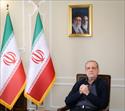
President Masoud Pezeshkian said energy imbalance was among the most significant challenges facing his administration during its first two years in office, alongside war, sanctions, water shortages and drought, as he reflected on the government's record ahead of the third year of his presidency.
In a televised interview released by president.ir, Pezeshkian said his administration has worked to manage the country through what he described as one of the most difficult periods since Iran's 1979 Islamic Revolution, relying on public support despite mounting domestic and external pressures.
The president said concerns over electricity and natural gas shortages during the winter, worsening water scarcity and an unprecedented drought in 1404 (March 2025-26) were among the government's most pressing domestic issues. "We faced energy imbalances and concerns that people might not have access to electricity and gas during the winter," Pezeshkian said, adding that the country's water crisis deteriorated further because of severe drought conditions.
He also cited military conflict, intensified sanctions and financial restrictions as major obstacles confronting the government over the past two years, saying the administration had sought to prevent social instability while maintaining essential public services. Addressing the concept of the people, a recurring theme of his presidency, Pezeshkian said the government considers all Iranians — regardless of political affiliation, ethnicity, gender or religious beliefs — to be equal stakeholders in the country's future.
"The people are everyone who lives in this country," he said. "The government has a duty to treat all citizens fairly and administer the country on the basis of justice." Pezeshkian reiterated that national unity, or "consensus," should not be viewed as political power-sharing among factions but as cooperation among qualified individuals capable of addressing the country's challenges.
He said appointments in government should be based on competence rather than political affiliation, arguing that merit and professional capability must be the primary criteria for public service. The president also discussed the government's response to recent security crises, the role of national leadership during periods of instability, and efforts to facilitate the return of Iranians living abroad.
Pezeshkian said the administration has pursued measures to ease the return of expatriate Iranians, stressing that citizens should be able to enter and leave the country without unnecessary obstacles, provided there are no legal restrictions communicated before travel.
Reflecting on the broader regional and domestic situation, Pezeshkian said the government remains committed to serving the public despite economic and geopolitical pressures. "As long as we stand with the people, no power can bring this country to its knees," he said. "We will continue to serve the Iranian people with all our strength." - Shana
09/08/2026
Iranian Oil Refinery Steps Up Expansion Drive
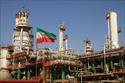
The CEO of the National Iranian Oil Refining and Distribution Company (NIORDC) underscored the strategic role of the Abadan Refinery in ensuring a stable fuel supply and accelerating development projects during a visit to the southern city.
Mohammad-Sadeq Azimifar met with refinery managers and local officials and toured various sections of the Abadan Refinery, where he reviewed production levels, development projects and challenges facing the facility.
Azimifar praised refinery employees for their efforts, particularly during wartime, saying their round-the-clock work under difficult conditions had played an important role in maintaining production and ensuring the country’s fuel supply. The deputy oil minister for refining and distribution affairs also stressed the need to continue increasing gasoline and diesel production, accelerate development projects and give greater attention to human resources.
Fardin Rashidi, CEO of the Abadan Oil Refining Company, highlighted the refinery’s strategic position in Iran’s refining industry and presented a report on current production and development projects. He said completing development projects, securing steady financing and obtaining the equipment and spare parts needed for ongoing projects were among the refinery’s top priorities. Rashidi said the development projects would not only increase production capacity but also create employment for more than 7,000 people over the next 24 months. He expressed hope that with continued access to financing, equipment and spare parts, the projects would be completed and brought on stream as scheduled. - Shana
09/08/2026
Libya Tops Countries Awarding Oil & Gas Exploration Licenses in June 2026
Libya Tops countries awarding oil and gas exploration licenses in June 2026
by AbdulkaderAssadSat, 01/08/2026 - 21:08
ShareTweet
oil
Libya ranked first among countries awarding oil and gas exploration licenses in June 2026, granting licenses covering estimated reserves of around 50 million barrels of oil and 832 billion cubic feet of natural gas, equivalent to approximately 82.2 million tonnes of carbon dioxide emissions if the resources are fully extracted and burned.
According to the monthly report issued by the International Institute for Sustainable Development (IISD), Libya’s latest licensing round is the country’s first since 2007, marking what the report described as a new phase for Libya’s oil and gas sector after years of stagnation. The report also noted that Libya holds the largest proven oil reserves in Africa.
The report added that Italy’s Eni and QatarEnergy secured the largest offshore concessions along Libya’s Mediterranean coast, while Libya led the six countries that awarded a total of 22 new exploration licenses during June.
It also noted that Chevron, the Turkish Petroleum Corporation (TPAO), and Eni were among the leading investors in exploration licenses awarded globally during the month, with capital investments exceeding $1 billion. Meanwhile, Libya’s licenses ranked as the projects with the highest potential carbon emissions.
09/08/2026
Saudi Oil Sustainability Program Backs WE Rise 2026 to Empower Women in Energy

The Saudi Oil Sustainability Programme is sponsoring the Women and Energy Association’s WE Rise 2026 mentorship programme to support national talent development and increase women’s participation in the energy sector.
The specialised initiative aims to prepare emerging female leaders through professional mentoring, knowledge exchange and networking opportunities with experts from local and international organisations.
The sponsorship will support the programme’s activities and events, helping strengthen its impact in developing women’s capabilities and building a new generation of energy sector leaders.
The initiative aligns with the objectives of Saudi Vision 2030 by promoting sustainable development, empowering national talent and creating opportunities for professional growth.
It also highlights the Oil Sustainability Programme’s continued efforts to foster a more inclusive and skilled workforce capable of contributing to the future of the energy industry.
09/08/2026
Iran Says Deal on Hormuz Is Close But Not Enough to Open Waterway

Iran said on Saturday that a deal with Oman on control of the Strait of Hormuz was close but would not be enough to free up the waterway, and the United Arab Emirates said Iran had hit another ship there.
Agreement between Iran and Oman over the strait, which separates the two countries, is seen as vital to a wider deal to end the war, which began with U.S. and Israeli attacks on Iran on February 28 and led to Tehran establishing a chokehold over the major energy export route.
A U.S. official, who declined to be identified, said on Friday that Washington anticipated an agreement soon between Iran and Oman, so normal oil traffic could resume.
Iranian Foreign Minister Abbas Araqchi said Iran and Oman were “very close” to an agreement on a new shipping route through the strait, but reopening it would depend on other conditions, including U.S. compensation to Iran.
The secretary of Iran’s top national security body, Mohammad Baqer Zolqadr, listed other demands including ending U.S. threats against Iran, stopping aggression against Iran and its Lebanese, Palestinian, Yemeni and Iraqi allies, lifting a blockade and sanctions on Iran and freeing Iranian assets.
OMAN REPORTS POSITIVE NEGOTIATIONS, CONDEMNS SHIP ATTACKS
Oman condemned what it described as repeated attacks on vessels while transiting the strait, without assigning blame, and said that negotiations with Iran on arrangements for shipping through Hormuz were “positive and constructive”.
“Oman stresses the importance of avoiding any actions that could affect these negotiations and the progress achieved in a manner that takes into account the interests of all parties,” the foreign ministry said.
Araqchi said the previous shipping traffic separation scheme through the strait was no longer acceptable to Tehran and Iran was discussing a temporary route with Oman while technical and legal issues surrounding a permanent route were resolved.
Iran’s President Masoud Pezeshkian, a relative moderate, said he believed now was the best time for an agreement.
“There is cohesion, strength, and unity in the country, and as far as I know, Iran is considered victorious and powerful in this war,” Iranian news agencies quoted him as saying.
Iran has reacted to the U.S. attacks by targeting U.S. bases in GCC states and Jordan as well as striking shipping in the narrow strait, which carried a fifth of the world’s oil and gas shipments before the war.
The UAE said on Saturday that Iran had attacked a carrier affiliated with the UAE’s state oil company with a missile as it transited the Strait of Hormuz. No injuries were reported in the latest attacks on shipping there.
The UK maritime trade monitor UKMTO said a vessel had caught fire after being hit by an unknown projectile but the fire was put out and there was no reported environmental impact.
There was no immediate comment from Iranian authorities.
In recent weeks, the Trump administration has repeatedly signaled that a deal to open the strait could be close, only to have Iran deny that talks are under way. It was unclear whether the latest flurry of negotiations would yield a more lasting arrangement.
“Once the deal is announced to restore commercial shipping without impediments, the United States will lift the blockade of Iranian ports,” the U.S. official told Reuters on Friday. U.S. actions would be tied to Iran’s implementation of its commitments, he said.
U.S. Central Command said on Saturday it had allowed more than 30 ships through for humanitarian aid since the current blockade started. U.S. forces have turned away 53 ships, disabled two vessels and boarded two others, Central Command said in a statement on social media.
Prices of food and other necessities have increased rapidly in Iran since the conflict began in February. At a news conference on Saturday, Pezeshkian blamed the U.S. for causing difficulties in importing basic goods.
He did not mention any blockade exceptions for humanitarian aid.
Iran’s Revolutionary Guards, who have targeted the ships, also said on Saturday that reopening the strait depended on Washington accepting Iran’s conditions and was not related to the Iran-Oman negotiations.
“Whenever the United States accepts Iran’s conditions, the Strait of Hormuz will certainly be reopened,” said Guards spokesperson Hossein Mohebbi, according to Iran’s Tasnim news agency.
SOURCES SAID THIS WEEK A DEAL WOULD GIVE IRAN SOME CONTROL
A proposed deal between Iran and Oman to help end five months of war between Iran and the U.S. would give Tehran control over ships entering the Persian Gulf through the strait, a senior Iranian source and two regional officials told Reuters on Wednesday, one of the biggest concessions yet to Iran.
U.S. officials have repeatedly said they would never agree to Iran controlling access to the world’s most important trade route for energy supplies. It was not clear whether they had sought to change the parameters of the deal.
Iran has used the hostilities to justify charging a toll on oil tankers. That, and the firing on ships that attempt to cross the strait without its permission, has badly disrupted global shipments, causing energy prices to surge and fueling inflation. - Internazionale
09/08/2026
Minister: US, Qatari Firms to Construct Oil Pipeline from Basra to Fishkhabur
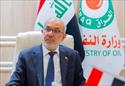
Iraqi Oil Minister Basim Khudair said on Wednesday that a consortium of US-based TI Capital and Chevron, as well as Qatar’s UCC, will construct a strategic oil pipeline from Basra to Fishkhabur. He added the new Basra-Fishkhabur oil pipeline is estimated to cost no more than US$15 billion.
In a statement to the state-run news agency (INA), Khudair explained that the project is a network of pipelines that will be extended to the Turkish port of Ceyhan and the Syrian port of Baniyas.
The pipeline network will provide the country with additional export outlets on the Mediterranean, significantly reducing the risks of maritime shipping via the Strait of Hormuz.
Khudair confirmed that Iraq is seeking to establish significant partnerships with major international companies. He noted that the new oil pipelines will provide two additional outlets to enhance export flexibility.
Iraq is attempting to reach major agreements with international oil corporations, which is why American companies have been favored, according to Khudair.
The Iraqi minister noted that Prime Minister Ali al-Zaidi’s recent meeting with US President Donald Trump included important discussions.
Khudair highlighted that a shared understanding exists between Trump and al-Zaidi, who is currently in Washington, to attract international corporations to invest in Iraq.
A country like Iraq, with its vast oil and gas reserves, cannot continue to rely on a single outlet, the Strait of Hormuz, according to Khudair.
“Economic and financial issues were keeping the Iraqi government from completing the pipeline project,” he added.
The Basra-Fishkhabur pipeline project is one of Iraq’s largest strategic energy initiatives, connecting southern oil reserves to the Turkish border.
This massive project provides a critical economic shortcut to reduce Iraq’s reliance on the Strait of Hormuz.
09/08/2026