Egypt to Introduce Extended Producer Responsibility for Packaging Waste
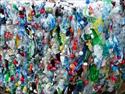
Egypt is preparing to introduce an Extended Producer Responsibility (EPR) system for priority packaging materials as part of efforts to reduce waste sent to landfills, promote recycling and support the transition towards a circular economy.
Local Development and Environment Minister Manal Awad reviewed preparations for implementing the scheme during a meeting with Yasser Abdallah, CEO of the Waste Management Regulatory Authority.
According to the ministry, the electronic platform for the EPR system is ready to be launched through Egypt’s national Waste Information Management System (WIMS).
The platform will allow producers and importers to register and disclose the quantities of packaging materials they place on the Egyptian market. Awad called for simplifying registration procedures to facilitate participation by producers and importers.
The meeting identified the priority packaging materials to be covered during the first phase of implementation following consultations with private-sector representatives and other stakeholders.
Studies examining the value chains of the targeted materials found that the scheme is expected to reduce the proportion of waste sent to landfills, strengthen the circular economy and create new jobs in the recycling sector.
Officials also discussed moving from the legislative framework to detailed implementation mechanisms following the issuance of a prime ministerial decision defining the products covered by the system, producers’ obligations, applicable fees and the responsibilities of relevant authorities.
The meeting also reviewed the national Waste Information Management System, which provides electronic licensing, approvals and permits for activities involving waste and hazardous materials.
The system covers licences and approvals for the collection, transportation, treatment and safe final disposal of hazardous and non-hazardous waste, as well as permits for waste exports and the import of non-hazardous waste used as industrial inputs.
Awad said implementing EPR would support sustainable waste management and Egypt’s transition towards a circular economy while helping the country meet its international commitments on the environmentally sound management of materials and waste.
20/08/2026
Libyan Oil Refinery Completes Phase 1 & Preparations for Phase 2 of Furnace 121H4 Project
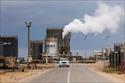
Zawia Oil Refining Company announced that, as part of the ongoing developments in the pre-preparation project for the load area and the upper ring of the radiation zone of Furnace 121H4, the first phase of the project has been completed. This phase included the fabrication of the entire steel structure for the load area, as well as the sandblasting and final painting. The overall project completion rate to date is 45%.
The new load area was relocated to the eastern side of the second optimization unit. This step paves the way for the commencement of the second phase of the project, which represents the critical phase of implementation. This phase includes the construction of the refractory concrete walls and roof of the load area, in addition to the installation and welding of pipe coils.
This achievement comes as part of the Maintenance and Services sector’s adoption of such large-scale, high-quality projects, and its continuous commitment to maintaining the efficiency of operational units, enhancing the reliability of equipment, and raising the level of operational performance of the unit, which contributes to supporting the continuity of operations and achieving the highest levels of readiness and efficiency.
20/08/2026
ADES Resumes Work on All Suspended Offshore Rigs in Saudi Arabia
Saudi-listed offshore drilling contractor ADES Holding Co. has received resumption notices for all of its temporarily suspended offshore rigs in the Kingdom after operations at some facilities were affected by regional conflict.
In a statement, ADES said the resumption notices reflect the sustained strength of the company’s offshore market fundamentals, with contracted jackup utilization holding at around 90 percent and day rates remaining firm.
The update comes amid prolonged geopolitical tensions in the region, where conflict involving Israel, the US, and Iran has disrupted energy operations and raised concerns over the security of key supply routes, including the Strait of Hormuz.
In March, CEO Mohamed Farouk told Asharq TV that ADES had suspended operations at 10 rigs in the GCC region because of the conflict, adding that the interruptions were expected to be temporary.
“We are pleased with the swift resumption of all of our temporarily suspended offshore rigs in Saudi Arabia, which comes in addition to our rigs in Qatar that have already resumed and are back in full operation,” Farouk said in the latest statement.
He further said that this timely return across the region reflected both the encouraging easing of regional tensions and the unwavering commitment of the company’s teams to the highest standards of safety and operational readiness, values that had always defined how ADES operates.
“The safety of our personnel and assets remains, and will always remain, our highest priority, and it is precisely this discipline that has enabled us to preserve the integrity of our operations throughout this period and to be in a position to resume activity so quickly once conditions allowed,” Farouk added.
ADES posts steady earnings
Earlier this month, ADES reported a first-half net profit of SR364.97 million (~US$97.5 million), down 4.64 percent from a year earlier, largely because of the temporary suspension of several offshore rigs.
The company added that the decline was partly offset by robust revenue of SR4.54 billion (~US$1.2 million) in the first half, marking an increase of 49 percent compared to the same period last year.
It also said that it will distribute about SR220.8 million (~US$59 million) in interim cash dividends for the first half of 2026, equivalent to SR0.20 (~45 cents) per share.
Farouk added that the company is maintaining its full-year earnings before interest, taxes, depreciation and amortization guidance in the range of SR4.5 billion (~US$1.2 million) to SR4.87 billion (~US$1.3 million).
He said the guidance was underpinned by the scale and diversification of its 123-rig platform, the continued realization of synergies from the Shelf Drilling acquisition, and supportive momentum across international markets.
In November, ADES Holding completed the acquisition of Shelf Drilling Holding Ltd., helping position the company as a global leader in the shallow-water drilling segment.
Farouk concluded that these developments reinforce ADES’s position as a “Saudi national champion with a global footprint and a trusted partner to leading national and international oil companies.”
20/08/2026
Trade Between Iran & Oman Needs to Sharply Increase: Joint Chamber Head

Trade between Iran and Oman should expand severalfold from its current annual volume of under US$5 billion, given that Iran’s trade with the neighboring United Arab Emirates exceeds US$26 billion, the head of the Iran-Oman Joint Chamber of Commerce said on Tuesday. Jamal Razeghi told a meeting of the provincial government-private sector dialogue council in Kohgiluyeh and Boyer-Ahmad Province that while Iran-UAE trade stood at roughly US$26 billion per year, bilateral trade with Oman had yet to surpass the US$5 billion mark. “Iran-Oman relations have continued unabated since before the Islamic Revolution (1979), but in practice, insufficient attention has been paid to developing trade with this country,” Razeghi said, according to the state-run IRNA news agency.
He said bilateral trade had grown at an annual rate of 30% to 40% over the past three years, but added: “Despite this growth, the absolute value of trade remains low and has stayed below US$5 billion.” Razeghi said the private sector had for years called for diverting a portion of Iran’s trade away from the UAE and toward Oman, but that for various reasons, such a shift had not been permitted. He also outlined disruptions caused by Iran’s heavy reliance on UAE trade routes during the recent conflict. A large share of the country’s trade had been channeled through the UAE’s Jebel Ali port, he said, and when the UAE announced that even Iranian vessels would not be allowed to load or unload cargo there, a significant portion of trade effectively ground to a halt. “This year, in particular, the country’s farmers suffered serious losses in exporting their products, and we also faced major difficulties in importing essential goods,” Razeghi said. “Policymakers should learn from this experience and avoid concentrating the country’s trade on a single destination.”
Iran’s southern ports remain under a US naval blockade imposed by former President Donald Trump in mid-April, part of an effort to pressure Tehran into an agreement following a 40-day US-Israeli war that began in late February. After a several-week pause following the signing of a memorandum of understanding, strikes on Iranian infrastructure resumed in mid-July, and the blockade was also reinstated. Iran has been seeking to diversify its logistics routes to counter growing restrictions on trade corridors, redirecting cargo operations to northern ports as well as to ports in Pakistan, India and Oman after activity at Jebel Ali was disrupted during wartime conditions. - Iran Daily
20/08/2026
Emirates NBD Drives Decarbonisation Shift with Dedicated Transition Finance Framework

Emirates NBD, a leading banking group in the Middle East, North Africa, Türkiye and South Asia (MENATSA) region, has marked a significant milestone in its sustainable finance journey by pioneering the UAE’s first dedicated Transition Finance Framework to support corporate and institutional customers in their transformation to more sustainable business models.
The Transition Finance Framework establishes a clear methodology for identifying, assessing and labelling transition finance activities that contribute to the decarbonisation of high-emitting and hard-to-abate sectors that are complex, capital-intensive, or technologically challenging including manufacturing, mining, power and energy, real estate, transportation and storage, agriculture, and information technology.
Developed with reference to leading international guidance, including the ICMA Climate Transition Finance Handbook, the ICMA Climate Transition Bond Guidelines 2025, and the Loan Market Association Guide to Transition Loan Finance 2025, the Framework supports clients whose activities may not yet qualify as “green”, but who are undertaking credible actions to reduce emissions and transition towards more sustainable business models.
Additionally, Emirates NBD has commissioned DNV Assurance to provide a Second Party Opinion, supporting the credibility and market alignment of the Framework. Corporate and institutional banking customers will benefit from improved access to transition finance solutions, clearer guidance on what types of activities may qualify as transition finance, support for investments linked to emissions reduction, energy efficiency, cleaner technologies and low-carbon business models and alignment with evolving investor, lender and regulatory expectations.
Vijay Bains, Chief Sustainability Officer and Group Head of ESG at Emirates NBD, said: “At Emirates NBD, our goal is to empower our clients with robust, transparent, and innovative transition finance solutions. This new Framework expands our existing and established Sustainable Finance and Sustainability-Linked Loan Financing Bond Frameworks, ensuring we are fully equipped to support the real economy transition across the UAE and the wider region. By providing a consistent internal methodology to assess eligible transition activities and engage clients on credible transition opportunities, the Framework reinforces Emirates NBD’s role as a trusted partner in the region’s shift towards lower-carbon operations. In doing so, this initiative strengthens our commitment to mobilise USD 30 billion in sustainable and transition finance by 2030.”
Emirates NBD supports the UAE Banking Federation’s ambition to mobilise AED1 trillion in sustainable finance by 2030, by setting the bank’s own target of US$30 billion by 2030. By strengthening its sustainable finance platform with a dedicated transition finance approach, Emirates NBD is accelerating efforts to achieve this goal while supporting the UAE’s wider climate and economic ambitions by helping channel capital towards activities that can contribute to decarbonisation, industrial transformation and long-term resilience.
20/08/2026
IMF Notes Egypt’s Arrears Settlement Gains, Stresses Effort to Boost EGPC Inflows

The full settlement of arrears owed to international oil companies, together with higher domestic fuel prices, is expected to support Egypt’s oil and gas production, improve the Egyptian General Petroleum Corporation (EGPC) operating profitability and ease its financial pressures, according to the International Monetary Fund (IMF) report on the results of its seventh review of Egypt’s economic reforms.
The report directly linked payments to international oil companies with renewed activity in the upstream sector. It noted that, according to Egyptian authorities, clearing the arrears has strengthened incentives for international oil companies to restore production and step up exploration, ultimately boosting domestic output.
This connection is particularly significant for Egypt’s energy landscape as it indicates that resolving the debt was never merely a financial measure, but rather a strategic mechanism designed to rebuild trust and compel investors to resume-and accelerate-investment, drilling, and field development, said the report.
Egypt has cleared US$6.2 billion in arrears owed by the EGPC to international oil companies (IOCs) in June 2026 through government-guaranteed loans from international institutions, as stated by the report. The government is now working to prevent new arrears from accumulating.
“The arrears accumulation had curtailed investment, slowed drilling and exploration, and stalled field development — ultimately weighing on domestic oil and gas output,” Karim Badawi, Minister of Petroleum and Mineral Resources, previously lamented.
Despite the settlement, the IMF cautioned that EGPC’s financial position remains weak and that the corporation is still highly leveraged.
EGPC’s financial problems stem from a structural mismatch between its revenues and its obligations. It buys fuel from IOCs or from abroad at dollar-denominated global market rates while selling it locally to government entities -mainly the Ministry of Electricity and Renewable Energy- in Egyptian Pounds at heavily subsidized rates. What exacerbates the problem is that mostly these entities fail to pay EGPC on time or in full. The corporation resorts to borrowing to bridge the revenue gap, burdening itself with huge debt service payments.
The government, noted the report, is required to submit a progress report on EGPC’s viability plan to the Ministry of Finance by end-September 2026. The report will assess progress toward restoring a cash-flow surplus, reducing government guarantees and improving collections, while providing a comprehensive update on EGPC’s financial position.
The authorities’ target is to achieve a positive cash-flow balance for EGPC by FY2025/26, while strengthening profitability and preventing the re-accumulation of arrears.
20/08/2026
Alba Reinforces Bahrainisation with Managerial Appointments
Alba, the world’s largest aluminium smelter on one site, is pleased to announce the recent promotions of S Abbas S Baqer to manager calciner and marine and Ali Aseeri to manager engineering and projects.
Since joining Alba in 1989 as a vocational trainee, Mr Baqer has built an accomplished career across engineering, maintenance and marine operations.
He has held a number of senior leadership positions and was instrumental in the successful delivery of Alba’s Port Upgrade Project, a key enabler of the Line 6 Expansion Project and the company’s long-term growth ambitions.
Mr Aseeri brings over two decades of engineering expertise to this role.
He started his career in Alba’s Engineering Department in 2005, following which he held several key positions, including those of senior engineer and superintendent of engineering.
Throughout his tenure, Mr Aseeri has played a pivotal role in delivering transformative capacity enhancement projects such as Lines 4 and 6 Anode Enlargement Projects and the Upgrades of Gas Treatment Centres 1 through 4.
Commenting on these appointments, Alba’s chief executive officer Ali Al Baqali said: “The promotions of Mr Baqer and Mr Aseeri reflect Alba’s commitment to developing national talent and building a strong leadership pipeline from within. Their appointments demonstrate the depth of capability we’ve cultivated across the organisation through continuous learning, targeted development and meaningful growth opportunities.
As Alba continues to strengthen its position as a global industry leader and expand its international footprint, the ability to develop and empower high-calibre Bahraini talent remains a strategic priority. Both have built distinguished careers at Alba, consistently demonstrating strong performance, leadership and a commitment to excellence. I’m confident that their experience, expertise and dedication will play a pivotal role in advancing Alba’s strategic ambitions and supporting its global growth journey.”
Mr Baqer holds a bachelor of engineering in mechanical engineering from the University of Huddersfield, UK, graduating with first class honours (distinction), and several professional certifications such as Lean Six Sigma Black Belt, Certified Maintenance Planner, and Port Facility Security Officer (PFSO) under the International Ship and Port Facility Security (ISPS) Code.
Mr Aseeri holds a master’s degree in mechanical engineering from the Technical University of Liberec, Czech Republic, an MBA from AGU, and a Project Management Professional (PMP) certification from the Project Management Institute (PMI).
20/08/2026
Egypt's PhPC Fully Achieves Production Targets for FY 2025/26
Pharaonic Petroleum Company (PhPC) achieved 100% of its production target for fiscal year (FY) 2025/26, Hossam Zaki, the company’s Chairman, said, while outlining plans to increase natural gas and condensate production by maximizing the use of existing infrastructure.
The Egyptian company is also preparing to bring the Tort-6 well in the Mediterranean onto production before the end of 2026, with a targeted output of approximately 40 million cubic feet per day (mmcf/d) of natural gas.
This came during an inspection tour of Pharaonic Petroleum Company’s production site in Port Said, made by Karim Badawi, Minister of Petroleum and Mineral Resources. Badawi urged the company to expedite the connection of the offshore Harmattan gas field in the Mediterranean Sea to existing production facilities and assess technical alternatives that could shorten the project’s implementation schedule.
During the meeting, Zaki reviewed the work status of the Harmattan field development project, which targets the production of around 200 mmcf/d of natural gas and 4,400 barrels per day (bbl/d) of condensate.Badawi directed the acceleration of development work at the Harmattan field, seeking to bring the field into production as quickly as possible to support domestic natural gas supplies.
The field will be connected to the Ha’py processing facility through a 50-kilometer gas pipeline, with the Engineering for the Petroleum and Process Industries (Enppi) acting as the general contractor in cooperation with Petrojet and Petroleum Marine Services (PMS).
Harmattan is part of El Burg Offshore concession, which Arcius acquired in November 2025. The concession is operated by Arcius with a 100% interest. Arcius was established as a gas-focused joint venture between bp and XRG, the international investment arm of ADNOC, with the partners targeting gas development opportunities in Egypt and the wider Eastern Mediterranean.
In April 2026, Arcius announced a final investment decision (FID) in collaboration with EGAS, with PhPC acting on behalf of El Burg Offshore Petroleum Company to execute the project. PhPC subsequently awarded the EPCI contract to ENPPI, with PMS and Petrojet participating as subcontractors.
Badawi also highlighted the importance of applying advanced drilling and exploration technologies to improve drilling success rates and maximize the recovery of Egypt’s gas resources. He commended Pharaonic Petroleum’s exploration and field-development plans and called for continued adherence to international safety standards.
Pharaonic Petroleum had previously outlined a US$449 million investment plan for fiscal year 2026/27, with Harmattan identified as a key development project. The company said the field’s initial phase would deliver 150 mmcf/d of gas and 3,300 bbl/d of condensates before reaching the higher production targets through subsequent development.
20/08/2026
Iraqi PM Plans to Double Electricity Output by 2027

Iraq plans to double its electricity production and distribution capacity by 2027, with measures targeting both supply expansion and the elimination of longstanding inefficiencies. Prime Minister Ali al-Zaidi made the announcement during a visit to the Ministry of Electricity, where he chaired a meeting with senior ministry officials. He directed the Minister of Electricity, Ali Saad Wahib, to take the following steps:
- Full maintenance of the 30,000 megawatts currently being produced
- Purchase of at least 10,000 megawatts of imported power from neighbouring countries
- Purchase of 37,000 megawatts of new capacity, comprising 15,000 megawatts from GE, 12,000 megawatts from solar energy, and 10,000 megawatts from thermal sources
Al-Zaidi said 2027 would mark a turning point for Iraq's electricity sector, and that the government was committed to ending delays and halting waste and corruption that had persisted for decades.
20/08/2026
Tehran Hosting Intl. Exhibition of Construction
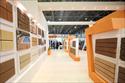
Over 600 domestic and foreign companies participated in the 26th International Exhibition of the Construction Industry at the permanent venue of Tehran International Exhibitions.
According to IRNA, the 26th International Exhibition of the Construction Industry is running during August 18-21 in various sectors, including building materials, equipment and machinery, doors and windows, elevators and escalators, mechanical and electrical installations, smart systems, safety equipment, architecture and modern designs, and knowledge-based products. The exhibition is being held in 20 halls and part of the open spaces of Tehran International Exhibition Center, organized by the Iran Chamber of Cooperatives.
Private sector must participate in decision-making for construction industry: minister
The Minister of Transport and Urban Development, emphasizing the role of the private sector in boosting the construction industry, stated that the government should not replace the private sector and the people in construction. Instead, it should remove obstacles, facilitate processes, and support existing capacities to pave the way for the development of construction and increased public access to housing.
According to IRNA from the Ministry of Transport and Urban Development, Farzaneh Sadegh, speaking on Tuesday at the opening ceremony of the 26th Construction Industry Exhibition, added that over the past months, her ministry has held extensive consultations with private sector activists, including all segments involved in construction, investment, development, contracting, mass housing, and all related chains of the construction industry.
The Minister of Transport and Urban Development emphasized that the private sector is not merely an executor but must participate in decision-making and policymaking.
Sadegh continued that one of the most important outcomes of the ongoing meetings with activists and elites of the construction industry was the establishment of a task force for removing production barriers with maximum participation of the private sector. This task force has been formed under the Supreme Housing Council and, with the emphasis of the First Vice President, has been examining issues in the construction sector, particularly housing.
The Minister stated that the conclusions of these reviews will be presented at the first session of the Supreme Housing Council, adding that the country's special conditions, sanctions, and war have exacerbated some problems, but administrative inefficiencies have nothing to do with war or sanctions, and the ministry's utmost effort is to reduce these inefficiencies.
She noted that issues such as insurance, taxes, tolls, facilities, the building permit issuance process, technical regulations, the rules of the Supreme Council of Urban Planning and Architecture, the regulations of the Deputy for Housing and Construction, and the National Building Regulations have been examined in the meetings held.
Amending regulations and facilitating construction
Sadegh stated that issues related to the National Engineering Organization and facilities that could reduce the time for issuing building permits have also been reviewed—issues that have long troubled the private sector and investors seeking to enter the housing sector.
She added that some issues related to cooperatives, mass construction, executors, and supervisors have been resolved through ongoing meetings and cooperation with the National Engineering Organization and the Deputy for Housing and Construction, and some guidelines have been revised and communicated.
The Minister further noted that some other problems, due to their cross-sectoral nature and being beyond the ministry's mandate, required coordination with other bodies, and such coordination has been carried out.
Referring to the country's energy consumption situation and the need to reform construction processes, Sadegh said that one of the most important issues being pursued is the industrialization of construction. "We have always talked about increasing production and the number of constructions, but we have spoken less about reducing costs. If we can reduce construction costs without compromising quality, production will also increase."
She reminded that industrialization has gained attention due to higher speed, lower cost, greater technical sophistication, and higher quality.
The Minister further emphasized that the issue is not just construction costs—operational and maintenance costs of buildings must also be reduced. This matter is being pursued with the cooperation of the private sector and the National Engineering Organization nationwide.
Sadegh then referred to measures taken with the help of the Civil Committee of the parliament for the development of professional leasing, stating that when discussing housing construction and applicants, we should not only consider outright ownership. Given the differences in affordability and needs across provinces and cities, meeting the housing needs of all people is not possible solely through ownership.
She noted that governments have been involved in supportive housing construction for years, and the extent of access for real applicants—including the first to fourth income deciles and young couples—to housing has been examined. Therefore, leasing and professional leasing can address a significant portion of the need for quality housing.
The Minister added that part of this relates to rental supportive housing, and another part to facilitating construction by mass builders, developers, and investors to build housing suited to the capacity of various segments of society, including the middle class.
Sadegh continued that numerous meetings have been held with mass builders, contractors, and developers to facilitate processes within the ministry's mandate. Utilizing the capacity of deteriorated urban textures and urban regeneration with the help of the private sector for the development of professional leasing is also being pursued.
She identified market rental regulation as another important issue, saying that at times of inflationary spikes—which may be caused by factors other than the housing and construction sector—appropriate regulation should be carried out through the development of professional leasing, and the private sector and municipalities can be of great help in this area.
The Minister of Transport and Urban Development, referring to the President's emphasis on the role of the private sector, said that the government's approach is not to replace the private sector. In housing and construction, the government should not step in to build in place of the people and the private sector.
Sadegh added that the government must recognize and support capacities and remove obstacles, and the issues raised ultimately return to removing barriers, supporting, and facilitating processes.
Iran has high capacity in technical and engineering services
Referring to the presence of representatives from various countries at the 26th Construction Industry Exhibition, she said that the region we live in is in dire need of Iran's strong capacities in infrastructure, materials, equipment, and most importantly, technical and engineering services.
The member of the 14th government's cabinet stated that the 26th Construction Industry Exhibition is not just a place to showcase capabilities, but a dialogue platform for developing maximum interactions among countries.
She added that as the Minister of Transport and Urban Development, who participates in joint economic committees with neighboring countries, she has emphasized Iran's capacity in technical and engineering services in these meetings, and in recent trips, private sector activists have been accompanied.
The Minister expressed gratitude to private sector activists, engineers, and Iranian contractors, stating that Iran's engineering and construction capability is such that the world is in awe—to the extent that when a bridge is damaged, Iran's rich engineering knowledge can rebuild it within hours.
Meanwhile, Mohammad Ali Dehghan Dehnavi, the head of the Trade Promotion Organization of Iran, stated in a message to the exhibition that the Tehran Construction Industry Exhibition helps elevate the construction industry in Iran and the region and will lead to the development of construction projects and related equipment.
The message added that the 26th Tehran International Construction Industry Exhibition is a suitable opportunity for construction industry activists to familiarize themselves with the latest technologies, modern construction methods, new building materials, building smartification equipment, mechanical and electrical systems, and specialized engineering services.
Dehghan Dehnavi's message noted that this exhibition is one of the largest in the West Asia and the largest in the country in this field, hosting domestic and foreign visitors every year. Not only do domestic companies have the opportunity to participate, but companies from various countries around the world are also present.
The head of the Trade Promotion Organization added that the Tehran Construction Industry Exhibition helps elevate the construction industry in Iran and the region and will lead to the development of construction projects and related equipment. Companies can introduce their products to new markets and explore the potential for cooperation with foreign companies.
Dehghan Dehnavi added that Iran's construction industry market, due to domestic needs, has high potential for presence and will expand the market for knowledge-based companies. The exhibition aims to introduce the latest achievements, modern technologies, products, and services related to the construction industry and will host manufacturing companies, builders, engineers, architects, consulting engineering firms, and activists in the fields of installations, building materials, and construction equipment.
Another part of the message stated that in recent decades, significant efforts have been made to develop the export of construction products and materials in the country. Iran, with its rich resources of raw materials, cheap energy, low-cost labor, and high quality of manufactured products, has achieved a significant competitive advantage in global markets. Neighboring countries such as Iraq, Turkey, and Afghanistan are the largest importers of Iranian building materials, accounting for several million dollars of Iran's exports; this has particular appeal due to geographical proximity, low transportation costs, and favorable customs tariffs in these markets. Also, in the field of steel structures, Iran, with its production of high-quality and competitive steel, has the capacity to export at least one million tons per year, which can bring significant foreign currency revenue to the country.
Dehghan Dehnavi continued that the export of building materials, given its vast potential, can become one of the main sources of foreign currency earnings and a key driver of Iran's economic growth, but this path is not without challenges. Structural barriers and external problems continue to hinder its growth. To turn this opportunity into a major success, we need effective cooperation between the government, trade institutions, and exporters. Additionally, compliance with domestic and international legal requirements is essential for taking steps along this path. - Tehran Times
20/08/2026