Iraq Faces Daily Petrol Shortfall of 4m Litres

Iraq's daily petrol consumption reached approximately 35 million litres on Wednesday, surpassing all previous records, according to the Ministry of Oil's media and government communications office.
The ministry said the shortfall between production and consumption has reached around 4 million litres per day. South Refineries Company (SRC) refineries are operating at full capacity, producing around 30 million litres of petrol per day, but consumption has risen to approximately 34-35 million litres daily.
The ministry attributed the production gap in part to the withdrawal of a foreign company responsible for operating the fluid catalytic cracking (FCC) unit (pictured), citing security concerns. The departure resulted in a loss of 4-5 million litres of high-octane petrol per day. Demand has also been elevated by holidays and religious visits.
Previous peak consumption had not exceeded 32 million litres per day prior to recent regional developments. The ministry said it is managing the shortfall by drawing on available reserves.
08/06/2026
Iran’s Crude Exports Plummet to Lowest in 6 Years
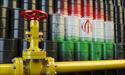
Iranian exports of crude oil and condensate fell to their lowest level in at least six years in May, falling well below 300,000 barrels per day, mainly due to the U.S. naval blockade, according to shipping data and analysts.
The U.S. began enforcing the blockade on April 13, choking Iranian exports as the oil market faces a supply crunch due to Iran's effective closure of the Strait of Hormuz cutting exports from Saudi Arabia, Kuwait, Iraq and the United Arab Emirates.
Iran's exports averaged about 209,000 bpd in May, Vortexa data shows, down sharply from 1.34 million bpd in April and nearly 1.9 million bpd in March.
This marks their lowest level since late 2019 and early 2020, when U.S. President Donald Trump was pursuing a "maximum pressure" campaign against Iran in his first term, Vortexa said.
Iranian officials in New York did not immediately reply to a Reuters request for comment.
"The key drivers appear to be the disruption around the Strait of Hormuz, the U.S. naval blockade targeting vessels entering or departing Iranian ports, and the broader unwillingness of owners, operators, insurers, and counterparties to expose vessels and crews to the current security environment," said Vortexa analyst Claire Jungman.
Data from another firm, Kpler, showed a similar decline, although it pegged May exports slightly higher at 260,000 bpd — still a six-year low.
IRANIAN OIL IN FLOATING STORAGE FALLS
The volume of Iranian oil being stored on ships has been falling as more tankers discharge in China, Kpler data shows.
Of roughly 147 million barrels of Iranian crude and condensate floating in storage, about 67 million barrels are stranded inside the Persian Gulf and Gulf of Oman, Kpler said.
Floating storage volumes have fallen from a recent high of about 190 million barrels in late April.
Iman Nasseri, an analyst at FGE NexantECA, estimated about 55 million barrels of Iranian crude is floating on ships behind the blockade line, less than the Kpler figure.
If the blockade persists for another two months, Iran could effectively run out of oil available to ship to China, its top buyer, Kpler analyst Homayoun Falakshahi said.
China's imports of Iranian crude fell to 1.10 million bpd in May, the lowest since January 2025, according to Kpler. - Zawya
08/06/2026
O-Green Developing Wind Power Pilot in Duqm
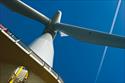
Omani state-backed integrated clean energy platform O-Green is developing a pilot wind farm in the Duqm Special Economic Zone (SEZ) featuring a small cluster of wind turbines, each with a capacity of 9.6 MW — currently the largest individual turbines of their kind in the Middle East.
Formally known as the Duqm North and South Wind Project (DNSWP), the pilot farm will comprise six wind turbine generators with a total installed capacity of 58 MW. Planned for deployment across two sites within the SEZ, the project is expected to generate around 190 gigawatt-hours of electricity annually, contributing to the decarbonisation of a wind turbine manufacturing plant currently being developed by O-Green in Duqm.
Significantly, the pilot wind farm forms part of a broader portfolio of clean energy projects exceeding 11 GW of solar and wind generation capacity, as well as 4.5 gigawatt-hours of battery energy storage capacity, in various stages of planning and development across Oman, the GCC, Africa and Europe. To date, the company has secured more than 3.3 GW of generation capacity and 2.4 gigawatt-hours of storage capacity.
Among the company’s most notable projects currently under implementation is a 2.7 GW round-the-clock renewable energy project combining solar, wind and battery energy storage systems for deployment in Duqm and Mahout in the Sultanate of Oman. A long-term Power Purchase Agreement (PPA) for the project was signed recently with Nama Power and Water Procurement Company (PWP), Oman’s sole buyer of power and water output.
The company is also implementing a 93 MW solar power plant in Suhar Industrial City in strategic partnership with the Public Establishment for Industrial Estates (Madayn). The project will provide clean energy to more than 200 industrial facilities, with commercial operations expected to commence in September.
Also in Oman, O-Green is developing a first-of-its-kind wind turbine manufacturing plant at the Duqm SEZ. Phase 1 of the facility, currently in the early stages of development, will focus on the production of multi-megawatt-class turbines based on technology licensed from Shanghai Electric Group, a major player in China’s clean energy equipment manufacturing sector.
In Botswana, a partnership between O-Green and Botswana Power Corporation is developing a 500 MW solar PV plant in Maun as part of a broader bilateral cooperation initiative targeting the development of projects with a combined capacity of up to 3,000 MW.
As part of its broader business portfolio, O-Green is also focused on the development of next-generation sustainable digital infrastructure, including AI-enabled, cloud and hyperscale data centres powered by dependable, competitively priced renewable energy in Oman and Europe.
Founded in 2025, O-Green represents a partnership between OQ Alternative Energy — part of OQ Group — and Naqaa Sustainable Energy, a state-owned energy company.
08/06/2026
IEA: Oil Inventories Could Hit Record Low Levels If Stock Draws Continue

Global oil inventories could hit critical or historically low levels just ahead of the peak summer demand period if stock draws continue at their current pace, Reuters quoted the head of the International Energy Agency's oil industry and markets division as saying.
"We're seeing stock draws continuing into the summer, and with the possibility or the likelihood that we reach critical levels or historical low levels just ahead of the peak summer demand," Toril Bosoni said.
Meanwhile, an IEA report earlier said the far-reaching effects of the conflict in the Middle East are prompting countries and companies to rethink energy investment strategies in response to heightened concerns over energy security and the reliability of trade flows, according to a new IEA report.
The 2026 edition of the IEA’s annual World Energy Investment report highlights that the current energy crisis, stemming from the effective closure of the Strait of Hormuz, is changing risk perceptions and bolstering moves towards greater diversification.
Coming just a few years after the energy crisis centred around Russia’s invasion of Ukraine in 2022, today’s supply shock is expected to leave a lasting imprint on future investment priorities, particularly in Asia and the Middle East, where the impacts of the disruptions to shipping flows through the Strait of Hormuz have been felt most acutely.
“We are in the midst of the largest energy security crisis the world has ever faced – and I believe this will reshape investment strategies globally, with parallels to the major changes the energy world witnessed after the oil shocks of the 1970s,” said IEA Executive Director Fatih Birol.
“We are already seeing intensified efforts by both producer and consumer countries to diversify trade routes and energy sources – such as advancing new pipelines and other supply infrastructure, on the one hand, and turning more to domestically available resources, on the other. These range from renewables and nuclear to coal, oil and gas, in some cases – as well as broader measures to strengthen electricity systems, expand electrification and accelerate energy efficiency.”
The report projects that global energy investment will reach US$3.4 trillion in 2026, a slight increase year-on-year. Around US$2.2 trillion is expected to go to grids, storage, low-emissions fuels, nuclear, renewables, efficiency and electrification in 2026, while around US$1.2 trillion is set to be invested in oil, natural gas and coal.
Despite higher oil prices, oil investment is expected to decline for a third consecutive year in 2026, falling below US$500 billion. The report finds that uncertainty over the duration of the price spike, long project lead times, supply chain constraints and tighter offshore rig markets are limiting near-term spending responses outside the Middle East. At the same time, natural gas investment is projected to rise to US$330 billion, the highest level in a decade, supported by a wave of new LNG export projects, particularly in the United States and Qatar.
The report highlights growing interest among fuel-importing countries in energy sources available domestically including renewables, nuclear power and, in some cases, coal. Investment in renewable power projects is expected to total around US$665 billion in 2026, with US$365 billion going toward solar alone. While annual investment growth in renewables has moderated following several years of rapid expansion, low-emissions sources still account for more than 70% of total power generation investment globally. Nuclear investment is continuing its resurgence, exceeding US$80 billion annually, with close to 80 gigawatts of new nuclear capacity under construction across 15 countries.
08/06/2026
Omani, Belarusian Companies Ink Key Agreements

Seven memoranda of understanding (MoUs) were signed during the Oman–Belarus Business Forum, held in the Belarusian capital, Minsk. The signing took place on the sidelines of a visit by an Omani trade delegation to the Republic of Belarus.
The MoUs, signed between Omani and Belarusian companies, cover food security, the development of artificial intelligence (AI) prototypes for the water, agriculture and soil sectors, knowledge transfer, joint packaging, manufacturing expertise transfer, urban planning infrastructure, smart city solutions, and geographic information systems (GIS).
Dr Saud Hamoud Al Habsi, Minister of Agriculture, Fisheries and Water Resources, said Oman places great importance on enhancing investment in the food security sector through the ministry’s strategic investment programme, which has become one of the main drivers of growth in agriculture, fisheries and food industries. He noted that under the programme within the Tenth Five-Year Plan, 493 investment projects have been implemented with a total value of RO1.8bn, equivalent to US$4.7bn.
In his address at the forum, the minister emphasised Oman’s keenness to enhance cooperation with Belarus in agriculture, food security, food industries and innovation, calling for expanded technical and investment cooperation between the two countries to strengthen food security and bilateral partnership.
He highlighted the importance of exchanging expertise and benefiting from successful experiences in developing the agricultural sector and deploying modern technologies, underscoring Oman’s efforts to develop agriculture, fisheries and water resources as part of its sustainable development agenda.
Maxim Ryzhenkov, Minister of Foreign Affairs of the Republic of Belarus, noted in his speech the joint action plan between the two sides and the follow-up measures arising from reciprocal visits by the leaderships of both countries. He also highlighted the importance of participation from the agriculture, food security and information technology sectors, and the potential to expand cooperation to include petrochemicals, trade, infrastructure and logistics.
Yuri Gorlov, Minister of Agriculture and Food of the Republic of Belarus, emphasised the importance of Omani–Belarusian relations, particularly with the commencement of exports of several Belarusian agricultural products to the Sultanate of Oman.
He also praised Oman’s competitive advantages, which could help attract investments from Belarusian companies, as well as the high quality of Omani products showcased at the Belagro 2026 exhibition currently being held in Minsk.
Meanwhile, Faisal Abdullah Al Rowas, Chairman of the Board of Directors of the Oman Chamber of Commerce and Industry (OCCI) and head of the Omani trade delegation, said the forum reflects the shared commitment of both sides to transforming strong bilateral relations into practical economic partnerships. He noted that it follows the success of the Oman–Belarus Business Forum held in Muscat last April, which helped strengthen ties between the private sectors of both countries.
On the sidelines of the forum, bilateral meetings were held between representatives of companies and institutions from both sides to develop new commercial and investment partnerships, helping to expand trade and strengthen economic relations between the Sultanate of Oman and the Republic of Belarus.
08/06/2026