Iranian Free Trade Zone Emerging as Industrial, Export & Tourism Hub
Iran's Aras Free Trade Zone has seen the inauguration of 22 development, industrial, and tourism projects, approval of dozens of major investment plans, and signing of strategic memorandums of understanding over the past month, which signals the region's transition into a production, export, and tourism hub in the country's northwest. The zone’s development strategy emphasizes infrastructure, industrialization, and the expansion of modern services.
According to ILNA, the past month was particularly dynamic for the Aras Free Zone Organization, ranging from the commissioning of multi-trillion-rial projects to the approval of 67 investment plans valued at IRR 100 trillion (US$62.5 million) by the zone's economic commission. The area is consolidating a new identity as a production-oriented, export-driven region underpinned by modern infrastructure. The most significant milestone was the inauguration of 22 projects commissioned by President Masoud Pezeshkian, covering industrial units, service infrastructure, and tourism initiatives, which officials say will create substantial direct and indirect employment.
Industrial projects included the launch of a brake pad manufacturing company and a textile company, reflecting a focus on completing production chains and reducing import dependency. In tourism, the opening of a hotel expands the region's accommodation capacity. Simultaneously, construction began on the widening and upgrading of the road to Silgerd village, highlighting attention to access infrastructure and connecting peripheral areas with Aras’s economic core, a move expected to reduce logistics and transportation costs. Among the notable developments, the approval of 67 investment plans over the past 10 months could, if implemented, transform the region's production structure. This level of investment underscores Aras's shift from attracting small-scale capital to hosting large-scale, driving projects. Regional managers emphasize consolidating the zone’s industrial and production-oriented position, aiming to make Aras a northwest industrial hub and a bridge connecting domestic production to regional markets. Regulatory announcements on warehouse organization and enforcement discipline also indicate policymakers' efforts to improve transparency and efficiency in supply chains and trade.
Cooperation with CIS
The zone’s recent activities also included initiatives beyond physical development. Officials proposed “readiness to redefine Iran's economic cooperation with CIS countries,” reflecting a cross-border perspective that leverages Aras’s strategic location near Armenia and access to the Eurasian market to enhance non-oil exports. A memorandum of understanding for developing digital infrastructure and industrial marketing represents another step toward smartening services and facilitating producers' access to markets, which could boost enterprise productivity and reduce transaction costs. In tourism, the launch of a credit card for visitors illustrates innovative financial tools to stimulate demand and increase tourist retention. Local festivals and cultural events further strengthen Aras’s brand as a tourism destination, gradually solidifying its position among northwest Iran’s destinations. Overall, Aras Free Zone is advancing on three parallel tracks: developing infrastructure and projects, deepening industrialization and attracting major investments, and enhancing tourism with innovative services. - Iran Daily
25/02/2026
Iran Seeks to Establish Goods Transport Corridor from Kermanshah to Iraq’s Baghdad: VP
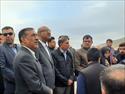
Vice President for Executive Affairs Mohammad-Jafar Qaempanah says Iran is seriously pursuing the construction of a railway linking the cities of Kermanshah and Khosravi, with the ultimate goal of establishing an active international corridor for goods transportation.
Qaempanah made the remarks on Tuesday during a field visit to various sections of the railway project stretching from Kermanshah in western Iran to the border city of Khosravi near Iraq.
The Kermanshah–Khosravi railway plays an important role in completing Iran’s east–west transport corridor, the vice president said. He added that the plan is to finalize the route to the Khosravi border while the Iraqi government simultaneously completes the Baghdad–Khanaqin–Khosravi railway segment, paving the way for the creation of an active international corridor in the region.
He noted that the railway would create significant capacity for transporting goods from northwestern Iran — and even neighboring countries — to Iraq and vice versa, and could therefore play a major role in the economic development of Kermanshah Province.
The senior official also said that, given the project’s national importance as a key infrastructure initiative in western Iran, efforts are underway to allocate additional funding to accelerate its completion. - IRNA
25/02/2026
ICMA Signs MoU with Bahrain-Based IIFM
The International Islamic Financial Market (IIFM), a Bahrain-based standard-setting body, and the International Capital Market Association (ICMA) have announced the signing of a Memorandum of Understanding (MOU) and the formal commencement of their joint initiative to develop a global standardised documentation framework for Shari’ah-compliant repurchase agreement (Repo). The project is officially titled the IIFM/ICMA Islamic Repo (I’aadat Al Shira’a) Master Agreement.
This landmark initiative addresses long-standing liquidity management challenges in Islamic finance by replacing fragmented practices with a unified, Shari’ah-compliant, and robust operational standard. The collaboration leverages ICMA’s extensive experience with the Global Master Repurchase Agreement (GMRA) and IIFM’s specialised expertise in Shari’ah-compliant standard-setting. Yusuf Battiwala, Partner at Norton Rose Fulbright has been appointed as Legal Counsel for the project.
The standardisation project is designed to enhance market liquidity by providing Islamic financial institutions worldwide with reliable tools for short-term funding, while simultaneously reducing operational costs and Shari’ah complexities.
Dr. Ahmed Rufai, Acting CEO of IIFM said: "We are delighted to partner with ICMA to bring greater standardisation, harmonisation and transparency to the Islamic repo market. By combining ICMA's global expertise in Repo with IIFM’s Shari’ah leadership, we are creating a framework that facilitates efficient liquidity management and strengthens the integration of Islamic finance within global capital markets. This project is a cornerstone of our strategic vision, providing the legal certainty and infrastructure necessary for a more transparent, efficient, and interconnected Islamic financial future."
Mr. Bryan Pascoe, Chief Executive of ICMA stated: “Repo is a cornerstone of the global financial market and an essential tool for firms’ liquidity and risk management. By partnering with IIFM to develop a globally standardised, Shari’ah-compliant master agreement, we aim to help with extending the core benefits of repo to the Islamic Finance market, bringing greater clarity, legal certainty and operational efficiency to Islamic repo activity across key markets. This will support Islamic banks and other market participants in managing short-term funding more effectively, and it will strengthen the resilience and connectivity of local capital markets as they continue to deepen and internationalise.”
Following the completion of the drafting phase, the standards will be supported by an explanatory memorandum to assist market participants in seamless implementation. We invite ICMA members to contact us if they have any questions or would like to get involved.
25/02/2026
IN2 Joins Iraq Britain Business Council

IN2, an international strategic communications and research agency, has joined the Iraq Britain Business Council (IBBC). The company said the move strengthens its engagement with Iraq's business and investment community, highlighting its operational presence in Erbil and Baghdad alongside offices in London and Dubai.
Founded more than a decade ago, IN2 has worked with the Government of Iraq on communications initiatives including community engagement, digital platforms, countering disinformation and promoting digital safety.
Paul Tilley MBE, MD and Founder IN2 said: "Our membership in the IBBC is a reinforcement of our decade-long promise to the Iraqi people. By combining our deep Erbil-based expertise with our strategic hubs in London and Dubai, we provide a seamless 'Tri-Hub' model. This ensures British and international partners can navigate Iraq with confidence, backed by data-driven insights and genuine local trust."
Christophe Michels, IBBC MD said: "We welcome IN2 into our Council as their expertise further extends IBBC's membership capability in and beyond Iraq. It's instructive to note how high tech capabilities are coming from UK and integrating into Iraq's business landscape to modernize and enrich the Iraqi market as IN2 offer a model example."
25/02/2026
UNDP to Support Iraq in Tackling Hazardous Pollutants
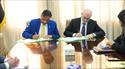
Iraq's Minister of Environment, Dr Helo Al-Askari, has signed an implementation agreement with the United Nations Development Programme (UNDP) to launch a multi-year project on the integrated management of persistent organic pollutants (POPs) and the assessment of chemically contaminated sites.
The project will update Iraq's obligations under the Stockholm Convention on Persistent Organic Pollutants, conduct nationwide surveys on hazardous chemicals including pesticides and PCBs, and assess contaminated sites, particularly in provinces previously affected by ISIS.
It also includes inspection of pesticide warehouses and contaminated transformer oils, safe disposal of hazardous materials, laboratory upgrades, and institutional capacity building.
The ministry said the initiative aims to reduce long-term environmental and health risks while strengthening Iraq's compliance with international environmental standards.
25/02/2026
MRMIA Updates Egyptian Minister on Nationwide Airborne Geophysical Survey Plan

Minister of Petroleum and Mineral Resources, Karim Badawi, held a meeting with the Board of Directors of the Mineral Resources and Mining Industries Authority (MRMIA), chaired by Yasser Ramadan, to discuss the launch of the nationwide airborne geophysical survey project.
The meeting also focused on aligning the Authority’s operational roadmaps with its new status as an economic entity. Officials briefed Badawi on the developments in negotiations for new gold and mineral investments, and in the implementation of recently issued mining and exploitation licenses.
The meeting shed light on the progress of existing agreements between Egyptian and international companies to maximise value-added industries, particularly in phosphate ore. This aligns with the Ministry’s focus on facilitating investment in the mining sector and increasing the economic return from mineral resources.
The Minister emphasized the importance of full coordination among all board members and achieving integration between representatives of the various ministries and entities to develop a strategy for the optimal utilization of Egypt’s mineral resources, directing that board meetings be held regularly.
In 2025, the Industry Committee of the Egyptian Parliament ratified a draft law to transition the Egyptian Mineral Resources Authority (EMRA) into an independent economic entity under the name MRMIA. This legislative approval followed extensive consultations with representatives from the Ministries of Finance, Industry, Petroleum, and Justice.
Following the law amendment, Badawi announced during the Egypt Mining Forum 2025 that the MRMIA will launch its first airborne geophysical survey in decades.
“The revamped authority now possesses the capability to carry out comprehensive aerial surveys and process the necessary geological data to attract new investments,” said Badawi.
25/02/2026
Britain Sanctions NZ Insurer over Iran & Russia Oil Trade
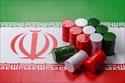
Britain on Tuesday sanctioned Maritime Mutual, the New Zealand-based marine insurer that was the subject of a Reuters special report into how it had helped in the trade of tens of billions of dollars of Iranian and Russian oil.
"(Maritime Mutual) is or has been involved in obtaining a benefit from or supporting the Government of Russia by carrying on business in a sector of strategic significance to the Government of Russia, namely the Russian energy sector," the British Government said in a statement.
Reuters reported in October that Maritime Mutual had insured vessels in what's known as the shadow fleet – hundreds of oil tankers owned by different firms that transport sanctioned cargoes from countries such as Iran, Russia and Venezuela, concealing their trade with fake locations, documents and names.
The company had insured at some point almost one in six of the shadow fleet tankers sanctioned by Western governments, including the US, European Union and Britain, Reuters found.
The British sanctions imposed on Maritime Mutual Insurance Association, the company's main business based in Auckland, New Zealand, include an asset freeze and director disqualification. Maritime Mutual Association Limited, an affiliate in Gibraltar, was also sanctioned.
The UK Treasury issued a licence, which expires on April 9, allowing for the winding down of insurance policies written by Maritime Mutual entities and their subsidiaries before the sanctions announcement.
"The Board of Maritime Mutual Insurance Association (MMIA) strongly disagrees with the UK Foreign, Commonwealth Development Office's (FCDO) decision to designate Maritime Mutual Insurance Association (NZ) and Maritime Mutual Association on the UK's Russia sanctions list," a spokesperson for the company said in an email to Reuters.
"We are considering all our options." The spokesperson reiterated previous statements that Maritime Mutual and its affiliates do not provide cover to any vessel within the shadow fleet or to vessels carrying oil and associated products originating from Russia.
The person said that any vessel carrying MMIA insurance that is subsequently listed within one of these categories has its insurance cancelled.
"The government is incorrect in its assertation that MMIA is involved in obtaining a benefit from or supporting the Government of Russia by carrying on business in a sector of strategic significance to the Government of Russia, namely the Russian energy sector," the spokesperson said.
The sanctions against Maritime Mutual on Tuesday are part of a package of nearly 300 measures that Britain said was its largest set of penalties since Russia's full-scale invasion of Ukraine in 2022.
"The UK has today taken decisive action to disrupt the critical financing, military equipment and revenue streams that sustain Russia's aggression," foreign minister Yvette Cooper said in a statement. - Baird Maritime
25/02/2026
Egypt Accounts for 19% of Global Date Output

Egypt has emerged as the world’s largest producer of dates, generating around 2 million tonnes annually from more than 24 million date palms, according to the Ministry of Agriculture and Land Reclamation.
The government is seeking to further strengthen the sector by expanding the cultivation of high-value export varieties, the Egyptian Cabinet said, noting that more than 200 facilities — including processing plants and packing centers — support the industry. Many of these facilities have undergone recent upgrades through combined public and private investment.
Global demand for dates is rising steadily. According to market research firm Mordor Intelligence, the global dates market is projected to grow from about US$29.33 billion in 2025 to approximately US$44.07 billion by 2031.
Growth is being driven by increasing consumer preference for natural sweeteners, health-oriented diets, and improved cold-chain infrastructure that supports broader distribution and exports.
Egypt’s date exports have recorded significant growth, supported by quality improvements and successful efforts to access new markets across Europe, Asia, and Africa, the Cabinet statement said.
The release highlighted contributions from the UAE, which helped rehabilitate the date factory in Siwa Oasis at a cost of roughly 14 million Egyptian pounds (US$298,000), renovated and upgraded the date complex in El-Kharga in the New Valley for about 17 million pounds (US$360,000), and established a date cooling complex in the Western Desert oases with a storage capacity of 4,000 tonnes. These investments have helped enhance efficiency across the production chain.
Further expansion is underway through the development of specialized industrial complexes for dates in key industrial hubs, including Sadat City, Borg El Arab, 10th of Ramadan City, and 6th of October City.
Agriculture and Land Reclamation Minister Alaa Farouk said Egypt accounts for approximately 19 percent of global date production, reiterating plans to focus on export-oriented varieties with higher added value.
Speaking during a tour of the sixth Cairo Date Festival at the Agricultural Museum in Dokki, Farouk emphasized the need to improve post-harvest systems such as sorting, grading, and packaging to ensure compliance with international quality standards.
He also urged research institutions and agricultural faculties to accelerate innovation in disease-resistant varieties and adopt smart farming technologies to address climate change and pest-related challenges.
Matrouh Gov. Maj. Gen. Khaled Shoaib underscored the importance of coordination between the agriculture ministry and major palm-growing governorates to boost production and enhance value through processing and packaging.
Cairo Gov. Ibrahim Saber said exhibitions such as the Cairo Date Festival play a key role in supporting local producers, expanding marketing channels, and stimulating economic activity, particularly for small and medium-sized enterprises, while ensuring the availability of high-quality products at affordable prices ahead of Ramadan.
25/02/2026
Iraq Improves Ranking in Corruption Perceptions Index
Transparency International has said that Iraq has improved its ranking and score in the global Corruption Perceptions Index (CPI) for 2025.
From a total of 182 countries, Iraq came in at number 136, up 4 places on the previous year.
And from a score of 16 in 2013, 2014 and 2015, Iraq has gradually but steadily improved to the current score of 28.
This result puts it on equal ranking with Pakistan, Mali and Bolivia.
Denmark again took first place, with South Sudan and Somalia sharing last place.
The Corruption Perceptions Index ranks countries and territories by their perceived levels of public sector corruption according to experts and business people.
25/02/2026
QatarEnergy Celebrates New Energy Graduates
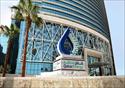
QatarEnergy celebrated the graduation of a new group of Qatari nationals who have completed their academic studies and vocational programmes and have joined QatarEnergy and other energy sector companies.
The energy sector graduates have commenced working with QatarEnergy, QatarEnergy LNG, North Oil Company, ORYX GTL, Qatar Fertiliser Company (QAFCO), Qatar Petrochemical Company (QAPCO), Qatar Chemical Company (Q-Chem), Shell Qatar, Dolphin Energy, and Woqod.
Saad Al-Kaabi, the Minister of State for Energy Affairs, the President and CEO of QatarEnergy, congratulated the graduates on this achievement and encouraged them to seize this unique opportunity to achieve greater personal and professional growth and success.
He said to the graduates: “You are the future, and this is your opportunity to be the next generation of leaders that will take Qatar’s energy sector forward,” and asserted the importance of working as a one team that places Qatar’s progress and prosperity as its top priority.
“We are embarking on new stage of growth that will extend our global leadership in the energy industry. We are more than doubling our LNG production to 142 million tonnes per annum in Qatar, which will become 160 million with the addition of production from our Golden Pass LNG project in the United States. This growth becomes even more important as we look at the strategic expansion in the petrochemical sector, increasing our production capacity of polymers, urea fertilisers, condensates, liquefied petroleum gas, and helium,” added the Minister.
Al-Kaabi wished the graduates the best of success as they take their position across Qatar’s energy sector and thanked their parents and families for the support they provided.
He extended his gratitude to all those involved in the education and training programmes in QatarEnergy and its affiliates for their efforts in supporting the students and following up on their progress.
This year’s graduates carry bachelor’s degrees, diplomas, and technician certificates and have graduated from educational institutions in Qatar, the US, and the UK.
25/02/2026
Details on Libya’s Oil Exploration Licenses Awarded to Foreign Firms
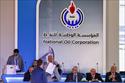
Libya has awarded oil exploration and production licenses to several major international energy companies, marking the first time in 17 years that the country has opened its oil sector to foreign investors.
The announcement came during a National Oil Corporation (NOC) ceremony in Tripoli last week, attended by Prime Minister Abdul Hamid Dbeibah, senior government officials, diplomats and representatives from the energy industry.
Among the companies awarded licenses were Chevron (USA), Repsol (Spain) in partnership with Turkish Petroleum, Italy’s Eni in a consortium with QE, Hungary’s MOL and Nigeria’s Aiteo. The firms will now have the opportunity to explore both onshore and offshore blocks across Libya, a country whose oil sector has been largely dormant since 2008.
Before this round, the NOC had actively worked to revive Libya’s oil sector, launching a global bidding process at the beginning of 2025. The initiative offered investment opportunities in 20 exploration blocks, including 9 offshore sites and 11 onshore areas. Comprehensive seismic surveys and technical studies were conducted in the areas to provide clear data for companies interested in participating in the bidding process.
Speaking at the ceremony, NOC Chairman Engineer Masoud Suleman highlighted the significance of the licensing round, saying it is expected to double Libya’s crude oil production, which reached a 12-year high of 1.37 million barrels per day in 2025.
“He noted that this achievement will lead to an economic revival that aims to steer the country toward stability and prosperity, while also safeguarding Libya’s crude oil reserves for future generations,” said NOC in a statement, seen by The Eastleigh Voice.
Further, Masoud emphasised that attracting major international companies to invest in Libya is a key part of the government’s “Return to Life” project, which seeks to rebuild the country’s institutions and economy after years of instability.
He similarly described the success of this licensing round as “a victory in restoring the world’s confidence in Libya’s ability to recover and develop its institutions in line with the rapid global developments in the energy sector.”
“The success of this round was not limited to the number and size of the companies that secured investment opportunities, but represents a broader achievement in demonstrating Libya’s readiness to engage with global energy markets,” Masoud said, according to the statement.
25/02/2026
IEA Director Says Oil Demand Growth under 1 Million bpd, Expects Substantial Surplus
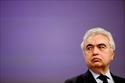
International Energy Agency Director Fatih Birol said on Thursday that oil demand growth is less than one million barrels per day and that a substantial surplus was expected.
He said that it is up to OPEC+ countries to decide what they are going to do "but given the demand being less than one million barrels per day growth, we expect a substantial surplus with substantial production coming from the American quintet: the US, Canada, Brazil, Argentina, and Guyana."
Birol also said the agency is entering the final phases of India becoming a full IEA member.
25/02/2026