Iran Opens 16th Cold Plasma Clinic

Iran's 16th cold plasma-based wound treatment clinic opened Sunday in Firuzabad, Fars Province, in the presence of the vice president and head of the Atomic Energy Organization of Iran (AEOI).
According to IRNA, wound treatment at Hazrat-e Qaem Hospital uses modern scientific methods and international equipment based on cold plasma technology. Devices used at the clinic feature the latest global technologies and were supplied and installed in cooperation with the Atomic Energy Organization of Iran.
Mohammad Eslami, the AEOI chief, said 1.5 million people across the country benefit from radiopharmaceutical services. Eslami also inaugurated a cold plasma wound treatment clinic at Shohaday-e Khalij-e Fars Hospital in Bushehr on Saturday morning, and another cold plasma clinic became operational in Bandar Ganaveh.
Speaking to reporters at the ceremony, he said, "Today the 14th and 15th cold plasma wound treatment centers in Bushehr Province are being inaugurated, which is an important step in developing novel medical services in the country," Mehr news agency reported.
Referring to the development of new technologies in chronic wound treatment, the vice president said the AEOI is active in the medical field across several areas using advanced technologies, and one area pursued with greater momentum over the past two years has been the use of plasma technology in treatment.
"In this framework, two areas have been activated in particular. First, cancer treatment, which with successful results is undergoing clinical stages and will soon expand nationwide with cooperation of the Ministry of Health, and Medical Education," he said.
"The second area is chronic wound treatment. Many families face the problem of chronic wounds, especially diabetic foot ulcers, and fortunately with development of this technology, effective and promising results have been achieved."
With the expansion of facilities and capacity, authorities are seeking to turn the clinics into regional specialized hubs providing services to other areas as well, he added. Referring to capacities in radiation therapy and radiopharmaceuticals, Eslami said, “This field is among novel treatment methods in the world and advanced countries have also made extensive investment in it.” - Iran Daily
17/02/2026
Iran’s Steel Exports in 10 Months Announced by ISPA
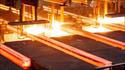
Iran exported US$6.5 billion worth of steel and iron products in the 10 months of the current Iranian calendar year (started March 21, 2025), showing a 22% growth compared to the last year’s corresponding period.
According to the Iranian Steel Producers Association (ISPA), 20 million tons of iron ore pellet and concentrate were exported from the country between March 21, 2025 and January 22, 2026, registering a 68% and 28% growth, respectively compared to the same period last year.
About US$563 million worth of various types of steel sheets has been exported from the country in the first 10 months of the current Iranian calendar year, indicating a 132% growth as compared to the same period last year, ISPA added. - Mehr
17/02/2026
Gas Restrictions Lifted for Iranian Petchem Complexes
The National Petrochemical Company said it has fully lifted gas restrictions for petrochemical complexes, allowing companies to receive feedstock at their required capacity. Hassan Abbaszadeh, the company's CEO, announced the development Sunday on the sidelines of an energy exhibition, according to the NPC. Gas restrictions were lifted Friday, Abbaszadeh said, enabling companies to receive feedstock at required capacity levels.
In October, about 90 million cubic meters of gas were delivered daily to the petrochemical industry, he said, a figure that later dropped to between 50 million and 75 million cubic meters. The return to normal conditions has begun, with companies expected to reach October capacity levels by the end of the week, he added.
Some companies had entered scheduled maintenance due to forecasts of sustained cold weather, Abbaszadeh said, with many units having returned to operation in recent days. Other companies can receive required feedstock as indicated by the National Iranian Gas Co., he said.
About 98% of petrochemical export revenues return to economy
Approximately 98% of petrochemical export revenues have been returned or are in the process of being returned to the economic cycle, Abbaszadeh said. This represents about a 2% increase from the previous year, despite industry challenges, he said.
The simplest and most cost-effective method for ensuring stable gas supply is consumption optimization, Abbaszadeh said, citing the importance of the "Energy Pulse" campaign. About 22% of the industry's installed capacity remains unused due to feedstock limitations, he said.
While solutions such as flare gas recovery, solar power plant development and alternative fuel use are being pursued, energy consumption optimization remains the cheapest and fastest approach, Abbaszadeh said. This year saw fewer days of energy restrictions compared with the previous year, which was managed through measures including liquid fuel use, he added.
Petrochemical companies show confidence in NPC arbitration
Disputes among some petrochemical companies from 2021 through 2024 have been resolved through arbitration rulings ratified by the heads of government branches, Abbaszadeh said.
Companies have been asked to refer disputes to the National Petrochemical Co. as the specialized holding company before pursuing legal action, Abbaszadeh said. Six arbitration cases are currently under review, with companies showing confidence in this specialized mechanism, he said. - Shana
17/02/2026
Low-Sulfur Mazut Supplied to Several Iranian Power Plants
The head of Iran’s Department of Environment said 420 million liters of low-sulfur mazut were allocated this year to four power plants located in residential areas, highlighting efforts to reduce sulfur content in mazut through collaboration between knowledge-based companies, the Department of Environment and the Oil Ministry.
Shina Ansari said Sunday at an air pollution management conference held at the Meteorological Organization that the Clean Air Law, approved by Parliament in 2017, remains the country’s most important upstream legal framework on air pollution. Under Article 2 of the law, the Department of Environment oversees implementation, while more than 20 executive bodies have defined responsibilities for compliance.
She added that, alongside scrapping aging vehicle fleets, electrification programs are also a key measure to reduce air pollution. In addition to deploying electric buses and taxis, a program to replace 20,000 aging motorcycles in Tehran with electric models has begun. The plan is being implemented through financial incentives tied to fuel-saving certificates.
Ansari said power plant fuel is another important issue. While mobile sources are the primary contributors to air pollution in Tehran and Mashhad, stationary sources account for a significant share in cities such as Arak. In 2024, under a resolution by the National Air Pollution Reduction Task Force, low-sulfur mazut was supplied to the Shazand power plant. As a result, the number of unhealthy days caused by sulfur dioxide pollution declined from 27 days in 1402 to five days in 1403.
She said this outcome prompted the Department of Environment to coordinate with the Oil Ministry to supply 420 million liters of low-sulfur mazut this year to four power plants located within residential areas, particularly during periods of severe air pollution. Efforts are also underway to enable mazut desulfurization using knowledge-based companies. The selected project is currently being implemented at one of the country’s refineries.
Ansari also pointed to progress in reducing gas flaring, saying several million cubic meters of flaring have been cut. She added that the Department of Environment, in cooperation with the Oil Ministry, is pursuing further reductions, particularly in oil-producing provinces such as Khuzestan and Bushehr. - Shana
17/02/2026
Iran Heavy Crude Oil Price Falls in January 2026
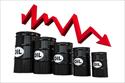
According to OPEC, Iran’s average heavy crude oil price in January 2026 can be seen in the following Table:
|
Average Heavy Crude Oil Price |
|
January 2026 |
US$60.87 |
|
December 2025 |
US$61.44 |
|
From Beginning of 2026 |
US$60.87 |
|
Same Period in 2025 |
US$79.65 |
-
ISNA17/02/2026
Iran Denies Link to Three Oil Tankers Seized by India
A knowledgeable source at the National Iranian Oil Company has denied any connection between three recently detained oil tankers and fleets allegedly linked to Iran.
According to reports provided by Iranian Ministry of Petroleum to domestic media, the three tankers seized by the government of India have no affiliation with the National Iranian Oil Company.
The source stated that neither the cargo nor the vessels themselves are connected to the company.
Hours earlier, some foreign media, citing informed sources, reported that India had detained three tankers sanctioned by the United States earlier this month, claiming they were linked to Iran.
The report also said that Indian authorities had increased maritime surveillance in their waters to prevent what they described as illegal trade.
According to reports from Iran’s oil industry, no disruptions have occurred this month in the movement of fleets involved in the country’s oil export operations. - WANA
17/02/2026
Iran, Russia to Finalize 6 Cooperation Documents at Joint Commission
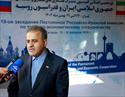
Iran and Russia are set to finalize six separate cooperation documents following negotiations by 16 working groups during the first two days of the 19th Iran-Russia Joint Economic Commission, a senior Iranian oil official said Monday.
Ali-Mohammad Mousavi, deputy oil minister for international affairs and commerce, said the working groups reviewed issues pursued by delegations from both countries over the past year and prepared the final text of the commission’s main document.
“In addition to drafting the commission’s principal document — a comprehensive report containing about 190 clauses — six separate documents will be prepared and signed by various agencies,” Mousavi said on the sidelines of the commission’s opening ceremony. He added that the documents cover areas including standards, health and agriculture, and may be signed before the joint news conference in the presence of the commission’s co-chairs.
Mousavi said energy cooperation remains a central axis of the talks. He cited progress in discussions on Russian gas imports, describing the issue as important for Iran’s goal of becoming a regional energy hub. He also said oil-sector cooperation has been successful, noting that Russian companies have invested in several Iranian oil fields aimed at development and increased production.
The commission is co-chaired by the two countries’ oil and energy ministers, Mousavi said, adding that meetings are held annually, alternating between Russia and Tehran. He said issues are followed throughout the year via visits and in-person, virtual and telephone meetings, with executive decisions taken on a continuing basis.
Among key topics in the current round are Russian investment in phases 2 and 3 of the Bushehr nuclear power plant, and progress on the International North-South rail corridor, Mousavi said. He said the discussions are structured and that all developments are formally recorded in the commission’s documents to facilitate practical and trackable cooperation. - Shana
17/02/2026
19th Iran-Russia Joint Commission Meeting Kicks Off in Tehran
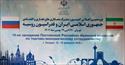
The 19th session of the Iran-Russia Joint Commission on Economic Cooperation began in Tehran on Monday. The three-day meeting, held at the Kooshk International Conference Center, runs through Wednesday and brings together officials to discuss a wide range of bilateral issues.
Discussions are focused on advancing the International North-South Transport Corridor, natural gas deliveries from Russia to Iran, and expanding cooperation in the space industry, nuclear energy, trade and finance, customs, mining, agriculture, health, tourism, science and technology.
The first two days of the commission feature expert-level working group meetings. On the final day, the session’s memorandum of understanding is set to be signed by the co-chairs: Iranian Oil Minister Mohsen Paknejad and Russian Energy Minister Sergei Tsivilev.
According to the Oil Ministry’s news service Shana, the working groups are tasked with reviewing pathways to enhance cooperation, addressing existing challenges, and drafting a roadmap for future collaboration to be included in the final MoU.
The 18th session of the joint commission was held in Moscow in April 2025. Regular meetings of the commission are seen as a key opportunity to deepen the strategic ties between Tehran and Moscow, boosting economic capacity and fostering a regional order based on shared interests. - Shana
17/02/2026
CBO Warns Companies against Using Oman's Currency Images in ADs

The Central Bank of Oman (CBO) has issued a warning to companies against using images of the national currency (Omani rial) for advertising and promotional purposes without prior approval.
In an alert issued on Sunday, the CBO said it had observed that some companies were using images of the Omani currency in marketing materials for advertising and promotional purposes without obtaining the central bank’s authorisation.
The CBO stressed that, in accordance with Article (43) of the Banking Law issued under Royal Decree No 2/2025, the use of the Sultanate of Oman’s currency for any purpose other than as a final settlement legal tender constitutes an infringement of the rights of the Central Bank of Oman.
Accordingly, the CBO directed companies to refrain from using images of the national currency as advertising material.
17/02/2026
Kuwait Morphs into Trusted Energy Partner
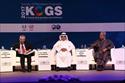
The major turnout for an annual oil and gas conference in Kuwait is a testament to the nation's transformation into a "trusted" international energy partner, His Highness the Prime Minister Sheikh Ahmad Al-Abdullah Al-Ahmad Al-Sabah said on 3 February 2026.
Underlining an existential "economic shift" Kuwait has seen as part of its long-term development plan, "Kuwait Vision 2035," His Highness the Prime Minister told the Kuwait Oil and Gas Show Conference (KOGS) that this strategy is a roadmap towards a more "diverse and sustainable" economy that places grater emphasis on the long-term value of the nation's natural resources.
Such a strategy will revolve around the virtutes of "flexibility and creativity," in a bid to transform Kuwait into a global and competitive "energy hub," he emphasized, citing the crude project "Shaheen" that promises to be the "biggest foreign investment" in the history of the national oil industry, pending its completion in the next few months.
His Highness the Prime Minister went on to say that Kuwait is inviting international oil companies to assist in efforts to develop offshore oil and gas production, which will be instrumental in propping up the operations of Kuwait Oil Company, he explained.
The fifth edition of KOGS is the biggest in the event's history, according to the chief executive of state-owned Kuwait Petroleum Corporation (KPC) Sheikh Nawaf Al-Sabah, citing the impressive turnout the talks have garnered.
KPC is pushing forward with its strategy to raise its refining capacity by 1.4 million barrels per day (bpd) on a national level, while the figure for abroad is at 600,000 bpd, the official told a press conference after the opening of KOGS.
He went on to say that KPC would rely on the completion of marquee oil production projects to bring the strategy to fruition, in addition to leveraging the expertise of international firms into reaching a crude output of "four million bpd by the year 2035," added the official.
In light of growing global energy demand, he said that stability in global markets was necessary to ensure long-term supply, predicting the "pivotal role" that oil will play by providing a quarter of global energy supply by the year 2050 given the expected shortcomings of other sources.
17/02/2026
UNESCO & Japan Launch New Initiative in Iraq's Ninewa
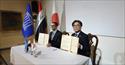
UNESCO and the Government of Japan have launched a project to support children, youth, and communities in West Mosul and Sinjar to overcome the long-lasting impacts of conflict.
The "Reviving the Bridges for Peace in Ninewa: Education and Reconciliation for Conflict-Affected Communities" initiative aims to strengthen social cohesion and peace-building through inclusive education, participatory training for schools and parents, youth empowerment and community engagement.
It will provide safe and supportive learning environments in 10 primary and secondary schools, benefiting over 3,000 children and youth, with a particular focus on returnees and displaced youth (especially adolescent girls).
Full statement from UNESCO:
UNESCO and Japan Launch Initiative to Revive Education and Peace in Ninewa, Iraq
UNESCO and the Government of Japan, today launched the project "Reviving the Bridges for Peace in Ninewa: Education and Reconciliation for Conflict-Affected Communities", aimed at supporting children, youth, and communities in West Mosul and Sinjar to overcome the long-lasting impacts of conflict.
This initiative will strengthen social cohesion and peacebuilding through inclusive education, participatory training for schools and parents, youth empowerment and community engagement. It will provide safe and supportive learning environments in 10 primary and secondary schools, benefiting over 3,000 children and youth, with a particular focus on returnees and displaced youth (especially adolescent girls).
The project builds on UNESCO's ongoing work in Iraq, including previous initiatives supported by Japan and other international partners, leveraging training materials, teacher capacity-building, and youth-led campaigns to foster positive social behavior and prevent violent extremism.
"This project represents a critical step toward restoring trust, rebuilding communities, and empowering young people as agents of peace in Ninewa," said Dr. Alexandros Makarigakis, UNESCO Representative to Iraq. "By combining education, youth empowerment, and community engagement, we aim to lay the foundation for sustainable reconciliation and long-term resilience."
His Excellency Mr. Akira Endo, Ambassador of Japan to Iraq, expressed his appreciation to the longstanding cooperation with UNESCO in supporting Iraqi people, then "I would like to reaffirm the unwavering commitment of the government and people of Japan to standing with the people of Iraq until Iraq overcomes the humanitarian crisis caused by past wars and truly restore its peace and stability," in conclusion.
The initiative aligns with Iraq's National Education Strategy 2022-2032, the 2030 Agenda for Sustainable Development, and the UN Youth Strategy - Youth 2030, emphasizing equitable access to education, human rights, and gender equality.
Through this partnership, UNESCO and Japan reaffirm their shared commitment to fostering inclusive education, strengthening youth leadership, and promoting sustainable peace in post-conflict Iraq.
17/02/2026
Repsol’s Libyan Offshore Bet Adds Risk And Growth Optionality
Repsol is leading a new offshore exploration venture in Libya with MOL Group and Türkiye Petrolleri A.O. The consortium has secured operatorship and major stakes in the first Libyan offshore licensing round in 17 years. The project focuses on offshore blocks in the Mediterranean, expanding Repsol's presence in North African energy production.
This move puts Repsol at the center of a fresh chapter for Libyan offshore exploration, an area that has seen limited new licensing activity for many years. The company already has a footprint across upstream, refining, and marketing, and this project adds another producing region to its exploration portfolio.
For investors, the new Libyan offshore role highlights how Repsol is using partnerships to access resources that may support supply diversification over time. The scale, timing, and eventual production profile are still open questions, so it is worth watching how project terms, drilling plans, and capital commitments develop as the venture progresses.
This Libyan offshore venture puts Repsol in the operator seat with a 40% stake, which gives it more control over how the project is paced and how capital is allocated. For you as an investor, that matters because Repsol is already juggling upstream options, possible corporate actions, and a growing low carbon portfolio. Adding a new offshore block in a higher risk jurisdiction brings resource potential, but also project execution and political risk that need to be weighed against existing commitments.
How This Fits Into The Repsol Narrative
- The O7 offshore block aligns with Repsol’s plan to reshape its upstream portfolio toward scalable projects, and could support future production that helps fund its renewable fuels and green hydrogen ambitions.
- At the same time, increased spending on a Libyan offshore project may compete with capital that could otherwise go to renewables, especially when analysts already highlight high capital needs and regulatory pressure on hydrocarbons.
The potential impact of operating a Libyan offshore asset, including political and project specific risks, is not fully reflected in the existing narrative that focuses more on Alaska, the U.K., and North America.
The Risks and Rewards Investors Should Consider
- Offshore exploration in Libya adds political and operational risk, on top of the 3 existing company risks analysts already flag.
- Heavy upfront capital for offshore work could pressure free cash flow if oil prices or refining margins soften, especially while profit margins are described as volatile.
- Earnings are forecast to grow 16.7% per year, so a successful project could support that growth profile over time.
- The shares are described as trading at 65.4% below one estimate of fair value, so new upstream options may be viewed as additional optionality rather than fully priced in.
What To Watch Going Forward
From here, keep an eye on how Repsol phases spending on O7, any updates to drilling timelines, and whether it revises its broader upstream plans to reflect this Libyan entry. It is also worth tracking how this interacts with any future decision on listing or restructuring the upstream unit, and whether peers such as BP, Eni, or TotalEnergies adjust their own North Africa exposure in ways that shift the competitive balance.
To stay informed on how the latest news impacts the investment narrative for Repsol, head to the community page for Repsol to follow the top community narratives.
This article by Simply Wall St is general in nature. We provide commentary based on historical data and analyst forecasts only using an unbiased methodology and our articles are not intended to be financial advice. It does not constitute a recommendation to buy or sell any stock, and does not take account of your objectives, or your financial situation. We aim to bring you long-term focused analysis driven by fundamental data. Note that our analysis may not factor in the latest price-sensitive company announcements or qualitative material. Simply Wall St has no position in any stocks mentioned.
17/02/2026