Iran to Roll Out 110 Smart Irrigation Projects, Expand Solar Power on Farms

Iran is implementing 110 pilot smart irrigation projects covering about 10,000 hectares nationwide as part of a broader push to boost water efficiency and deploy renewable energy in agriculture, a deputy agriculture minister said.
Safdar Niyazi Shahraki, deputy for water and soil affairs at the Agriculture Ministry, told IRNA the projects, now in their third year, are being carried out across nearly all provinces and will be expanded nationwide once completed.
He said the ministry is also planning to equip around 230,000 electric agricultural wells and nearly 200,000 diesel-powered wells with solar panels, creating what he described as significant capacity for the development of solar energy in rural areas.
Niyazi said the ministry is advancing the use of artificial intelligence in irrigation management, internet-of-things applications on farms, satellite imagery for crop monitoring, national water and soil databases and digital soil mapping, alongside efforts to modernize water transfer networks and develop agricultural decision-support platforms.
He added that subsurface irrigation projects have begun in Khuzestan, Kerman, Khorasan and Ardabil provinces under targets set in Iran’s seven-year development plan, though funding constraints remain a key challenge.
On energy, Niyazi said the government has earmarked 20 trillion tomans, equivalent to about US$400 million, for solar panel deployment in agriculture, with an engineering body designated to oversee implementation. He noted that access to bank financing, originally expected to reach 100 trillion (US$62.89 million), has yet to materialize.
Niyazi said meeting the agriculture-related targets of the development plan – including annual installation of 200,000 hectares of modern irrigation systems and large-scale drainage, canal rehabilitation and soil studies – would require about IRR 1,750 trillion (US$1.1 billion) in funding per year, of which only a limited portion has so far been secured.
With drought intensifying and water resources shrinking, he said improving water-use efficiency in agriculture has become increasingly critical as some agricultural water is diverted to meet drinking water needs. - Tehran Times
12/02/2026
Hitachi Energy Opens New Cairo Office
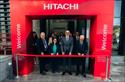
Hitachi Energy has inaugurated a new office in Cairo. Designed to enhance collaboration and efficiency, the facility brings all Egypt-based employees together, enabling closer coordination across teams and stronger engagement with customers and partners.
Built with sustainability at its core, the office incorporates high-performance glazed façades to maximise natural daylight and reduce energy consumption, alongside measures that lower water and environmental impact.
The opening was attended by the Ambassadors of Japan and Sweden to Egypt, a representative from the Swiss Embassy, and Mohamed Hosseiny, Managing Director for Africa at Hitachi Energy, highlighting strong international and local partnerships.
“Egypt plays a pivotal role in Hitachi Energy’s long-term vision for Africa,” said Mohamed Hosseiny, Managing Director for Africa at Hitachi Energy. “This new office is more than a physical expansion. It reflects our continued investment in local talent and operational excellence to deploy our state-of-art technologies that supports sustainable economic growth and energy resilience across the region.”
The Ambassador of Japan to Egypt, Fumio Iwai, congratulated Hitachi Energy on its new Egypt office, emphasising it will serve as a pivotal hub for the company's continued growth across Africa.
He reiterated the Japanese Government's commitment to collaborating closely with the Egyptian government to further enhance the business environment for Japanese companies, including Hitachi and to deepen cooperation with partner nations like Sweden and Switzerland, aiming to contribute to the development of Egypt and Africa.
“It was a pleasure for me to attend the opening of Hitachi Energy’s new office in Cairo,” said Dag Juhlin Dannfelt, Ambassador of Sweden to Egypt. “We congratulate Hitachi Energy on this important milestone, which reflects confidence in Egypt’s energy sector and Sweden’s strong belief in innovation-driven partnerships. Hitachi Energy plays a leading role in delivering clean, secure and resilient energy solutions that support Egypt’s Vision 2030 and the region’s sustainable future.”
12/02/2026
OPEC Production Dips in January on Lower Supply from Nigeria & Libya
OPEC's oil output fell in January due to lower supply from Nigeria and Libya, a Reuters survey found on Monday, which offset increases in members including Venezuela after the U.S. capture of Nicolas Maduro and the ending of an oil blockade.
The Organization of the Petroleum Exporting Countries pumped 28.34 million barrels per day in January, down 60,000 bpd from December's total, the survey showed, with Nigeria posting the largest decline.
OPEC+, comprising OPEC and allies including Russia, in January began a first-quarter pause of its monthly output increases amid concerns of a supply glut.
Many members are running close to capacity limits and some are tasked with extra cuts to compensate for earlier overproduction, which has limited the impact of the increases.
Under an agreement by eight OPEC+ members covering January output, the five of them that are OPEC members - Algeria, Iraq, Kuwait, Saudi Arabia and the UAE - were to keep output unchanged before the effect of compensation cuts totaling 130,000 bpd for Iraq and the UAE.
The survey shows that they increased output by 60,000 bpd month on month, but total output remained below their targets.
Nigeria had OPEC's largest output decline, and Libyan supply also fell as bad weather impacted loadings, the survey found.
Iranian crude supply fell further. Iran is subject to U.S. sanctions that seek to curb its oil exports over its nuclear work, and new measures were announced in January over Tehran's crackdown on protesters.
Among countries with higher output, Iraq exported more from its southern terminals. Venezuelan crude output increased slightly and exports jumped.
Venezuelan production has risen close to 1 million bpd, Reuters reported on Monday, having earlier reported that Venezuelan exports of crude and refined products rose to some 800,000 bpd in January.
The Reuters survey is based on flow data from financial group LSEG, information from other companies that track flows, such as Kpler, and information provided by sources at oil companies, OPEC and consultants.
12/02/2026
Egypt Highlights Mining Reforms, Potential in Africa’s Indaba Conference

The Ministry of Petroleum and Mineral Resources (MoPMR) is participating with a high-level delegation in the activities of Africa’s Mining Indaba 2026 conference, held in Cape Town, South Africa, from February 9th to 12th, where global and African mining leaders converge to shape the future of the sector.
Egypt’s participation in this year’s edition comes within the framework of promoting the new investment climate in the mining sector and showcasing the structural reforms and investment incentives recently implemented by the Ministry. It also aims to highlight legislative amendments designed to streamline procedures and attract major international corporations, as well as medium and small-sized companies, in the field of gold and mineral exploration and exploitation.
Furthermore, the conference serves as an opportunity to strengthen partnerships with African nations where mining has become a major contributor to gross domestic product (GDP), facilitating the exchange of expertise and best practices, as well as to gain insights into various reform and development experiences within the mining sector.
The Egyptian delegation commenced its activities by attending the ministerial symposium on critical and strategic minerals. Held before the official opening of the conference with extensive international participation, the session was inaugurated by Gwede Mantashe, South Africa’s Minister of Mineral and Petroleum Resources.
The symposium aimed to present and discuss visions for mobilizing regional and international efforts to maximize the utilization of these minerals, which are vital for renewable energy projects, technology, electronics, Artificial Intelligence (AI) applications, and the automotive industry. Additionally, the session addressed policies and financing methods for critical mineral extraction projects, as well as overcoming challenges to support the establishment of secure and sustainable supply chains for these essential minerals.
On the sidelines of the conference, the delegation met with Vijay Kumar, CEO of Vedanta Zinc International, where they reviewed available investment opportunities in Egypt’s untapped copper and zinc regions, as these are classified as critical and strategic minerals.
The international company was briefed on Egypt’s plan to conduct a comprehensive aerial geophysical survey of mineral-rich areas. This initiative will provide a modern and accurate database to support investment decision-making and encourage investors. Furthermore, both parties discussed ways to expand cooperation to include manufacturing projects based on zinc and copper ores, aimed at maximizing their added value.
Vedanta Zinc International (VZI) is the Johannesburg-based arm of Vedanta Limited, overseeing strategic zinc operations in South Africa, Namibia, and Ireland. As part of the wider Vedanta Resources plc family, VZI leverages global expertise to manage some of the world’s most significant zinc deposits.
12/02/2026
Industrial City Investment Planned in Iraq's Wassit Province

Iraq's Industrial Coordination Council has approved a series of measures aimed at supporting industrial operations, infrastructure use, and fuel transition for manufacturing facilities.
The Council approved the use of specialised berths (10 and 11) at Khor Al-Zubair Port to support the operation of a sponge iron plant, in line with the plant's production capacity, following its rehabilitation. The facilities will be used to meet export requirements during the trial operation phase and subsequently during full commercial production.
In the industrial sector, the Council also agreed that the Ministry of Industry and Minerals will prepare an investment opportunity for the development of an industrial city at the Suwaira site in Wasit province.
To address challenges facing brick factory owners in relation to the implementation of Cabinet Decision No. 24547, it was agreed to form a joint team from the relevant authorities. The team will:
Identify brick factories in the Nahrawan area capable of converting to liquefied gas use
Develop practical proposals for supplying gas pipelines and central storage tanks for these factories
In a related decision, the Council voted for the Ministry of Oil and the Ministry of Natural Resources in the Kurdistan Regional Government to re-examine the supply of liquefied gas to licensed brick factories in the region's governorates.
12/02/2026
KSA Cuts Arab Light March OSP to Asia for Fourth Month
Saudi Arabia, the world's biggest oil exporter, cut the official selling price of March Arab Light crude to Asia to a more than five-year low on Thursday, marking the fourth straight month of price cuts.
Global oil supply has increased faster than demand, mostly as OPEC+, a producer group comprising the Organization of the Petroleum Exporting Countries plus allies including Russia, began boosting output in April 2025 after years of cuts.
Other producers, such as the U.S., Guyana and Brazil, have also increased output.
The March OSP for Arab Light crude was set at parity with the Oman/Dubai average, down from a premium of US$0.30 a barrel in February, Saudi Aramco said in a statement.
The March OSP is the lowest since December 2020, Reuters' data showed, although the 30-cent price cut was smaller than expected.
"We view the cut as constructive for Dubai time-spreads, with March trade having suggested a 70 cents per barrel reduction, and many expecting a far deeper cut," said Richard Jones, a crude analyst at Energy Aspects.
"With refining margins still strong in Asia and Russian barrels struggling to clear, Saudi Arabia was likely to tighten OSPs ahead of higher summer domestic demand."
Aramco's Mediterranean OSP for Arab Light was set at a US$0.85 discount to ICE Brent, widening from a US$0.55 discount the prior month.
The company's Arab Light OSP for Northwest Europe fell 30 cents, to a discount of US$0.65 versus ICE Brent, and its price for North American customers fell 10 cents, to a US$2.10 premium to ASCI.
The price cuts mirror the shift since the start of 2026 in structure for the Dubai market to a contango, where prices for later-dated supplies are more expensive than prompt cargoes.
The dynamic suggests there is lower demand for prompt crude. Eight OPEC+ members have paused oil output hikes for the first quarter of 2026 after releasing some 2.9 million barrels per day into the market since April 2025, roughly 3% of global demand.
The group re-affirmed the pause for March in a Sunday meeting. Saudi crude OSPs typically set the trend for Iranian, Kuwaiti and Iraqi prices, affecting about 9 million bpd of crude bound for Asia.
12/02/2026
Construction of New Eco-Friendly Sulphuric Acid Plant in Completed Iraq
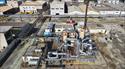
Al-Furat General Company, a subsidiary of the Ministry of Industry and Minerals, has completed construction of a new environmentally friendly sulphuric [sulfuric] acid production plant using advanced technology and Iraqi expertise.
The company's Director General, Ali Qasim Al-Shammari, said the old sulphuric acid plant had been dismantled and replaced with a modern facility designed and built using in-house capabilities, in line with approved environmental standards.
Engineering and technical teams prepared the studies, designs and layouts for the new plant in coordination with the consultancy office of Al-Mustansiriya University. The facility includes modern equipment, integrated systems and a central control unit, and operates using double-absorption technology to produce sulphuric acid with a design capacity of 40 tonnes per day.
The plant entered full production in mid-September last year and is currently operating steadily at full design capacity, without gas emissions. The upgrade has improved product quality, reduced production costs and ensured compliance with the highest environmental requirements.
Al-Shammari noted that this is the only plant of its kind in Iraq using this technology, and that it has met all contractual obligations to supply power stations and oil refineries, highlighting the capability of national expertise and reinforcing Al-Furat's position as a key industrial enterprise.
12/02/2026
Oil Up Due to US-Iran Tensions
Oil prices edged up on Thursday morning as investors worried about escalating tensions between the U.S. and Iran. Brent crude oil futures were up 34 cents, or 0.49%, at US$69.74 a barrel at 0126 GMT. U.S. West Texas Intermediate crude rose 37 cents, or 0.57%, to US$65.00.
Both benchmarks settled higher on Wednesday. Brent futures gained 0.87% and WTI gained more than 1.05%, as investor worries about U.S.-Iran tensions overshadowed a build in U.S. crude stocks.
U.S. President Donald Trump said after talks with Israeli Prime Minister Benjamin Netanyahu on Wednesday that they reached no "definitive" agreement on how to move forward with Iran, but he insisted negotiations with Tehran would continue.
On Tuesday, Trump said he was considering sending a second aircraft carrier to the Middle East if a deal is not reached with Iran, even as Washington and Tehran prepared to resume talks.
U.S. and Iranian diplomats held indirect talks last week in Oman. The date and venue of the next round of U.S.-Iran talks have yet to be announced.
A sustained break above a US$65–US$66 level would require further escalation in the Middle East, while any de-escalation could quickly trigger profit-taking back toward US$60-US$61 in WTI, IG analyst Tony Sycamore said.
U.S. job growth unexpectedly accelerated in January and the unemployment rate fell to 4.3%, the Labor Department said, signaling health in the economy.
"The resilient U.S. economy is also supporting oil demand expectations," said Mingyu Gao, chief researcher for energy and chemicals at China Futures.
A hefty build in U.S. crude inventories capped price gains. U.S. crude inventories rose by 8.5 million barrels to 428.8 million barrels last week, the Energy Information Administration said, far exceeding analysts' expectations in a Reuters poll for a 793,000-barrel rise.
However, since the start of the year, global oil inventory builds have generally come in below expectations and net long positions in overseas crude oil futures and options have not yet reached overweight levels, said Gao.
Oil prices are therefore likely to remain biased to the upside, supported by the U.S.-Iran situation, tighter sanctions on Russian oil and expectations of reduced exports, Gao added. - Zawya
12/02/2026