Iran Plans Launch of Its Heaviest Ever Satellite on Dec 28

Iran is planning to launch its heaviest ever satellite into low Earth orbit in late December, as part of efforts to expand the country’s operational space missions.
Local media reports published on Monday said the Iranian-made Paya satellite, also known as Tolou 3, will be launched from Russia’s Vostochny Cosmodrome on December 28.
According to the reports, the launch will mark Iran’s first operational use of a mini-satellite weighing about 150 kilograms, a class of spacecraft that would allow the country to expand the scope of its space missions.
They said the Paya satellite is designed to provide imaging with a resolution of about 10-20 meters per pixel and can be used for natural resource management, environmental monitoring, agriculture, and data-driven scientific and practical applications.
The head of the aerospace division of Iran Electronics Industries, a subsidiary of the Iranian Defense Ministry that designed and manufactured the satellite, told state television that the successful launch of the Paya mission could mark a turning point in Iran’s space activities.
Moharram Ghiasvand said the satellite will transmit images in far greater volumes, with a data-downlink rate up to ten times higher than that of Iran’s previous satellites.
Ghiasvand added that the satellite is equipped with two imaging sensors capable of capturing black-and-white and color images. He said its spatial resolution is five meters, which can be enhanced to three meters using artificial intelligence algorithms, marking the first time Iran could achieve sub-five-meter resolution in low Earth orbit.
Reports also said the planned launch from Vostochny in late December will include two other Iranian satellites placed into low Earth orbit.
These include Zafar-2, which is intended for Earth-observation missions, and Kowsar 1.5, which will be used primarily for agriculture monitoring and related applications. - Press TV
24/12/2025
PDA Rolled Out for Iran's Oil Industry
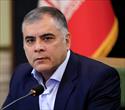
Iran’s oil minister issued a standardized Innovative Product Development Agreement, known as the PDA, to support the use of advanced products and expand domestic manufacturing by new technology-based firms (NTBFs) across the oil industry.
The PDA was drafted to implement requirements set out in higher-level legislation, including the 2011 law supporting NTBFs and the commercialization of innovations and inventions, the 1398 law on maximizing the use of domestic production and services and supporting Iranian-made goods and its executive bylaws, and the 1401 law on boosting knowledge-based production.
Under this framework, the Oil Ministry’s deputy for engineering, research and technology, led by the General Department for the Technical and Executive System and Project Evaluation, began drafting standardized “first-of-a-kind” manufacturing contracts some time ago. The effort includes three separate documents covering contracts for the development and production of goods, software and services in the oil industry.
The first document in the series, titled the Innovative Product Development Agreement (PDA), was prepared by the General Department for the Technical and Executive System and Project Evaluation with input from a technical and executive working group made up of legal, contractual, financial and technical experts from the main oil companies, the ministry’s legal affairs department and specialists from outside the oil sector. - Shana
24/12/2025
Iran’s IRGC Says It Has Pulled Out of Venezuela Subway Project

The construction arm of Iran’s elite military force, the IRGC, says it has withdrawn from a major subway project in Venezuela.
The commander of Khatam Headquarters, a subsidiary of the Islamic Revolution Guard Corps, said on Monday that the force had initially agreed to build a subway line in the Venezuelan capital, Caracas, but later pulled out of the project.
“Initial agreements were reached with Venezuela, but we handed over the project to the Venezuelan side due to new conditions that were imposed on the project,” Brigadier General Abdorreza Abed was quoted as saying by the ILNA news agency.
Abed said that Khatam Headquarters is involved in only a limited number of foreign projects and will brief the media and the public about them if they prove fruitful.
The IRGC has been a major contributor to Iran’s development efforts in recent decades, with its projects mainly focused on the transportation and energy sectors.
The force has also been involved in several projects in regional countries, particularly in Iraq and Syria, where it has built power plants and other facilities.
Khatam Headquarters employs a range of public and private contractors for its projects inside Iran, helping boost employment and local economic capacity.
Abed said the IRGC will never accept projects that can be carried out by private companies inside Iran, noting that it has been assigned mega-projects that are beyond the capabilities of ordinary contractors.
In an interview with the IRGC’s in-house journal published on Saturday, Abed said that Khatam Headquarters works with nearly 10,000 small and medium-sized contractors that employ more than 150,000 people.
He added that the IRGC’s policy is to reject projects worth less than $4 million in order to give smaller companies in Iran room to operate. -Press TV
24/12/2025
Iran Halts Gas Exports to Neighboring Iraq amid Surge in Domestic Demand
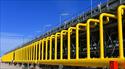
Iran has temporarily halted its natural Gas Exports to Iraq due to a sharp rise in domestic demand for heating.
A Tuesday report by the Iraqi News Agency cited a statement from the Iraqi Ministry of Electricity’s spokesman, saying that Iran had officially notified Iraq of a complete halt in gas deliveries due to “emergency circumstances.”
Ahmed Musa said the suspension of gas imports from Iran has caused Iraq to lose up to 4.5 gigawatts of electricity generation capacity. He added that Iraq has introduced interim measures, including increasing the supply of domestic fuel to power plants, to manage the shortfall.
The National Iranian Gas Company (NIGC) has not yet commented on the statement from Iraqi authorities. However, the suspension comes amid reports of a sharp rise in gas demand in Iran following a cold spell that has pushed temperatures as low as minus 10 degrees Celsius in parts of the country.
NIGC figures released on Tuesday showed that household, commercial, and industrial gas consumption reached more than 655 million cubic meters (mcm) over the previous 24 hours, with household heating accounting for the bulk of the demand.
Iran is a major supplier of natural gas to Iraq, which relies on imports from Iran for 43% of its electricity generation. In recent months, Iran has supplied an average of up to 50 mcm of natural gas daily to Iraq, despite growing US pressure aimed at curbing energy trade between the two countries. - Press TV
24/12/2025
Iraq Approves Austerity Measures
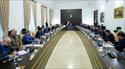
Prime Minister Mohammed Shia Al-Sudani chaired an extraordinary meeting of the Ministerial Council for the Economy, approving a package of measures aimed at reducing government spending and increasing revenues.
Decisions included an urgent review of salaries and allowances for the three presidencies, with instructions to equalise benefits at the Presidency and Parliament with those of the Prime Minister's Office, alongside updating proposals for a unified public-sector pay scale.
Overseas travel allocations for state employees will be cut by 90%, limited to essential cases with ministerial approval. The Council also approved lower supervision costs for new projects and the introduction of a national import programme restricted to essential goods.
The Council agreed to recommend revising wheat subsidies so that government support does not exceed 170% of global market prices, and tasked the Minister of Trade with reforming the food ration card system to better target vulnerable groups.
On revenue enhancement, Al-Sudani directed a review of how non-oil revenues from the Kurdistan Region are calculated and transferred, in coordination with the Kurdistan Regional Government. Measures also included strengthening the pre-arrival customs declaration system in coordination with the Central Bank of Iraq, improving electricity bill collection, reviewing tariffs, and expanding automation and mandatory electronic payments across government services, including electricity, Baghdad Municipality and local authorities nationwide.
The recommendations were subsequently approved by Cabinet.
24/12/2025
Oman & Turkiye Eye Enhanced Bilateral Trade

Oman and Turkiye are seeking to strengthen their bilateral trade and investment ties, targeting an increase in total trade between the two countries to US$5 billion over the next five years. The sultanate has also proposed a plan to establish a dedicated Turkish-Omani Industrial Zone in the sultanate.
The 13th session of the Turkiye–Oman Joint Committee took place in Ankara on December 19, 2025, co-chaired by Mehmet Simsek, Minister of Treasury and Finance of Turkiye, and H E Qais Mohammed al Yousef, Minister of Commerce, Industry and Investment Promotion of Oman.
At the meeting, both sides signed the Joint Committee Protocol, alongside a Memorandum of Understanding aimed at enhancing cooperation between educational institutions. The Protocol, signed at the conclusion of the session, serves as a roadmap reflecting the progress achieved in Turkiye–Oman relations and identifies new areas of collaboration across sectors including industry, transport, energy, tourism, education, banking and finance, agriculture, and e-commerce.
H E Yousef highlighted the importance of expanding trade and investment in line with the directives of both countries’ leadership, stressing the shared objective of raising bilateral trade to US$5 billion over the next five years. He underlined the need to convert strong political momentum into tangible economic results through joint projects and strategic investments.
The minister proposed a plan to establish a Turkish-Omani Industrial Zone in Oman, leveraging the sultanate’s strategic location and existing free trade agreements with the United States and India. The zone is expected to focus on sectors such as spare parts and textiles. To facilitate this initiative, the minister emphasised the importance of exploring direct import routes and drawing lessons from Turkiye’s successful export promotion strategies and incentive programmes.
H E Yousef also noted the steady growth in bilateral trade and investment flows, including the increasing presence of Turkish companies in Oman and the growing confidence of Omani investors in the Turkish economy. He welcomed steps to accelerate the conclusion of the Turkiye–GCC Free Trade Agreement, strengthen cooperation in industrial zones, logistics, export promotion, and capacity building, and enhance people-to-people exchanges in tourism, education, and technical cooperation.
He highlighted the significant growth in bilateral trade, citing a 5.3% increase in 2024, followed by a further 7.8% rise in the first half of 2025. Turkiye remains a key export destination for Omani products, while the number of Turkish companies operating in Oman rose by 21% as of September 2025. Turkish investment in Oman also grew by 18.7%, playing a pivotal role in supporting the sultanate’s infrastructure and development projects.
Speaking at the meeting, Simsek emphasised that concluding the free trade agreement negotiations between Turkiye and the GCC would be a decisive catalyst for regional trade and urged the process to be finalised without delay.
On investment, Simsek affirmed Turkiye’s readiness to support Oman’s Vision 2040 and its non-oil economic transformation, noting the complementary strengths of both countries in logistics and connectivity. He suggested that linking Oman’s world-class ports and economic zones with Turkiye’s extensive network across Europe, Central Asia, and the Middle East could create an integrated trade corridor, reducing time, cost, and risk. He also highlighted the potential for joint projects in third countries, particularly in Africa.
Simsek further noted that financial and banking institutions in both countries maintain regular contact. The 2026 work programme was discussed, with plans to expand cooperation in the coming period. He also emphasised the importance of small and medium-sized enterprises (SMEs) as the backbone of both economies and called for strengthening collaboration in this area, citing Turkiye’s nearly 400 organised industrial zones and Oman’s special economic zones as mutually beneficial.
In the energy sector, Simsek highlighted the agreement between Turkish Petroleum Corporation (TPAO) and OQ Exploration and Production (OQEP) as key to diversifying Turkiye’s energy supply. He also welcomed cooperation on critical minerals and mining, and noted positive collaboration among TPAO, Botas, and OQEP in oil, natural gas, pipeline security, storage, and green energy initiatives.
Additionally, the Turkiye–Oman Roundtable Meeting, organised under the Union of Chambers and Commodity Exchanges of Turkiye (TOBB), brought together ministers and private-sector representatives to review ongoing projects and explore new opportunities. Participants highlighted the role of organised industrial zones in promoting trade and investment, and stressed the importance of sharing experiences and best practices.
24/12/2025
Qatari, Malawian Ministers Meet
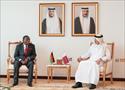
Minister of State for Foreign Trade Affairs HE Dr. Ahmed bin Mohammed Al Sayed met on Monday with Member of Parliament and Minister of Finance, Economic Planning, and Decentralisation of the Republic of Malawi HE Joseph Mwanamvekha, who is visiting the country. The meeting discussed trade and investment cooperation between the two countries and ways to support and develop it, in addition to a number of other topics of mutual interest.
24/12/2025