Iran to Launch 1st Fully Indigenous N-Fusion System
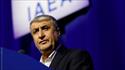
Iran is preparing to bring its first domestically developed nuclear fusion system into operation, with the project highlighting the country’s advances in cutting-edge nuclear technology, the head of the Atomic Energy Organization of Iran (AEOI) said on Sunday.
Speaking during a televised interview, Mohammad Eslami said Iranian scientists had made significant progress in developing the system, expressing hope that it would become operational according to the planned schedule.
He said the project aimed to demonstrate Iran’s scientific capabilities and its ability to compete with leading global powers in advanced technologies.
Ali Nowrouzi, head of Iran’s Advanced Technologies Company, explained that nuclear fusion involves bringing two light isotopes together under specific and complex physical conditions to trigger a fusion reaction.
He said radiation produced through the process could be used to develop radiopharmaceuticals and advanced medical diagnostic systems.
Nowrouzi added that the long-term goal was to develop a system capable of generating high electrical currents without energy losses within the system, underscoring the broader potential of fusion technology for energy production. - IRNA
17/11/2026
Damage to Iran's Water Infrastructure Sites Reported to Intl. Bodies
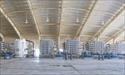
Iran has documented damage to more than 410 points across its drinking water infrastructure during two wars with Israel and the United States and reported the incidents to international bodies for follow-up, a senior official at the country’s Energy Ministry said on Sunday. Hasham Amini, the head of the National Water and Wastewater Engineering Company, said attacks during the 12-day war with Israel in June 2025 and the 40-day war that began in late February damaged water supply facilities and infrastructure across the country. He said the attacks violated international conventions and humanitarian law, arguing that civilian water supply systems should be protected from military action under international protocols and humanitarian principles, IRNA reported.
“Although international protocols, as well as the principles of ethics and humanity, dictate that no country’s drinking water facilities and infrastructure should be damaged, our colleagues were able to restore the facilities to operation immediately,” Amini said. He added that these facilities were quickly brought back into operation, ensuring that the attacks did not disrupt the supply of drinking water and sanitation services to the public. Amini said replacement equipment had been deployed to areas where desalination plants were damaged, including Qeshm Island, Sirik and other islands. In some locations, facilities were restored to operation within about 24 hours of the incidents, he added. He said alternative water sources had also been used in Lorestan, Hormozgan, Kermanshah and Isfahan provinces to maintain supplies that met required quality standards. On Qeshm Island, other desalination plants were used to compensate for damage to one facility, he added. Iranian Energy Minister Abbas Aliabadi also addressed attacks on water and electricity infrastructure on March 22, calling on countries and international organizations to condemn them and describing the strikes as contrary to international law. - Iran Daily
17/11/2026
Road Minister Raises Iran's Truck Transit Issues at Uzbekistan-Turkmenistan Border
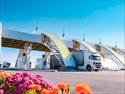
Iranian Transport and Urban Development Minister Farzaneh Sadeq visited the Alat-Farap border crossing between Uzbekistan and Turkmenistan to review obstacles facing Iranian truck drivers and road transit with transport and customs officials from both countries, the ministry said. Sadeq traveled by land into Turkmenistan on Sunday, at the end of her official visit to Uzbekistan, to follow up on transport and transit issues at the border, according to a statement from Iran's Ministry of Roads and Urban Development. During separate talks with transport and customs officials from Uzbekistan and Turkmenistan, she reviewed the latest status of road freight traffic, the movement of trucks across the border and obstacles affecting transit. She was also briefed on the concerns and demands of industry operators. Sadeq also met with several Iranian truck drivers at the crossing and spoke with them directly to hear about the problems and difficulties they face while traveling through the border. The visit was aimed at identifying border bottlenecks, following up on outstanding issues, facilitating the movement of Iranian road transport fleets and removing obstacles facing transit operators, the ministry said. Iran and Uzbekistan are also working to expand rail and road transport cooperation, improve transit flows and strengthen logistics and trade ties through regional corridors. During a meeting with Uzbek Transport Minister Ilkhom Makhkamov in Tashkent on Thursday, Sadeq described bilateral cooperation in road, air and rail transport as positive. She proposed a trilateral railway meeting involving Iran, Uzbekistan and Turkmenistan to improve coordination and accelerate rail cooperation among the three countries. She also highlighted the two countries' potential in logistics and transit, describing Iran's northern and southern ports as valuable assets for expanding regional trade. - Iran Daily
17/11/2026
GECOL, Huawei Review Developing Libya’s Communications Infrastructure & Technical Systems
The General Electricity Company of Libya (GECOL) reported yesterday that its chairman, in the presence of its Vice Chairman and its Director of the Informatics and Communications Department, held a meeting on the same day with representatives of China’s ITC giant, HUAWEI.
GECOL reported that the meeting was devoted to discussing opportunities for cooperation in developing communications infrastructure and technical systems and reviewing modern technological solutions and the possibility of employing them in supporting the company’s work systems.
The meeting discussed ways to raise the efficiency of communications systems and modernize the digital infrastructure, in a way that keeps pace with technical developments and contributes to supporting the company’s plans for digital transformation, enhancing the efficiency of operational performance and raising the level of services provided.
17/11/2026
Minister: Iran Ready to Boost Agricultural Ties with Afghanistan
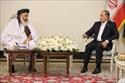
Iranian Minister of Agriculture said: “Iran is ready to cooperate with Afghanistan in the fields of mechanization, livestock husbandry, agriculture, plant breeding, and livestock breeding.”
According to the portal of the Ministry of Agriculture, Gholamreza Nouri, on the evening of November 14, in a meeting with Mawlawi Mohammad Hassan Akhund, Afghanistan’s Minister of Finance and head of the Afghan side of the two countries’ Joint Economic Cooperation Committee, referred to Iran’s transit capacities and said: “Iran’s capacities for Afghanistan’s access to the Persian Gulf and open waters can serve the development of trade between the two countries.”
Referring to the transfer of part of Afghanistan’s goods to neighboring countries through Iran, he added: “These exchanges can increase. Capable investors are present in Afghanistan and can invest, especially in the Chabahar region, to establish terminals and port facilities so that the volume of Afghanistan’s commercial exchanges with the world in the fields of imports and exports increases.”
The Minister of Agriculture, emphasizing the necessity of strengthening economic cooperation between the two countries, said: “In the government, a special working group on relations with Afghanistan has been formed under the chairmanship of the First Vice President, and a number of relevant ministers are also members of it. Investment in various sectors of Afghanistan is among the issues that this working group is pursuing specially.”
Nouri, referring to the two countries’ shared capacities in the agricultural sector, considered mechanization, livestock husbandry, and agriculture to be among the fields susceptible to joint cooperation and stated: “We are ready to place whatever is produced in Afghanistan and needed by Iran on the priority purchase list, and to meet Afghanistan’s needs from our country’s production capacities.”
Referring to the fields of technical and specialized cooperation between the two countries, he continued: “In the fields of plant breeding, livestock breeding, supply of veterinary medicines and vaccines, and day-old chicks, we are ready to have the necessary cooperation with Afghanistan.”
The Minister of Agriculture also announced the readiness of Iran’s research centers to train Afghan experts and said: “Recently, a number of Afghan experts attended the country’s agricultural research centers and completed 10- to 15-day training courses. Our research centers are ready to accept experts from that country in accordance with Afghanistan’s needs and provide the necessary specialized training.”
Referring to the ban on poppy cultivation in Afghanistan, he listed cooperation in developing alternative crops as another important field of cooperation between the two countries and announced: “Iran is ready to help with the production of alternative products.”
Nouri considered facilitating traffic at shared borders and removing customs obstacles to be among the requirements for increasing trade exchanges and emphasized the necessity of round-the-clock customs activity, simplification of border formalities, increased transit traffic, and joint cooperation to combat smuggling.
Referring to the problems raised at the two countries’ border crossings during his trip to Kabul, he said: “After this trip, one of the deputies of the Ministry of Agriculture, along with representatives of executive bodies, visited the two countries’ borders, and continuous follow-ups are continuing to remove obstacles and increase the volume of border exchanges.” The Minister of Agriculture announced Iran’s readiness to reopen the Yazdan border crossing and cooperate in activating border markets.
Emphasizing the necessity of making the Iran-Afghanistan Joint Economic Cooperation Committee more active, he said: “Good documents have been prepared for cooperation between the two countries, and their finalization and exchange can help increase exchanges. We hope that, with the follow-ups carried out, the seventh meeting of the two countries’ Joint Commission will be held in Kabul as soon as possible.”
Mawlawi Mohammad Hassan Akhund, Afghanistan’s Minister of Finance, also in this meeting, emphasizing the extensive capacities of Iran and Afghanistan for expanding economic exchanges and jointly combating smuggling, said: “The two countries’ joint fight against smuggling will strengthen legal trade.”
Stating that Afghanistan and Iran have numerous fields for cooperation and joint investment, he added: “In the sectors of agriculture, investment, mines, transportation, banking and financial cooperation, energy, and other economic areas, there are considerable capacities for cooperation that can be utilized through joint efforts.”
The head of the Afghan side of the Iran-Afghanistan Joint Economic Cooperation Committee considered investment in various economic sectors to be among other areas that can be pursued between the two countries and said: “Afghanistan has extensive and valuable capacities for investment in the sectors of mineral extraction, agriculture, production, energy, and economic infrastructure.”
According to the portal of the Ministry of Agriculture, Gholamreza Nouri, on the evening of November 14, in explaining the main points of the meeting with Mawlawi Mohammad Hassan Akhund, Afghanistan’s Minister of Finance and head of the Afghan side of the two countries’ Joint Economic Cooperation Committee, stated: “Today we hosted Afghanistan’s Finance Minister. Given that he heads the Joint Committee on behalf of Afghanistan and the Minister of Agriculture heads this commission on behalf of Iran, this meeting was held with the aim of providing the ground for holding the Joint Committee in Tehran.”
Referring to the review of current issues in the two countries’ economic relations, he added: “Border exchanges, customs activities, accelerating border traffic, and increasing the volume of exchanges with Afghanistan, both in imports and exports, were among the issues discussed and reviewed in this meeting.”
The Minister of Agriculture, stating that the Afghan side is interested in using Iran’s transit capacities to access the markets of other countries, said: “The Afghan side was also interested in playing a greater role in importing goods into Iran and exporting goods through our country. We also welcomed this and are ready to increase the level of cooperation and exchanges between the two countries.”
He announced the volume of trade exchanges between Iran and Afghanistan as about US$2.7 billion and added: “Approximately one quarter of these exchanges is allocated to the agricultural sector. Given the trend underway in relations between the two countries and the numerous trips by officials of the Islamic Republic of Iran to Afghanistan and vice versa, it is predicted that this trend will soon accelerate and the volume of exchanges will increase.”
Nouri, referring to Afghanistan’s climatic capacities for developing agricultural activities, announced Iran’s readiness for cooperation in training and investment and stated: “Given the potentials that exist in Afghanistan’s climate, activity in the agricultural sector can develop, and suitable grounds for cooperation between the two countries are available.”
He continued: “We announced readiness to help in the fields of training and investment. Some Iranian companies have also announced readiness for a deeper presence in Afghanistan’s domestic production chains and for carrying out part of production activities in that country.”
The Minister of Agriculture, stating that this cooperation can, in addition to meeting the needs of the Afghan market, lead to the production of goods for consumption in Iran or for re-export, said: “This type of cooperation is both a transfer of technology and technical knowledge and leads to investment in the field of technical and engineering services.”
Nouri, in response to a question about supplying the wheat needed by guild and industrial units, also said: “This year, in the Market Regulation Headquarters, we allowed guild and industrial units to purchase wheat from domestic production so that they can procure their needed wheat themselves. Some of these units have also made purchases.”
Referring to the provision of the possibility of direct wheat imports for the first time by guild and industrial producers, he added: “We also liberalized wheat imports so that guild and industrial producers, who are consumers of flour, can import their needed wheat from any origin and with any quality. These units have taken measures in this regard, and part of the consignments has also reached the country.”
The Minister of Agriculture, stating that these changes have created new paths for supplying raw materials for the flour and food industries, stated: “A transparent process and new solutions compared with the past have been placed before these units. Of course, this decision affects their final cost, and the price of the wheat they receive will differ from the past based on the Market Regulation Headquarters’ approval; but on the other hand, the possibility of direct wheat imports and export of their products has also been provided for them.”
Referring to the high capacity of the flour industry and related food industries in the country, he emphasized: “Part of our capacities in the field of flour milling and flour-related food industries had remained unused, and with the provision of these conditions, the ground is provided for fuller use of the production capacity of these units.” - Tehran Times
17/11/2026
Sewa Connects 898 Projects to Electricity Grid in Sharjah
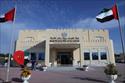
The Sharjah Electricity, Water and Gas Authority’s (Sewa) Electricity Distribution Department connected electricity to 898 projects across various sectors in Sharjah city during the third quarter of 2026.
It also extended medium- and low-voltage networks by a combined length exceeding 99 kilometres, and approved more than 640 electrical distribution boards in accordance with approved technical specifications, an Emirates News Agency (WAM) report said.
The department also conducted 1,119 technical inspections of buildings and projects and issued 524 preliminary electrical inspection certificates, facilitating customers’ applications for completion certificates from the municipality.
Keeping pace
Engineer Ahmed Al Bass, Deputy Director of Sewa’s Electricity Distribution Department, explained that these achievements implement the leadership’s directives to keep pace with urban, industrial and commercial expansion and provide citizens, residents and investors with services meeting international standards of quality and efficiency. These efforts help reinforce Sharjah’s position as an attractive environment for investment and stable living.
Sewa said that the projects span residential, commercial, industrial and service sectors. Connections were completed according to precise schedules and the highest standards of safety and environmental sustainability.
By integrating cutting-edge digital technologies and smart control systems into its network infrastructure, the authority aims to guarantee rapid response times and boost operational efficiency.
Meanwhile, Sewa is pressing forward with its ongoing efforts to upgrade its networks and service facilities. The utility has urged all customers and developers to strictly adhere to approved technical standards and specifications, ensuring seamless electricity connections that ultimately serve the best interests of the nation and the community.
17/11/2026
UAE-Based Dana Gas Delivers Strong 9-Month Results as Net Profit Rises
Dana Gas, the Middle East’s largest regional private sector natural gas company, has reported a net profit of AED558 million (US$152 million) for 9M 2026, compared with AED379 million (US$103 million) in 9M 2025, an increase of 48%.
The company's strong performance was driven by higher production and a stronger oil price environment, with improved realised hydrocarbon prices providing a significant contribution to revenue and profitability.
The nine-month result includes a one-off positive gas metering reconciliation of AED176 million (US$48 million), recognised in Q1 2026. Excluding this adjustment, net profit was AED382 million (US$104 million), compared with reported net profit of AED379 million (US$103 million) in 9M 2025. Q3 2026 net profit increased 50% year-on-year to AED165 million (US$45 million), compared with AED109 million (US$30 million) in Q3 2025.
Revenue for the nine-month period in 2026 increased 48% to AED1.38 billion (US$377 million), compared with AED935 million (US$255 million) in 9M 2025. Excluding the one-off metering adjustment in Q1, revenue increased by US$74 million, or 29%, year-on-year, driven by higher production and gas sales volumes in both the KRI and Egypt, alongside stronger realised hydrocarbon prices. Q3 revenue reached AED436 million (US$119 million), up 42% from AED308 million (US$84 million) in Q3 2025.
EBITDA increased 61% to AED917 million (US$250 million), compared with AED570 million (US$155 million) in 9M 2025, reflecting improved operational performance and higher realised hydrocarbon prices.
Operationally, higher utilisation of the KM250 expansion at Khor Mor lifted production during Q3, while Egypt’s drilling programme continued to deliver production growth and additional gas resources. The expanded facilities at Khor Mor provide further growth potential as utilisation increases, with Chemchemal progressing as the next major development project.
Richard Hall, CEO of Dana Gas, commented: “I am pleased to report a strong third-quarter performance, with Group production increasing 17% and net profit rising 50%. Higher production at Khor Mor and stronger realised hydrocarbon prices have driven improved earnings, demonstrating the tangible returns from our investments. We see significant further potential as utilisation of the expanded facilities increases.
"Our investment programme in Egypt continues to deliver strong results, with new wells adding production and gas resources. The improved payment position gives us greater confidence to keep investing and build on this progress. We are also advancing Chemchemal as our next major growth project, with drilling planned before year-end and long-term gas sales agreements already in place.
"Looking ahead, our priority is to sustain this momentum, further strengthen cash generation, and deliver long-term value to Shareholders. We continue to engage constructively with the KRI to improve collections and reduce outstanding receivables. Together with our strengthening financial position, these continued efforts underpin our commitment to sustainable dividends.”
17/11/2026
Former Minister: Egypt’s Declining Gas Production Manageable
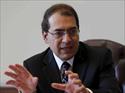
Egypt’s falling gas output is not the crisis markets make it out to be, according to Tarek El Molla, the country’s former minister of petroleum and mineral resources. Every field declines, he argues. What matters is how fast Egypt can replace what it loses.
“The behavior of the reservoirs of any oil and gas field is natural decline,” El Molla told Arab News. “Unless you drill, continue drilling, find more discoveries and put them into production, you will always face this decline.”
The cost of that decline is rising. Reuters calculated in July that Egypt’s gas import bill nearly tripled after the war with Iran began, from about US$560 million before the conflict to roughly US$1.65 billion in March for the same volumes.
On Oct. 30, trading sources told Reuters that the Egyptian General Petroleum Corporation had secured six cargoes of high-sulfur fuel oil for November and December delivery, as the war squeezed global liquefied natural gas supply.
That reverses a shift El Molla described. Egypt moved to LNG, he said, because it replaced fuel oil with “a form of energy which is easier to handle and had competitive prices then.”
Drilling for a reset
His answer starts offshore. Egypt is now in a phase of offshore drilling and exploration, El Molla said, adding: “Hopefully we reach a position where we can have some significant finds whereby we can restore an acceptable level of local production.”
There are early signs. In April, Eni said it had found an estimated 2 trillion cubic feet of gas offshore Egypt, and that the discovery would support the country’s goal of boosting reserves and production, Reuters reported.
El Molla was careful not to promise a quick turnaround. Balancing local production “is not necessarily happening tomorrow,” he said. It remains a priority for the government, and it depends on international oil companies continuing to drill.
The grid, not the money
His second lever is renewables, as protection against the kind of LNG price swings now hitting Cairo. Egypt set a target years ago for renewables to make up 42 percent of its energy mix, he said. “We were a little bit slow, but now we are catching up.” He said the deadline is now being brought forward to 2028.
He does not see financing as the obstacle. “It is all about the schedule of installing these capacities,” he said. The bigger task is the electricity grid, which “needs modification and upgrading.”
A hub already at work
The third lever is geography. El Molla said Egypt already moves crude and refined products from the Red Sea to the Mediterranean for most GCC producers.
Saudi Arabia leads that list, he said, as a main shareholder in the SUMED pipeline company. He said Egypt can do the same with gas and LNG, using its Red Sea access and its LNG plants on the Mediterranean.
That route carries extra weight this year. An Iranian official told Reuters on Nov. 3 that Iran and the US remain far from a deal to end the war.
The official said Tehran’s conditions must be met if Washington wants the Strait of Hormuz reopened.
“We are an energy hub,” El Molla said, adding: “We have proven the concept.”
The task now, he said, is to raise throughput and maximize the revenue the hub earns.
17/11/2026
Saudi Aramco Recognized as World’s 2nd-Most Valuable Oil & Gas Brand
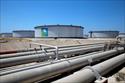
Saudi energy giant Aramco retained its position as the world’s second-most valuable oil and gas brand in 2026, with its brand value rising 14 percent to US$47.3 billion, its strongest growth in four years, according to a new Brand Finance report.
The increase comes as the Saudi energy giant expands natural gas operations, strengthens its international presence and increases production amid shifting global energy markets.
Shell retained the top position for the 12th consecutive year, with its brand value climbing 14 percent to US$51.8 billion. PetroChina ranked third at US$35.7 billion, followed by Sinopec Group at US$30.4 billion and ExxonMobil at US$26 billion.
“Higher production volumes, expansion in gas and a growing international presence have strengthened the brand's revenue outlook,” Brand Finance said in its report.
The consultancy highlighted Aramco’s increased production as OPEC+ eased voluntary output cuts, alongside progress at the Jafurah gas development and Tanajib Gas Plant.
Aramco’s Brand Strength Index score also rose to 81.8 out of 100, reflecting stronger awareness, reputation and engagement, supported partly by its growing presence in international sports.
Global standing
Ali Al-Riyami, former director general of oil and gas marketing at Oman’s Ministry of Energy and Minerals, told Arab News that the ranking reflects Aramco’s evolution beyond crude production.
“Aramco’s brand strength is underpinned by something very tangible: exceptional scale, reliability of supply and a growing presence across the global energy value chain,” he said.
Al-Riyami added that the valuation also reflects the Kingdom’s strategic influence over global energy markets and its expanding capabilities in gas and downstream operations.
Ramzi Abou Abdallah, senior market research analyst at Phystone Financial Advisory, told Arab News that Aramco’s ranking highlights its financial resilience and international expansion.
“Aramco’s position as the world’s second-most valuable oil and gas brand reflects more than its production capacity,” he said.
Abou Abdallah noted that maintaining this position would increasingly depend on revenue diversification, natural gas expansion and adapting to the global energy transition.
Financial momentum
The ranking follows Aramco’s third-quarter results, which showed net profit rising 34.5 percent year on year to US$36.3 billion, supported by higher revenue and a gain from selling its stake in Malaysian venture PRefChem.
The company also declared a US$21.9 billion quarterly base dividend, up 3.5 percent year on year.
Amid geopolitical tensions and shipping disruptions in the Strait of Hormuz, Aramco has increasingly relied on Saudi Arabia’s East-West Pipeline while exploring alternative export routes and overseas storage capacity.
Regional growth
Elsewhere in the GCC, the UAE’s ADNOC retained sixth place globally, with its brand value rising 11 percent to US$21.1 billion.
Across the industry, the combined value of the world’s 50 leading oil and gas brands increased 6 percent to US$468.9 billion, reflecting stronger revenue expectations, higher production and continued investment in diversified energy portfolios.
17/11/2026
Microsoft & Google Cloud Eye Iraq Data Centre Expansion

Iraq's Minister of Communications, Mustafa Jabbar Sanad, has held meetings with Microsoft and Google Cloud to discuss their entry into the Iraqi market through data centre projects and digital transformation systems.
According to the Ministry of Communications, Sanad visited Microsoft's offices in Doha, where discussions covered the establishment of data centres and digital transformation infrastructure, as well as training programmes. A separate meeting was held with Google Cloud to outline a roadmap for entry into Iraq.
17/11/2026
Kuwait's Action Energy Reports 63% Increase in 9-Month Net Profit

Action Energy Company (AEC), Kuwait’s leading local partner for integrated upstream services, reported a 62.9% year-on-year increase in net profit to KWD6.5 million (US$20.9 million) for the first nine months of 2026, supported by stronger core operations, higher drilling revenue and the expansion of its oilfield services business.
Revenue for the nine-month period ended 30 September 2026 increased 18.5% to KWD26.9 million (US$86.49 million), compared with KWD22.7 million (US$72.98 million) in the corresponding period last year. EBITDA rose 13.1% to KWD13.4 million (US$43.08 million), while earnings per share reached 11.49 fils, up from 10.62 fils.
For the third quarter, net profit increased 20.3% year on year to KWD2.1 million (US$6.75 million), despite revenue declining 4.5% to KWD8.8 million (US$28.29 million). EBITDA decreased 9.1% to KWD4.4 million (US$14.15 million), compared with KWD4.8 million (US$15.43 million) in Q3 2025.
The quarterly EBITDA decline was primarily attributed to revised rig lease rates under a new contract with Kuwait Oil Company (KOC), higher general and administrative expenses associated with business expansion, lower rig-move activity and the absence of a one-off revenue contribution recorded in the comparative period.
However, the revised KOC contract secures the deployment of contracted rigs for another five to six years, supporting the company's fleet utilisation rate of 100%.
Sheikh Mubarak Abdullah Al-Mubarak Al-Sabah, Chairman of Action Energy Company, said: “AEC delivered strong results for the first nine months of 2026, with record net profit of KWD 6.5 million (US$20.9 million) and operating cash flow up 73.8% year-over-year. This performance reflects the strength of our business and puts us in a solid position to execute our long-term growth strategy. We continue to invest in our people, equipment, and capabilities to support Kuwait’s upstream oil and gas sector. Our focus remains on delivering long-term value for our shareholders, and strengthening AEC’s position as a trusted partner to Kuwait’s energy industry.”
Ahmad Mohammad Al-Ajlan, Board Member and Chief Executive Officer, said: “AEC delivered strong profitability through the first nine months of 2026, with third-quarter net profit rising 20.3% year-over-year to KWD 2.1 million (US$6.75 million). We continued to invest in expanding our operating capabilities, making steady progress on the mobilization of seven new rigs and the expansion of our oilfield service lines, supported by a contracted backlog of KWD 340.7 million (US$1.095 billion). These investments will increase our operating capacity, broaden our service offering, and position us for the next phase of growth. We remain focused on safe, reliable execution, financial discipline, and delivering sustainable growth and long-term returns for our shareholders.”
Drilling operations and fleet expansion
Drilling and workover services remain the company's largest business segment, accounting for approximately 60% of its total contracted backlog. Action Energy operated 20 rigs during the reporting period.
Revenue from core drilling activities increased 4.2% year on year to KWD7.2 million (US$23.15 million). However, income from rig leasing, mobilisation and ancillary services declined, reflecting revised rental rates under the new KOC contract, fewer rig movements and the absence of the previous year's one-off revenue contribution.
The company is also progressing with the mobilisation of seven additional rigs to expand its operating capacity. The new fleet comprises four 1,500-horsepower rigs, one 1,000-horsepower rig and two 750-horsepower rigs.
Operations are expected to commence in the first quarter of 2027, supporting the company's strategy to strengthen its position in Kuwait's upstream drilling market.
Oilfield services expand contribution
AEC is also accelerating its diversification into higher-value oilfield services, reducing its reliance on traditional drilling activities and expanding its presence across the upstream value chain.
The contribution of oilfield services to the company's backlog increased from 28% in the first quarter to 40% in the third quarter of 2026, representing a 12-percentage-point increase.
During the nine-month period, the company continued mobilising equipment and developing its electric submersible pump (ESP), Slickline and once-through steam generator (OTSG) service lines, in line with its expansion schedule.
The growing contribution from these services reflects AEC's efforts to broaden its revenue streams and strengthen its integrated service offering to oil and gas customers.
Growth strategy and outlook
Action Energy's contracted backlog stood at KWD340.7 million (US$1.095 billion), providing visibility over future activity and supporting its expansion plans.
For the fourth quarter of 2026 and first quarter of 2027, the company's priorities include executing its existing backlog, completing the mobilisation of seven new rigs and receiving additional oilfield services equipment.
AEC also plans to maintain safe and reliable operations across its existing 20-rig fleet while managing liquidity, leverage and remaining capital expenditure. The company aims to keep its net debt-to-equity ratio at or below 1.25 times.
Other priorities include converting its contracted backlog into profitable revenue and selectively pursuing opportunities in the digital sector.
The company said it would continue monitoring regional developments while focusing on operational efficiency, financial discipline and sustainable growth.
The expansion of its rig fleet and oilfield services portfolio is expected to strengthen Action Energy's operating capacity and support its long-term position in Kuwait's upstream oil and gas sector.
17/11/2026
Solidarity Bahrain Signs Partnership with LuLu Exchange
Solidarity Bahrain, one of the largest insurance companies in the Kingdom of Bahrain and a subsidiary of Solidarity Group Holding, has partnered with LuLu Exchange to offer customers an exclusive remittance benefit through Solidarity Drive, its behavioral change and rewards app the recognizes customers for safe driving. The partnership expands the rewards and savings available to Solidarity Drive members, extending the value of the app beyond insurance. Members will also benefit from the convenience and accessibility of LuLu Exchange’s digital remittance services.
Commenting on the partnership, Solidarity Deputy Chief Executive Officer, Corporate Support, Mr. Amer Janahi, said: “At Solidarity, we are continuously looking for ways to create meaningful value for our customers and make Solidarity Drive a platform that supports their everyday needs. Partnering with LuLu Exchange extends the rewards our customers earn through safe driving to an essential service such as remittances, helping them save while they manage their financial commitments. This partnership reflects our commitment to building relevant partnerships that deliver tangible value and enhance the overall customer experience.”
Mr. Edison Fernandez , General Manager of LuLu Exchange Bahrain, said: “Partnering with Solidarity Bahrain allows us to reach a wider community of customers and reward them. By bringing exclusive remittance benefits to Solidarity Drive, we are combining LuLu Exchange’s trusted cross-border payment services with a platform that already encourages positive behavior. We look forward to working with Solidarity to create even more value for our shared customers.”
Through Solidarity Drive, Solidarity Bahrain continues to expand its network of strategic partners and bring together exclusive rewards, savings, and services in one convenient platform. The addition of LuLu Exchange further enhances the app’s offering, giving members another valuable way to save on everyday transactions.
17/11/2026