Canada Reimposes Sanctions on 11 Iranian Entities for Contributing to N-Activities

Canada reimposed sanctions on 11 Iranian entities on Tuesday for their contribution to Iran's nuclear activities and ballistic missile program, Foreign Minister Anita Anand said. Anand announced the measures at a meeting of Group of Seven foreign ministers in Paris, saying they were intended to restrict Iran's access to funding and sensitive technology linked to its nuclear and missile programs.
"Canada’s position is unequivocal: Iran must never be allowed to obtain a nuclear weapon," a foreign ministry statement quoted Anand as saying. The measures were imposed on 11 entities that contributed to "the Iranian regime’s proliferation-sensitive nuclear activities and ballistic missile program or to the financing of its malign activities," the statement said. Canada de-listed the entities in 2016 after a 2015 nuclear deal between Iran and world powers. But Ottawa said Tehran had repeatedly failed to cooperate with the International Atomic Energy Agency, the UN nuclear watchdog, over its nuclear activities and had not complied with the provisions of earlier UN Security Council resolutions.
The United States, its European allies and Israel accuse Tehran of using its nuclear program to conceal efforts to try to develop the capability to produce weapons. Iran says its nuclear program is for peaceful purposes only. The US has been at war with Iran since joint US-Israeli airstrikes against the Islamic Republic on February 28. An Iranian official told Reuters last week that Tehran had submitted a proposal on nuclear issues to the US via Qatar, but that discussions would depend on Washington first meeting a set of Iranian demands. The demands include sanctions relief, access to frozen assets and war reparations, the official said. Washington says nuclear issues must feature in initial talks. The 11 entities targeted by Canada include Iran's Nuclear Fuel Production and Procurement Company, the Nuclear Reactors Fuel Company, the National Iranian Oil Company and the National Iranian Tanker Company. - Reuters
11/11/2026
Iraq to Reopen Sheeb Border Crossing with Iran, Temporarily Close Mandali Border
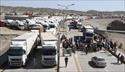
Iraq will reopen the Sheeb border crossing with Iran on Tuesday morning after completing technical requirements and necessary procedures, the head of the country's Border Ports Authority said, according to state news agency INA. The authority will temporarily close the Mandali border crossing with Iran from Friday to complete technical requirements, INA reported.
The developments come after Iraqi Foreign Minister Fuad Hussein said that the US Treasury had asked Baghdad to close all border crossings with Iran except for two, as part of Washington's efforts to increase economic pressure on Tehran.
"There are many official and unofficial border crossings with Iran, and closing all of them would be difficult and would affect our economy. The Americans are still demanding the closure of the crossings, and we are currently in discussions with them," Hussein told Al Jazeera. Iraq closed last month the busy Sheeb border crossing with Iran to review security and install detection equipment to stop smuggling. It was not immediately clear whether the planned reopening of Sheeb or the temporary closure of Mandali was related to the US request. - Reuters
11/11/2026
Yerevan Hosts Iran-Armenia Joint Economic Committee Meeting
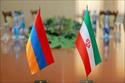
The 19th Iran-Armenia Joint Economic Committee meeting began in Yerevan with the formation of eight specialized committees, and the two countries are negotiating the expansion of trade, transportation, and energy cooperation.
According to a Mehr News Agency report citing the Planning and Budget Organization of Iran, Seyyed Hamid Pourmohammadi, Head of the Planning and Budget Organization, who traveled to Yerevan at the head of a high-ranking delegation to participate in the 19th Iran-Armenia Joint Economic Committer meeting, referring to Armenia’s approach toward the Islamic Republic of Iran, said: “The Republic of Armenia’s approach, especially during the Ramadan War and the 12-day war, has been a committed one.”
Referring to the holding of the 19th Iran-Armenia Joint Economic Cooperation Committee meeting in Yerevan, the Head of the Planning and Budget Organization stated: “At this meeting, eight working committees have been formed with the aim of developing joint cooperation in the areas of infrastructure, customs, trade, culture and art, health and treatment, industry, mining, and technology.” He added: “The work of these committees began Monday and will continue until tomorrow afternoon, and at the end, the joint cooperation document of the two countries will be signed.”
Pourmohammadi, referring to the importance of developing transportation infrastructure between the two countries, said: “Currently, the operation to complete the road from Jolfa to Nordooz in Iran is being carried out rapidly, and Iranian contractors have also undertaken the implementation of the Nordooz-Yerevan route on Armenian soil. Also, the construction of a new bridge over the Aras River, the development of border terminals, and increasing the customs capacity of the two countries are among the plans envisioned to facilitate traffic and trade.”
The official further cited the facilitation of truck traffic and an increase in the movement of Iranian and Armenian tourists as other important axes of the negotiations and said: “The development of economic and border cooperation can pave the way for increasing trade exchanges and strengthening communication between the two countries.”
He also announced the expansion of cooperation between the two countries in the energy sector and stated: “Iranian contractors are implementing the electricity transmission line from Armenia toward Iran, and we hope this project will be completed as soon as possible. On the other hand, supplying Armenia’s needed petroleum products from Iran is another capacity for developing bilateral cooperation in the energy sector.”
Referring to Armenia’s mining and industrial capacities, the Head of the Planning and Budget Organization said: “Cooperation in the fields of mining, industry, trade, and technology is among other topics examined in the specialized meetings of this commission, and the two countries can provide the ground for expanding cooperation by using mutual capacities.”
Pourmohammadi, referring to his planned meeting with Nikol Pashinyan, Prime Minister of Armenia, said: “In this meeting, we will discuss important issues of bilateral cooperation, the results of the negotiations of the specialized committees, and solutions for strengthening relations between the two countries. Specialized negotiations with the Deputy Prime Minister and the Armenian head of the joint committee will also be pursued.”
At the end, emphasizing the friendly and historical relations between Iran and Armenia, the Head of the Planning and Budget Organization noted: “With a shared civilizational and cultural background and long-standing neighborliness, the two countries have abundant capacities for developing cooperation, and we hope the results of this commission will lead to operational agreements and hopeful news for economic and trade actors of the two countries.” - Tehran Times
11/11/2026
Iran Expects Gas Shortfall in Winter
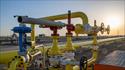
The government spokesperson has forecast a gas imbalance of 430 million cubic meters this winter, saying pressure may drop in the northern provinces and that the stability of Tehran's gas supply depends on consumption levels. Speaking at a press conference Tuesday, Fatemeh Mohajerani said gas refineries were damaged in the recent enemy attacks, cutting the country's gas production capacity by 230 million cubic meters. In previous years the winter gas shortfall was around 300 million cubic meters, she said. Accounting for the lost capacity, and assuming 100 million cubic meters of the damaged capacity comes back online, the shortfall this winter is projected to reach about 430 million cubic meters.
She said the oil and gas industry is working to rebuild the damaged facilities. In light of the Meteorological Organization's forecasts and the conditions ahead, she added, the necessary measures, including reconstruction and planning to manage the shortfall, began some time ago. Noting that some cities, particularly in the northern and northeastern provinces, sit at the end of the gas distribution network, the spokesperson said their location makes these areas more exposed to pressure drops, so keeping the network stable there is especially important. Mohajerani stressed the difference between managing the gas and electricity networks. Unlike electricity, which can be reconnected quickly after an outage, restoring gas after a cutoff is a time-consuming process, she said, so the stability of the gas network is critical and disruptions must be prevented. On coordination with the governors of provinces at risk of pressure drops, she said they have been briefed on possible conditions and planned measures since the summer, and have been given the authority to take the necessary initiatives. She thanked the governors for their cooperation.
Consumption Management and Energy Saving Are the Key to Getting Through This Winter
Asked about the possibility of gas cuts in Tehran, the spokesperson said Tehran residents are no different from other Iranians, and everyone must take part in managing consumption and saving energy to get through the winter. The likelihood of a cutoff in Tehran, as elsewhere in the country, depends on consumption, she said. If consumption rises sharply, gas could be cut anywhere, Tehran included. Responding to a question about industries' difficulties securing fuel, rising gas costs and reports of factory closures due to electricity and gas restrictions, Mohajerani said that despite the natural growth in energy demand this year and the damage to the country's gas facilities, industries' lost-profit losses in the Iranian year 1404 fell significantly compared with 1403. Describing the difficult energy supply conditions this year, she said the enemy targeted the country's industries and gas refineries in an attempt to make it harder to supply gas to industry and to get through the winter. To cope, the government has made consumption management and saving a priority, alongside restoring part of the damaged capacity.
On reports that some industries would shut down for four months because of electricity and gas shortages, and that the gas price they pay would rise by 430%, she said these figures need to be reviewed and verified. Numbers announced at official briefings must be accurate, she said, since other media and circles may cite them as official statistics. Stressing the need for public participation in reducing energy use, Mohajerani said joining consumption-reduction campaigns is one way to get through the current situation. Lowering household heating devices by just one degree could save the equivalent of 25 million cubic meters of gas, she said. She added that public cooperation in managing energy consumption could allow a more stable gas supply to industry and help the country's industries keep operating with fewer restrictions.
Subsidized Gasoline Prices Will Not Change
Asked about public concern over a possible gasoline price increase after authority to review and reform energy carrier prices and rationing was handed to a special working group, the spokesperson said the price of gasoline in the first and second quotas will not change in the coming months. Mohajerani stressed that the government has no plan to raise gasoline prices in these two quotas. Any increase from any source or structural reform would be spent on people's livelihoods and on funding the electronic coupon (kalabarg) program, she said. She repeated that the first- and second-tier rationed gasoline prices will not change, and that if any change is made in other categories, the public will be consulted first. - Shana
11/11/2026
Gasoline Consumption Growth Turns Negative in Iran
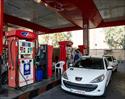
A package of strategic fuel-demand management measures has driven the country's gasoline consumption growth into decline for the first time since the COVID period. The measures include adjusting the third-tier gasoline price, regulating station emergency cards in 11 border provinces, replacing 2 million cubic meters per day of gasoline with CNG, and intelligently monitoring fuel supply in the capital by attaching identifiers to station emergency cards. The latest statistics from the National Iranian Oil Refining and Distribution Company (NIORDC) show a sharp turnaround. In previous years, annual gasoline consumption growth averaged 6%, driven by the steady arrival of brand-new cars, the slow retirement of old vehicles, shifts in the fuel mix, and waning interest in CNG. In 1405 (March 2026–27) growth fell to zero. This Aban (22 Ocober- 21 November), it came in at negative 2%, the first time since the COVID era that the country's fuel consumption balance has entered a downward phase. In recent years, the imbalance between the production and consumption of petroleum products, gasoline in particular, had become one of the energy sector's main challenges. If it had continued, it would have set off serious alarm bells for the national fuel distribution network. The government and the Oil Ministry therefore rolled out a set of price and non-price measures to rein in demand and bend the consumption curve toward negative growth. The aim was to close the channels of waste, revive the fuel basket, and bring station emergency cards under control.
Third-Tier Price Adjustment Cuts Consumption by 11 million Liters
The first measure was a gradual, phased adjustment of the third-tier gasoline price. The effect was visible within days. National fuel consumption had hit a record 144 million liters per day in the first 16 days of Shahrivar. After the price adjustment in the second half of the month, it dropped by 11 million liters to 133 million liters per day. That saved more than 160 million liters of gasoline in just 15 days. The reduction came at the peak of summer travel and gasoline demand, at a time of fuel imbalance. Besides stabilizing the distribution network, it eased the heavy operational pressure on the country's refineries.
CNG Consumption Up 15%
With the price change and the sharp, fast drop in gasoline consumption, the economic advantage of clean-burning CNG was restored for consumers. Figures show that daily CNG consumption rose 15% after the third-tier adjustment, an increase of about 2 million cubic meters per day. Since one cubic meter of CNG is equivalent to one liter of gasoline in the combustion cycle, this directly prevents 2 million liters of gasoline from being burned daily in the country's transport system. The public's embrace of CNG after the free-market price increase is a strategic step toward reviving existing capacity. In 1399 and 1400 (2020–2022), CNG consumption had reached nearly 24 million cubic meters per day. But the long-frozen gasoline price eroded the economic case for drivers. Consumption fell to about 15 million cubic meters per day, despite untapped capacity of 35 to 40 million cubic meters per day. Today, more than 2,500 standard CNG stations operate nationwide, and connecting less-served areas such as southern Kerman and Sistan and Baluchestan has widened access to the fuel. About 4.3 million factory-built and workshop-converted dual-fuel vehicles are on the road, with one CNG station for every 1,600 vehicles. This indicates the technical infrastructure is adequate to meet new demand.
Organizing Fuel Distribution in Border Provinces: Emergency Cards Withdrawn, Third-Tier Quota Credited Directly
The second operational focus was high-risk border provinces, with the goal of preventing organized fuel smuggling. Earlier approaches simply collected station cards all at once, which caused crowding at gas stations and long queues. Under a decision of the Article 8 Working Group, an alternative model was drawn up. Emergency cards were withdrawn from stations, and the third-tier quota was credited directly to applicants' personal smart fuel cards. Motorists can still fill up freely without delay, and every transaction is recorded. The scheme was first implemented in Kerman Province in Mordad, then in Sistan and Baluchestan from the start of Shahrivar. After the mechanism proved effective, it was extended to South Khorasan at the start of Mehr. From the start of Aban it was extended to eight more provinces: Hormozgan, Yazd, East Azerbaijan, West Azerbaijan, North Khorasan, Razavi Khorasan, Ardabil, and Kurdistan. Substitute CNG use rose significantly in these provinces, and gasoline consumption fell as a result.
Attaching Identifiers to Station emergency cards in Tehran
An analysis of fuel consumption details shows that about 60% of refueling is done with car owners' personal smart cards. The other 40% uses the free and emergency cards kept at stations, which are the main source of fuel diversion. A pilot scheme to attach identifiers to station emergency cards was therefore launched in Tehran, under the sixth strategy of a Cabinet resolution. Its goals are to prevent fuel smuggling, improve statistical transparency, and close the gap left by distributing gasoline daily without identity monitoring. Under this method, a person first swipes a valid bank card at the terminal. After identity verification, they select the desired amount, from 10 liters up to the 25-liter cap in Tehran, and enter the bank card PIN. The device then issues a receipt carrying a code (token/voucher). The motorist obtains an emergency card from the station attendant, enters the four-digit code printed on the receipt at the nozzle, and fills up. The pilot in Mehr cut average daily gasoline distribution in Tehran from 20.7 million liters in Mehr 1404 to 20 million liters this Mehr. That saved 20 million liters of gasoline in the capital over one month. The scheme now operates at 248 fuel stations in Tehran. Results showed that more than 40% of all refueling and misuse involving free cards was carried out by only 16% of users. In some cases, 70 to 104 monthly refueling transactions were recorded for a single vehicle's license plate.
Curbing Gasoline Consumption Growth Through Targeted Pricing and Non-Price Discipline
The rapid containment of gasoline consumption and the 2% negative growth this autumn show that bending the demand curve without shocks depends on combining targeted pricing tools with non-price discipline in the distribution network. The third-tier price adjustment, the direct transfer of station free-card quotas to personal cards in 11 provinces, the revival of CNG capacity with 2 million cubic meters per day replacing gasoline, and intelligent monitoring of fuel supply in the capital through identifiers on free cards together closed off much of the artificial demand and the leaks through which fuel was diverted. This eased the heavy pressure on the country's refineries and restored a stable balance between fuel production and consumption. - Shana
11/11/2026
Egypt Govt. Cuts Gas Supplies to Abu Qir Fertilizers
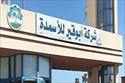
Abu Qir Fertilizers and Chemical Industries has disclosed that it received a notification of a 33% reduction in natural gas supplies effective November 8, up from the 20% cut announced a week earlier, according to a disclosure to the Egyptian Exchange (EGX).
The cut includes a number of energy-intensive industries, topped by fertilizer producers, as the increase in fuel prices is inflating the import bill and pushing the government to introduce austerity measures, including cutting government fuel use by 30% and electricity by 20%.
The company said it has implemented the necessary technical and operational measures to manage the reduction, allowing two of its three production plants to operate at full capacity.
Abu Qir also announced plans to reschedule periodic maintenance activities in response to the latest developments, aiming to minimize potential operational disruptions and maintain flexibility in adapting to changes in gas availability.
Abu Qir is considered one of the largest producers of nitrogen fertilizers in Egypt and the Middle East. It also exports ammonia as well as solid and liquid fertilizers to 40 countries
11/11/2026
Fire Contained at Iran's South Pars Gas Platform
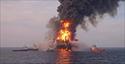
A fire that broke out on a platform at Iran's South Pars gas field ( SP Phase(s) 14 ), the world's largest offshore natural gas field, was contained on Tuesday, the semi-official Fars news agency reported, citing the deputy oil minister. The cause of the fire was under investigation, with a gas leak or an operational incident among the possible causes, the agency said. The affected platform produces 14.5 million cubic metres of gas, compared with the field's total production of 700 million cubic metres, Fars reported.
Iran's gas production totalled 276 billion cubic metres in 2024, of which 94% was consumed domestically, according to data from the Gas Exporting Countries Forum. Iran shares the reservoir with major gas exporter Qatar, which calls its portion the North Dome. The reservoir contains an estimated 1,800 trillion cubic feet (51 trillion cubic metres) of usable gas, enough to supply the world's needs for 13 years. - Reuters
11/11/2026
Iraq Bars Plane Carrying Iran's National Soccer Team from Landing in Basra

Iraq barred a plane carrying Iran's national soccer team from landing at Basra airport on Tuesday, a decision by the Iraqi Civil Aviation Authority linked to US sanctions imposed on Iranian airlines, two Basra airport officials said. The plane returned to Iran and landed at Abadan airport, and the team will now travel overland to Basra, an Iranian consulate official in Basra said.
The Iranian team was travelling to Iraq to participate in a four-nation tournament in Basra also involving Iraq, Lebanon and Palestine. An Iraqi civil aviation official said Iraq made the decision because it could not risk violating US sanctions on Iranian airlines.
The incident highlights the increasing impact of US sanctions on Iranian aviation operations in Iraq. Washington had announced sanctions on any global companies doing business with Iranian airlines after September 23, with the aim of grounding Iran’s entire civil fleet worldwide. Iraq in September ordered the suspension of Iranian flights to Baghdad airport after the United States threatened secondary sanctions against airports and service providers that handle Iranian carriers.
US Treasury Secretary Scott Bessent warned that airports servicing Iranian airlines could face sanctions, including exclusion from the US dollar system. This warning was part of a broader effort to tighten restrictions on Iran’s transport sector and on foreign entities providing services to sanctioned Iranian airlines. - Reuters
11/11/2026
Iran, Turkmenistan, Kazakhstan Reach Initial Accord on Digital Corridor
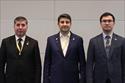
Iran’s minister of information and communications technology announced an initial trilateral agreement with Turkmenistan and Kazakhstan to establish a digital corridor to connect Central Asia to the Persian Gulf and neighboring countries.
On the sidelines of the ITU Plenipotentiary Conference 2026 (PP-26) in Doha, Seyed Sattar Hashemi met with Turkmenistan’s minister of communications and Kazakhstan’s deputy minister of AI and digital development to discuss expanding communications cooperation and strengthening regional digital connectivity.
During the meeting, the three sides reached an initial agreement to establish a joint digital corridor to link Central Asian countries to the Persian Gulf and provide communication routes with other neighboring countries. Under the initial agreement, the details of the cooperation will be reviewed in subsequent negotiations. A final agreement expected to be signed in the near future. - IRNA
11/11/2026
Bahraini Transport Minister: Each Country to Finance Its Share of GCC Railway Project

The GCC member states took a new step toward completing the railway interconnection project by signing the project's general agreement in Bahrain on Sunday. This comes as part of efforts to establish an integrated transport network linking the six nations and boosting the movement of passengers, goods, and commercial trade among them.
Bahraini Minister of Transportation and Telecommunications Dr. Sheikh Abdulla bin Ahmed Al Khalifa told Asharq Al-Awsat that each country will fund and execute the portion of the project located within its territory.
Meanwhile, the costs, fees, and expenses associated with the shared interconnection components among member states will be determined collectively, he added.
He explained that the agreement establishes a joint framework for the project's execution and operation, while defining the obligations of member states and their coordination mechanisms.
He noted that the network, which extends some 2,117 kilometers, aims to transport 6 million passengers and 200 million tons of freight by 2030, with the figures projected to rise to more than 8 million passengers and 271 million tons of freight by 2045.
The project spans from Kuwait, passing through Saudi Arabia, Bahrain, Qatar, and the UAE, all the way to Oman, with the goal of achieving full network operations by December 2030.
According to the minister, interconnection lines between adjacent countries can become operational as soon as their components are completed, without the need to wait for the entire GCC network to be finalized.
National financing and potential partnerships
On private sector participation, Al Khalifa said that it remains one of the viable options for financing, executing, or operating certain components of the project, depending on the outcomes of economic and financial studies. He stressed that there is no unified public-private partnership model approved across the entire network.
There are currently no pre-existing agreements with specific international partners to finance or execute the project, he said. However, the expertise of global companies in the fields of design, engineering, technology, and operating systems could be utilized based on the project's needs and its various phases.
Concerning the project's announced completion rate, the minister explained that the 50 percent figure represents the average progress achieved across member states, and does not mean that half of the construction work for the entire GCC network has been completed.
The project's cost estimates are currently undergoing review and updates in light of economic shifts, rising prices for materials and services, construction costs, and inflation, he revealed without specifying an updated total cost at the present time.
Returns beyond passenger and freight transport
Al Khalifa said that the economic impact of the project is not limited to facilitating passenger movement and freight transport, but extends to improving supply chain efficiency, boosting trade among GCC countries, and linking industrial centers, economic zones, and logistical hubs, as well as supporting employment and investment opportunities.
He added that determining the project's exact contribution to the gross domestic product (GDP) or estimating expected savings in time and costs remains premature, given that returns vary depending on transport routes, the nature of the cargo, and the points of origin and destination.
In light of the challenges facing maritime navigation in the region, the minister stressed that the GCC railway network is not intended to serve as a substitute for maritime transport. Instead, it acts as a complementary route that boosts transport options and connectivity among GCC nations, increasing the resilience of supply chains against disruptions that could affect various modes of transportation.
He noted that integration between ports, roads, railways, and airports will strengthen the flexibility of the GCC transport system, while connecting to broader international logistical corridors remains a future possibility contingent on completing studies, understandings, and coordination with the relevant countries and entities.
King Hamad Bridge to link Bahrain and Saudi Arabia
Regarding the connection between Bahrain and Saudi Arabia, Al Khalifa explained that the King Hamad Bridge project includes road lanes and railway lines, enabling the international passenger station in Bahrain to connect with the Saudi railway network and forming one of the essential components for completing the GCC interconnection.
He added that work is underway on the privatization procedures for the King Fahd Causeway Authority, alongside completing the necessary studies and procedures to transition to the execution of the new bridge project.
Achieving the connection between Bahrain and Saudi Arabia is a fundamental requirement for operating the railway line between the two countries within the project's targeted timeframe in December 2030,e he said.
11/11/2026
Oilfield Services Firms Lean on Middle East Rebound, But Risks Persist
Top oilfield services companies are counting on a recovery in Middle East activity after months of disruptions to support growth next year, but rising operating costs and renewed flare-ups are tempering the near-term outlook.
SLB, Halliburton and Baker Hughes all reported sequential revenue growth in parts of their Middle East businesses in the third quarter, as activity rebounded from conflict-related interruptions.
Still, year-on-year metrics and company forecasts indicate that activity remains uneven, while the timing of a sustained recovery is uncertain.
SLB's Middle East revenue rose 13% sequentially in the third quarter as activity improved across the region, but the world's top oilfield services provider flagged renewed disruptions in the final weeks of the period.
Despite the quarterly improvement, SLB's revenue from the division that includes Asia fell 7% from a year earlier, primarily reflecting a 12% decline in the Middle East, central to the company's growth prospects.
TPH Research expects a gradual regional recovery, predicted to begin in the second half of 2027, to help drive SLB's annual revenue growth of about 9%, excluding the impact of its Kelvion business.
CEO Olivier Le Peuch said the region could provide an additional growth catalyst if the long-drawn conflict eases.
He said activity had the potential not only to recover but "to exceed previous activity pre-conflict," as countries restore production capacity and continue developing oil and gas resources.
Halliburton's Middle East and Asia revenue rose 8% sequentially, driven by higher activity in Saudi Arabia and Kuwait.
CEO Jeff Miller signaled "multi-year demand growth for oilfield services" from efforts to restore production, rebuild inventories and strengthen energy security.
Baker Hughes expects Middle East activity to fall sequentially in the fourth quarter as higher logistics costs and supply-chain challenges weigh on operations.
Its Middle East and Asia revenue fell to US$1.26 billion from US$1.45 billion a year earlier.
CEO Lorenzo Simonelli said the company had seen "a meaningful improvement in the Middle East," with customers increasingly focused on maximizing recovery and extending asset life.
The contrasting outlooks underscore the uncertainty facing the sector.
Producers may need more services to restore output and improve recovery, but geopolitical uncertainty and operating constraints could delay spending and limit near-term growth.
"Geopolitical uncertainty is the biggest risk, particularly further escalation in the Middle East or disruption around the Strait of Hormuz. While depleted inventories support long-term demand, renewed turmoil could delay projects," said Jeremy Mullin, stock strategist at Zacks Investment Research.
11/11/2026
UAE's Borouge Targets AI-Driven Value Generation by 2027
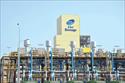
Borouge International is accelerating the global deployment of artificial intelligence and digitalisation (AI&D) across its operations, targeting US$100 million in value generation by 2027 as it advances its transformation into an AI-native company.
Announced at ADIPEC 2026, the initiative will cover the company's entire value chain, including production, innovation, supply chain, logistics and customer engagement.
It is supported by strategic partnerships with leading technology and industrial companies and builds on the integration of Borouge, Borealis and NOVA Chemicals.
The programme aims to improve operational availability and productivity, strengthen customer experience, enhance decision-making and maintain high health, safety and environmental (HSE) standards across the company's global operations.
Dr. Hasan Karam, Chief Operating Officer of Borouge International and Executive Sponsor for AI&D, said, “AI and digitalisation are central to how we are building Borouge International into a more agile, efficient and competitive global company. By combining the capabilities, technologies and expertise of our legacy companies, we can develop high-impact AI solutions once and scale them rapidly across our operations.
"As we work toward becoming an AI-native company, these initiatives are expected to deliver US$100 million in value generation by 2027. This will strengthen operational excellence, enhance the customer experience and create sustainable, long-term value for our shareholders.”
On the sidelines of ADIPEC 2026, Borouge International and its subsidiaries signed strategic partnerships with Microsoft, Emerson, Immensa and Cognite to accelerate the development and deployment of digital solutions across its value chain.
The company has already implemented the world's largest Real-Time Optimisation (RTO) system in the UAE, covering three large-scale ethane crackers and 20 furnaces. The AI-enabled system analyses more than 2,500 parameters per minute, supporting faster operational decisions, increased productivity, lower energy consumption and reduced emissions.
Borouge International plans to expand the RTO system to facilities worldwide, including key sites in North America, as part of its ambition to establish one of the petrochemical industry's most advanced industrial optimisation networks.
The company is also progressing towards autonomous operations. Earlier this year, it completed an industry-first proof of concept for AI-powered autonomous operations at its Ruwais facility in the UAE, in collaboration with Honeywell.
Conducted in a live production environment, the project demonstrated the potential to increase efficiency by up to 20%, reduce downtime by 20% and lower operating costs by up to 15%, while improving production performance, process safety and energy efficiency.
The initiative represents progress towards developing the petrochemical industry's first AI-driven control room for full-scale, real-time operations.
Borouge International's wider digital strategy includes machine learning to improve forecasting, digital twins for predictive maintenance and reducing asset downtime, and 3D printing to advance industrial additive manufacturing and supply chain efficiency.
The company's global presence across Europe, the Middle East and North America provides opportunities to test successful technologies at individual facilities before scaling them across its operations.
Following the integration of Borouge, Borealis and NOVA Chemicals, the group is seeking to leverage its combined manufacturing footprint, proprietary technologies, premium product portfolio and global commercial capabilities.
Through its 'build once, scale globally' approach, Borouge International aims to accelerate the adoption of proven AI solutions, strengthen operational excellence and generate long-term value across its international business.
11/11/2026
Saudi Aramco Reports Higher Q3 Earnings as Net Income Rises
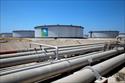
Saudi Aramco reported improved financial performance for the third quarter of 2026, with adjusted net income rising to US$31.2 billion, compared with US$28.6 billion in the same period last year.
Cash flow from operating activities increased to US$38.7 billion, up from US$36.1 billion in Q3 2025, while free cash flow climbed tor US$28.2 billion from US$23.6 billion.
The company’s gearing ratio stood at 5.5 per cent as of September 30, 2026, compared with 6.2 per cent at the end of June.
Aramco’s board declared a base dividend of US$21.9 billion for the third quarter, representing a 3.5 per cent year-on-year increase, with payment scheduled for the fourth quarter.
Operationally, downstream adjusted earnings before interest and taxes (EBIT) surged 234 per cent year-on-year, supported by stronger refining margins.
Production also commenced at the Zuluf crude oil increment, while major upstream projects, including the second phase of Jafurah, the Fadhili Gas Plant expansion and the Dammam development project, remain on track.
Aramco said its East-West Pipeline continued to provide export flexibility, while additional overseas storage capacity and new export routes are being explored.
The company also expanded its investment portfolio through the acquisition of a 49 per cent stake in HUMAIN, involving an asset transfer and approximately US$2.6 billion in cash contributions, strengthening its presence in the growing artificial intelligence sector.
Separately, Aramco signed a shareholders’ agreement to establish a joint venture focused on mineral exploration and hard-rock mining, leveraging its upstream expertise to expand into adjacent sectors.
Amin Nasser, Aramco President & CEO, said: “Geopolitical uncertainty and attacks on key energy facilities continued to amplify the global energy supply crisis in the third quarter of 2026, with serious implications for global energy security. Despite challenges, the unwavering dedication of our workforce, our operational excellence, the flexibility of our system, and the strength of a supply network built over decades enabled us to continue delivering reliably to our customers through this extraordinary period.
“We continue to explore additional overseas storage capacity and alternative export routes to further strengthen our global supply network, and our robust operational and financial performance during this volatile period demonstrates the value of our resilience.
“Backed by our strong balance sheet, we remain focused on the disciplined execution of priority projects and on leveraging advanced technologies to enhance performance and unlock new opportunities. This is how we will continue to meet the world’s evolving energy needs and deliver value for our shareholders and customers.”
11/11/2026
PetroNefertiti Reports Oil Flow at Egypt's Lorcan-6 Well
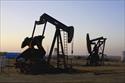
Egyptian oil producer PetroNefertiti has recorded positive test flows of 1,500 barrels of crude oil and 8 million cubic feet of associated gas per day at its Lorcan-6 exploration well in the Eastern Desert, according to a statement by the Ministry of Petroleum and Mineral Resources.
The company, an affiliate of South Valley Egyptian Petroleum Holding Company (Ganope), successfully drilled the well in the North Zeit Bay area of Gebel El Zeit. It is scheduled to bring Lorcan-6 on-stream once the testing program and required technical procedures are complete.
Exploration within PetroNefertiti’s concession is supported by investments from UK-based oil and gas company Dana Petroleum and South Korea’s state-run Korea National Oil Corporation (KNOC). The investments support continued exploration and the assessment of the area’s petroleum potential.
Alongside preparations to connect the well to production, work is continuing to update geological data and maps and analyze test results. These activities aim to identify locations for additional drilling and make greater use of the area’s petroleum resources.
The ministry said the drilling forms part of its strategy to increase domestic oil and gas production by intensifying exploration and development, expanding drilling activities, and pursuing promising opportunities within concession areas. The efforts are being undertaken with investment partners and in coordination with the Egyptian General Petroleum Corporation (EGPC) and Ganope.
11/11/2026