JPMorgan Index Inclusion to Draw More Foreign Investment into Saudi Debt Market
Saudi Arabia's local-currency debt market is set for increased foreign investment with its riyal-denominated government sukuk set to join the JPMorgan Government Bond Index-Emerging Markets in 2027.
According to Fitch Ratings, the inclusion follows the Kingdom’s efforts to build a domestic yield curve, improve local-market liquidity and reduce reliance on foreign-currency funding.
The inclusion reflects the Kingdom’s ongoing efforts under the Financial Sector Development Program, a Saudi Vision 2030 initiative aimed at deepening the capital market, broadening the investor base and improving the efficiency of government financing instruments.
As part of its broader economic diversification efforts under Vision 2030, Saudi Arabia also aims to attract US$100 billion in foreign direct investment annually.
Fitch said the inclusion in the JPMorgan index "should attract further foreign investment," nothing that non-Saudi investors’ share of the Kingdom's sovereign’s primary debt issuances rose to 15 percent in the first half of 2026 "despite Iran war-related volatilities."
The agency also pointed to a change in in the equity market that saw foreign ownership of the main market’s free float rose to 12.7 percent at end-August.
"Saudi Arabia’s removal of the Qualified Foreign Investor framework from February 2026 should broaden participation," it added.
Rising foreign share and geopolitical risks
Commenting on Fitch’s analysis, Kapil Chadda, partner at Arthur D. Little, said that the “inclusion puts Saudi local debt directly into the benchmark universe of global EM local-currency funds, creating structural foreign demand, rather than relying purely on discretionary investors.”
He added: “On the bottom line, riyal sukuk will start transitioning from a largely domestic market into a mainstream global EM rates market.”
In April, Saudi Arabia’s Ministry of Finance welcomed JPMorgan’s announcement that Saudi riyal-denominated government sukuk would be included in the GBI-EM from Jan. 29, 2027, on a phased-in basis, with an expected 2.52 percent weighting in the index.
“Beyond the initial index-driven buying, how much active money stays will depend on further gains in market liquidity. Those gains build on reforms such as opening the primary dealer program to international banks and linking with Euroclear,” Vijay Valecha, chief investment officer at Century Financial, told Arab News.
He added that recent market activity suggests that geopolitical risk has not translated into a broad withdrawal from Saudi credit.
“For riyal-denominated government sukuk specifically, the forthcoming index inclusion should help offset some of the market-access and liquidity concerns that can amplify risk premiums,” said Valecha.
The Century Financial official explained that geopolitics remains an important risk premium, but current evidence points to continued investor appetite for Saudi sovereign credit rather than a blanket avoidance of the Kingdom's debt offereings.
Fitch Ratings also said the Saudi Exchange remained the largest bourse in the GCC in September, accounting for about 63 percent of the region’s combined stock-market capitalisation of roughly US$4 trillion.
22/10/2026
Dubai Airports Utilizes Solar Power to Promote Sustainability
Dubai Airports has published its first ESG Impact Report, outlining progress made across environmental, social and governance priorities at Dubai International (DXB) and Dubai World Central – Al Maktoum International (DWC).
Covering 2024 and 2025, the report highlights measurable gains in energy efficiency, renewable energy, waste management, employee development and accessibility, while identifying areas requiring further work as airport operations expand.
Dubai Airports reduced electricity consumption by 144.72 GWh against its 2019 baseline as of June 2025.
Its sustainability programme also includes a 45 MWp rooftop solar programme across DXB and DWC, described as one of the region’s largest airport-based renewable energy initiatives.
In addition, a 5% biodiesel blend was introduced across airport and partner vehicle fleets.
Waste diversion also recorded significant progress.
Seven food-waste digesters at DXB can process a combined 4,900kg of food waste per day, contributing to a 76% landfill diversion rate in 2025.
The rate subsequently reached 100% in May 2026.
On the social side, Dubai Airports delivered 24,115 learning hours in 2025 through learning and leadership programmes to 1,531 employees, while development initiatives were extended to 17,349 service partners.
Accessibility remained another focus, with eight dedicated services for People of Determination at DXB.
A total of 52,619 learners across 14 partner entities completed accessibility training in 2025, while 36,040 sunflower lanyards were distributed to support passengers with hidden disabilities.
Paul Griffiths, CEO of Dubai Airports, said: “Sustainability cannot sit on the sidelines of the business. It has to influence the choices we make, the way we operate and how we plan for the future. We are clear about where we can make the greatest difference, from reducing the impact of our own operations to bringing partners together around the wider challenge of decarbonising aviation.
“There are no quick fixes, and progress will require honesty, discipline, and sustained action across the entire aviation community. This report provides a transparent account of where we are today, the practical steps already under way and the work still ahead of us as we continue to grow and create long-term value for Dubai, the UAE, and the communities we connect.”
The report also identifies priorities for the next phase, including improving ESG data collection, completing climate-risk and adaptation planning, advancing environmental management systems and strengthening collaboration across the aviation ecosystem through the oneDXB Sustainability Alliance.
22/10/2026
Saipem, MDC Partner to Boost Oil & Gas Cooperation in Egypt
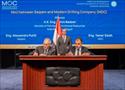
Italian energy services company Saipem and Egypt’s Modern Drilling Company (MDC) signed a memorandum of understanding (MoU) to expand cooperation in oil and gas activities. The signing took place during the Mediterranean Offshore Conference and Exhibition (MOC 2026), held in Alexandria.
The MoU was signed by Alessandro Puliti, Saipem CEO, and Tamer Salah, MDC Chairman and Managing Director. It aims to establish opportunities for joint projects, exchange technical and technological expertise, and expand cooperation between Egyptian and international companies operating in the petroleum sector.
The agreement is intended to leverage the companies’ technical capabilities and experience to support potential joint operations and broaden opportunities for Egyptian firms to collaborate with international energy services providers.
Saipem is an engineering and energy services company specializing in engineering, procurement, construction, and installation (EPCI) services for the energy sector. Its project portfolio in Egypt includes the Burullus Phase IV development and the Zohr gas field, where it carried out subsea infrastructure and pipeline installation work.
In January 2026, Egypt and Saipem examined progress on Phase 12 of the West Delta Deep Marine (WDDM) gas development project. Discussions further highlighted plans to upgrade and modernize the company’s onshore and offshore fleet in Egypt, supporting the ramp-up of upcoming exploration activities.
Modern Drilling Company (MDC), formerly known as SinoTharwa Drilling Company, is an Egyptian drilling contractor that provides onshore and offshore drilling and workover services to oil and gas companies.
22/10/2026
SABIC Highlights of Cooperation at WPC Energy Congress 2026 in Riyadh
SABIC participated as a National Energy Champion at the 25th WPC Energy Congress, held in Riyadh, Saudi Arabia, from October 11 to 15, highlighting the role of partnerships in driving industry development, innovation and energy transition initiatives.
The Congress, held under the theme “Pathways to an Energy Future for All,” took place in the Kingdom for the first time, bringing together industry leaders for ministerial discussions, CEO-level exchanges and technology showcases.
Dr. Faisal Alfaqeer, SABIC CEO and executive board member, addressed the plenary session, “Partnering for Success – Challenges and Opportunities”, emphasising collaboration as a key factor in business growth and industry progress.
He highlighted the importance of combining expertise, exchanging knowledge and sharing ideas across research and development, industrial operations, plant construction and supply chain management.
“Focusing on SABIC, we truly believe in partnerships – a belief that is evident throughout our history of more than five decades. In fact, one could argue that collaboration has been an essential element of SABIC’s growth story,” Dr. Alfaqeer noted.
Other SABIC leaders participated in sessions covering industry priorities, including safety, cybersecurity, footprint management, technology, innovation, local content and support for small and medium-sized enterprises (SMEs).
The company’s exhibition stand attracted visitors interested in its sustainable technologies supporting manufacturing applications in clean energy sectors, including renewable energy and electric vehicle infrastructure.
SABIC also sponsored the Congress’s Best Paper Award, one of 10 special programmes at the event. Technical committees comprising experts, including SABIC representatives, evaluated submissions and selected papers recognised for their contributions to advancing industry knowledge.
The WPC Energy Congress serves as an international platform for dialogue, cooperation and strategic planning across the energy sector. Its programme focuses on practical solutions to support the energy transition while addressing global energy equity.
Through its participation, SABIC highlighted the importance of cross-industry partnerships, technological development and knowledge exchange in supporting the evolution of the global energy landscape.
22/10/2026
Slight Rise in Fujairah September Bunker Sales
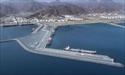
Marine bunker fuel sales at the United Arab Emirates' Fujairah port rose slightly in September after a dip in August, latest Fujairah Oil Industry Zone data published by S&P Global showed.
Monthly sales held steady above 200,000 cubic metres for a third consecutive month, but stayed well below levels seen before the Iran war.
Fuel oil supplies at Fujairah rose last month, allowing it to maintain some ship refuelling operations and increase exports to Asia.
* Bunker sales, excluding lubricants, totalled 236,735 cubic metres (about 235,000 metric tons) in September, up about 4.9% month-on-month.
* Low-sulphur residual bunker sales fell 3.2% from the prior month to 144,551 cubic metres in September.
* High-sulphur residual bunker sales climbed 17.9% over the same period to 68,797 cubic metres.
* Low-sulphur marine gasoil sales rose 27.4% to 22,990 cubic metres, while other marine gasoils totalled 397 cubic metres, more than tripling from August.
* The market share of low-sulphur bunker fuel narrowed to 71% in September from 74% in August, while high-sulphur bunker fuel's share widened to 29% from 26%.
22/10/2026
FAO Launches Projects to Support Iran’s Agro Sector
The United Nations Food and Agriculture Organization (FAO) is implementing two projects worth a combined US$700,000 in Iran to protect native livestock breeds and support fish farmers affected by the war, its representative in the country said. Farrukh Toirov, the FAO representative in Iran, announced the projects at the opening ceremony of an international livestock and poultry exhibition, ISNA reported. One project, with a budget of about US$300,000, focuses on conserving native livestock breeds, some of which are at risk of extinction.
The initiative aims to work with farmers, livestock breeders and specialists to preserve valuable genetic resources and pass them on to future generations, Toirov said. He also announced a second project, worth about US$400,000, to support fish farmers whose operations were damaged by the war. The initiative will be carried out in cooperation with the Ministry of Agriculture Jihad, fisheries specialists and the private sector. Toirov highlighted the role of Iranian agricultural producers in food security at home and across the region. He said cooperation among governments, the private sector, financial institutions and international organizations was essential to agricultural development and food security. - Iran Daily
22/10/2026