UAE & Kuwait Boost Naphtha Exports to Asia
The United Arab Emirates and Kuwait have boosted naphtha exports to Asia in recent months via ship-to-ship (STS) transfers outside the Strait of Hormuz, helping Asian petrochemical producers to increase output, traders and analysts said.
Abu Dhabi National Oil Company (ADNOC) and Kuwait Petroleum Corp (KPC), which accounted for nearly half of Persian Gulf exports before the Iran war, shipped almost 1.6 million metric tons, or about 14 million barrels, of naphtha in August and September, according to shipping data from trade sources.
That compared with around 700,000 tons in March and April, when the US-Iran war upended trade flows.
Both companies exported about 5 million tons combined in August and September 2025, mostly to Asia, Kpler data showed.
"Direct loadings of naphtha from Fujairah comprising re-exports via sea — from Iraq, Ruwais, and Hamriyah — and breakbulk trucked naphtha from other UAE ports have picked up substantially," said Armaan Ashraf, director of natural gas liquids and Asia oil at consultancy FGE NexantECA, referring to smaller quantities transported by road from other UAE ports to Fujairah for export.
ADNOC Maritime International Chartering loaded about 1.5 million tons of naphtha onto 25 vessels in August and September for STS transfers off Sohar, Oman, outside the Strait of Hormuz, trade data showed.
"As a reliable and long-term energy partner, ADNOC remains committed to supporting customers across Asia. We continue to supply naphtha to the region and work closely with customers to meet their requirements while ensuring secure and dependable supply," an ADNOC spokesperson said, without commenting on the volumes.
KPC, by comparison, shipped three cargoes totalling about 180,000 tons, the data showed. The company did not respond to a Reuters email seeking comment.
Actual export volumes from both companies may be higher because many vessels switch off transponders during voyages to reduce the risk of attack.
ADNOC still has scope to increase exports as KPC and QatarEnergy have been slower to restore supplies, one Singapore-based naphtha trader said. This was because QatarEnergy lacked sufficient product tankers, while KPC only began scaling up shipments from September, traders said.
KUWAIT, QATAR EXPORTS LAG UAE
KPC resumed spot naphtha offers to Japan on delivered ex-ship basis in late June after a three-month halt, a buyer said. Recent cargoes for early September delivery were sold at premiums of up to US$45 a ton to Japanese benchmarks, he added.
KPC officials said earlier this month they were offering STS options for crude and refined products outside the Strait of Hormuz. Trade data showed these transfers typically take place off Vadinar on India's west coast.
"While we have been seeing more STS activity off West Coast India, Sohar flows have kept steady," FGE's Ashraf said.
A Fujairah-based industry source said the surge in STS activity in the Gulf of Oman had created equipment shortages, forcing some sellers to seek alternative locations.
Last week, QatarEnergy offered up to 75,000 tons of naphtha for loading from Ras Laffan, inside the strait.
The producer sold a cargo last month at a discount of about US$100 a ton to Japanese benchmarks because buyers were unwilling to pay the risk premium associated with sending ships into the war-hit strait, an India-based buyer said.
QatarEnergy is also exploring STS exports of other petroleum products off Vadinar, the buyer added. The company did not respond to a Reuters email seeking comment.
ASIAN CRACKERS RAISE OUTPUT
Improved GCC supplies have allowed most South Korean and Japanese naphtha crackers to keep utilisation rates above 70% in August and September, up from about 68% in March and April, industry sources said.
Thailand's SCG Chemicals restarted its naphtha cracker in Rayong on September 17 after six months under force majeure. The company is sourcing naphtha from the spot market, including from the UAE, its CEO previously told Reuters.
Disruptions to supplies through the Strait of Hormuz after the US-Iran war pushed much of Asia's petrochemical industry to a near standstill, forcing plants to curb output and buyers to seek scarce replacement cargoes at sharply higher prices.
01/10/2026
AGOCO Returns Well to Production at Libyan Field
Libya's AGOCO said it had returned the EE1HR-80 well at the Majid field to production at a rate of 5,322 barrels per day after it had been offline for more than nine years. The well was shut down due to a lack of resources, two engineers at the company told Reuters.
Libya's oil production has faced repeated shutdowns for political and technical reasons since the 2011 uprising that toppled Muammar Gaddafi. Oil production is Libya's main economic source, representing approximately 90% of the country's economy.
01/10/2026
Goldman Sachs: GCC Oil Exports Return to 2025 Level
Goldman Sachs estimates GCC oil exports, including "dark exports" involving ships operating with their location transponders turned off, have recovered to 23.3 million barrels per day over the last week, in line with their 2025 average, as exports doubled in September, it said in a note on Tuesday.
It noted that the recovery was driven by increased exports through the Strait of Hormuz, including via ship-to-ship transfers.
* Estimated crude exports accounted for nearly 90% of the September recovery in GCC exports, reaching 19 million bpd, or 108% of their 2025 average, over the last week, Goldman said. The bank estimates about 5.2 million bpd in dark exports occurred in September.
* It added that exports of refined products and LPG have grown, but exports of diesel, gasoline, and jet fuel remain at 50% of their 2025 average.
* Goldman Sachs estimates the global oil market is roughly balanced in September, while OECD commercial oil stocks are in line with late February 2026 levels.
* "The remarkable adaptation of both Mideast supply and China import demand supports our base case that Brent prices moderate to $85 (a barrel) by year-end and to $80 in 2027," the bank said.
* Brent crude is headed for a monthly gain of around 14% in September, the biggest since July. Prices rose on Wednesday after US President Donald Trump denied he would be willing to ease sanctions on Iran while Qatar pushed for peace talks.
* "We still worry about renewed potential escalation that damages more energy infrastructure, which could cause significant upside to prices," Goldman added.
01/10/2026
S. Korea Explores Oil Refining Cooperation in Libya
South Korean companies have proposed cooperating on crude oil refining in Libya to help meet local demand for gasoline and diesel. The proposal also includes exploring the possibility of allocating part of Libya’s crude oil production for future export to South Korea, according to Indonesia’s SuaraGarut news site.
The proposal was discussed during the Libyan-Korean Economic Cooperation Forum, held in Tripoli on September 28, 2026, with the participation of government officials, business leaders, and representatives of major South Korean companies, including LG, Samsung, and Hyundai.
01/10/2026
Sharp Rise in Afghanistan-Iran Trade
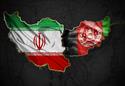
The Iranian Consul General in Herat has announced an increase in trade between his country and Afghanistan during a press conference. According to him, despite the war in Iran, the borders between the two countries remain open, and thousands of tons of commercial goods enter Afghanistan daily through roads and railways. Ali Reza Marhamati, the Iranian Consul General in Herat, said: “Trade with Afghanistan is continuing normally, the borders are open, and all goods related to Afghanistan that are in transit are being transferred without any obstacles. According to the statistics provided, more than 1,300 trucks move between the two countries without any problems.” The Herat Chamber of Commerce and Investment says that in recent days, trade between Iran and Afghanistan has increased by nearly 40%. Officials of the chamber say that the shadow of the war in Iran has not yet affected trade between the two countries.
Mohammad Yousuf Amin, the executive director of the Herat Chamber of Commerce and Investment, said: “The transfer of commercial goods through the Islam Qala border and the Herat–Khaf railway continues daily, and so far no problems have arisen in this regard.” A large portion of the raw materials used in the Herat Industrial Park is imported from Iran or through that country. The Herat Chamber of Industries and Mines says that raw materials continue to be imported from Iran daily as before. Mohammad Nasser Amin, head of the Herat Chamber of Industries and Mines, added: “Most of the goods required for the industrial park are imported from the Islamic Republic of Iran. Even if Iran has stopped exporting to some countries, our imports from this country are continuing as usual.” After the closure of Afghanistan’s border crossings with Pakistan, Iran has become the main route for the country’s imports and exports of commercial goods. - Kayhan
01/10/2026
ME Oil Exports Rebound in September as Saudi Arabia Boosts Shipments
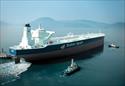
Crude oil exports from key Middle East producers rebounded in September to 12.8 million barrels per day, the highest since the US-Israeli war with Iran started in February, data from Kpler showed on Monday, as Saudi Arabia and the United Arab Emirates boosted exports.
The rebound came following a recovery in exports via the Strait of Hormuz, which were set to hit about 7.4 million bpd this month, as Saudi Arabia diverted oil exports from the Red Sea port of Yanbu following attacks that damaged its East-West pipeline, the preliminary data showed.
While exports from the region - which includes Saudi Arabia, the United Arab Emirates, Iraq, Oman, Qatar, Kuwait, Iran - have rebounded, they were still about 6 million bpd down from 18.8 million bpd in February, according to Kpler.
The region's top exporter Saudi Arabia was on track to ship about 5.4 million bpd this month, rebounding from 2.446 million bpd in August, the data showed.
September shipments from the Ras Tanura port in the Persian Gulf jumped to about 3.6 million bpd, from 929,000 bpd in August, but still lower than the 6.411 million bpd recorded in February, according to the data.
A total of 19 very large crude carriers, carrying 2 million barrels of Saudi oil each, exited the Strait of Hormuz last week, Kpler data showed.
The figures exclude any vessels that might have crossed the strait with their Automatic Identification System transponders turned off to avoid detection.
Before the Iran war started on February 28, the strait typically handled about 125 large commercial vessels per day, including tankers, gas carriers, bulkers and container vessels, accounting for some 20% of the world’s daily crude oil and liquefied natural gas supply.
01/10/2026
Flag Carrier Set to Connect Bahrain-Malaysia Ahead of F1
Gulf Air has welcomed the official confirmation from Formula 1 and the FIA that the Formula One Gulf Air Bahrain Grand Prix 2026 will be hosted at the Sepang International Circuit in Malaysia from October 2 to 4.
To support the event, Bahrain’s national carrier announced plans to introduce direct flights to Kuala Lumpur, boosting air connectivity between the kingdom and Malaysia while offering motorsport fans seamless travel to the race.
Gulf Air has served as the title sponsor of the Grand Prix since bringing the first Formula 1 race to the GCC in 2004. Airline officials highlighted that the move reflects the ongoing strength of the partnership and their commitment to bringing Bahraini hospitality to Malaysia.
Further details regarding flight schedules and bookings for the event will be announced shortly, according to the airline.
01/10/2026
Rise in Egypt’s US LNG Imports
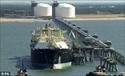
Egypt’s liquefied natural gas (LNG) imports from the United States (US) reached a record high of 86.05 billion cubic feet (bcf) in June 2026, surging 236% year-on-year (YoY) as Cairo expanded spot-market purchases to meet surging domestic power demand, according to the International Energy Agency (IEA).
Meanwhile, June shipments rose 138 % month-on-month (MoM) from 36.17 bcf in May 2026. The monthly volume marks the highest level recorded since 2016, surpassing the previous peak of 61.45 bcf registered in November 2025.
The surge in imports underscores Egypt’s growing reliance on external gas supplies to stabilize its electricity grid. Domestic natural gas production fell from approximately 70 billion cubic meters (bcm) in 2021 to around 49 bcm in 2024, creating an operational deficit against annual consumption, which reached 59 bcm in 2025. Gas-fired generation accounts for nearly 80% of Egypt’s total electricity output, as reported by the International Energy Agency (IEA).
01/10/2026
Oman's Crude Production Hikes in August
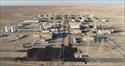
Oman’s oil production rose 11.9% year-on-year to 270mn barrels in the first eight months of 2026, with higher output helping drive a sharp acceleration in economic growth during the second quarter.
Data released by the National Centre for Statistics and Information (NCSI) showed that total oil production increased from 241.3mn barrels in January-August 2025, as the sultanate continued to raise output while maintaining oil export operations.
Average daily production climbed 10.9% to nearly 1.111mn barrels per day (bpd) during the eight-month period, compared with 1.002mn bpd a year earlier. Production reached its highest monthly average so far this year in May at 1.172mn bpd, while August output averaged 1.168mn bpd.
The increase marks a significant rise from Oman’s average daily production of around 1mn bpd in 2025 and comes as higher hydrocarbon output provides an important boost to the economy.
Oil exports, however, grew at a much slower pace, rising 1.9% to 209mn barrels in the first eight months of 2026 from 205mn barrels in the corresponding period of 2025.
At the same time, the average realised price of Omani crude rose 15.5% to US$83.3 per barrel during January-August, compared with US$72.1 a barrel a year earlier. The highest monthly average selling price of this year was recorded in May at US$124.1 a barrel, while the average stood at US$79.1 per barrel in August.
The combination of higher oil production and stronger crude prices has provided a favourable backdrop for Oman’s economy, with the petroleum sector emerging as the main driver of growth in 2026.
Oman’s real GDP expanded 5.1% year-on-year in Q2 2026, accelerating sharply from 3.0% growth in the first quarter. Preliminary NCSI data showed that GDP at constant prices increased to RO9.889bn in the second quarter of 2026 from RO9.405bn a year earlier.
Petroleum activities accounted for much of the acceleration, with value added from the sector rising 14.7% to RO3.413bn from RO2.976bn a year earlier. Within the sector, crude oil activity increased 15.2%, while natural gas activity grew 11.7%.
By comparison, non-petroleum GDP grew just 0.7% year-on-year in Q2 2026 to RO6.922bn from RO6.877bn a year ago, highlighting the widening contribution of the hydrocarbon sector to overall economic growth.
The International Monetary Fund said in June that Oman’s economy remained resilient despite regional tensions and was expected to record stronger growth in 2026, supported by increased oil and gas production and prudent macroeconomic policies.
The IMF also noted that Oman’s principal export terminals are located outside the Strait of Hormuz, allowing the country to maintain energy exports despite disruptions and heightened geopolitical risks in the region.
The Central Bank of Oman has projected real GDP growth of 4% for 2026, up from 2.4% in 2025, while the IMF has forecast growth of around 3.7%, with higher oil production identified as a key driver.
01/10/2026
UAE & KSA Lead Digital Economy in Arab Region

The UAE and Saudi Arabia (KSA) are at the forefront of the Arab region’s digital-economy development, with both countries ranking among the five highest-performing markets in the 2026 Arab Digital Economy Index.
The UAE led the index with a score of 76.66 points, while Saudi Arabia scored 73.64 points.
Bahrain, Qatar and Oman completed the highest-performing group, with scores of 66.75, 66.66 and 65.98, respectively.
The ranking comes as Saudi Arabia continues to accelerate its digital transformation and shift toward electronic payments.
In April, the Saudi Central Bank said electronic payments accounted for 85 percent of total retail payments in 2025, up from 79 percent in 2024.
In the UAE, the digital payments and infrastructure market is projected to grow from US$21.3 billion in 2025 to US$39.2 billion in 2033, representing a compound annual growth rate of 7.9 percent, according to Metastat Insights.
Ali Mohammed Al-Khouri, chairman of the board of directors of the Arab Federation for Digital Economy and adviser to the Council of Arab Economic Unity, said that the UAE’s top ranking in the index reflects the Emirates’ “years of sustained investment in digital infrastructure, government services, cybersecurity, artificial intelligence and the knowledge economy.”
Such efforts have helped establish the UAE as a “leading model for building an innovation-driven economy that translates technological advancement into higher productivity and economic value,” he said, according to state news agency WAM.
Wider regional progress
The index places Jordan, Kuwait, Morocco, Egypt, Tunisia and Algeria in a second group of countries with medium levels of performance.
A third group, comprising countries building their digital foundations, includes Lebanon, Mauritania, and Iraq, as well as Djibouti, Comoros, and Libya.
Palestine, Syria, and Sudan are also in this cohort, as are Somalia and Yemen.
The results showed stronger progress across the Arab world in digital infrastructure, government services and cybersecurity, while wider gaps remained in innovation, the data economy, research and development, and the ability to translate digital investment into productivity and economic value.
Al-Khouri said digital sovereignty was increasingly central to the future of Arab economies as data, artificial intelligence, cloud infrastructure, semiconductors and cybersecurity gain importance.
The Arab Digital Economy Vision, launched in Abu Dhabi in 2018 and adopted at the Arab leaders’ level in 2022, provides a regional framework for advancing digital transformation and cooperation.
01/10/2026
UAE Ranks 4th Globally in N-Facility Protection
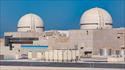
The United Arab Emirates has recorded significant progress in the 2026 Nuclear Threat Initiative (NTI) Nuclear Security Index, ranking fourth among 48 countries assessed for protecting nuclear facilities against sabotage.
The result reflects the continued development of the UAE’s nuclear security framework and sustained efforts to strengthen the protection and resilience of its peaceful nuclear energy programme.
The UAE also ranked joint 15th among 154 countries and areas assessed for supporting global efforts against the theft of nuclear materials, achieving a score of 85 out of 100, an increase of two points compared with the recalculated 2023 baseline.
The 2026 NTI Nuclear Security Index is an independent assessment of nuclear security conditions worldwide. Developed by the Nuclear Threat Initiative in partnership with Economist Enterprise, the Index assesses countries and areas across a range of nuclear security measures, including security and control measures, international norms, domestic commitments and capacity, and the broader risk environment.
The 2026 Index highlighted significant progress in the UAE’s security and control measures. The UAE’s score in this category increased from 66 in 2023 to 86 in 2026.
These measures cover key elements of nuclear security, including physical protection, insider-threat prevention, response capabilities, cybersecurity and security culture.
NTI highlighted a number of developments contributing to the UAE’s progress, including strengthened requirements for nuclear facility protection, updated cybersecurity provisions, enhanced personnel vetting requirements and measures to strengthen preparedness and resilience.
Hamad Al Kaabi, Director-General of the Federal Authority for Nuclear Regulation (FANR), said, “The UAE’s strong performance in the 2026 NTI Nuclear Security Index reflects our long-term commitment to maintaining a robust, sustainable and continuously improving nuclear security regime. It demonstrates the strength of the UAE’s regulatory framework, effective national coordination and our commitment to applying high standards of nuclear security.
“The nuclear security environment continues to evolve, requiring regulators, operators and relevant national entities to remain vigilant and prepared for emerging risks. The UAE will continue to strengthen its capabilities, learn from international experience and work closely with national and international partners to ensure the highest standards of nuclear security.”
Since its establishment, FANR has developed and continuously strengthened an integrated regulatory framework for nuclear security in accordance with national legislation and the UAE’s international obligations and commitments.
FANR regulates nuclear facilities and nuclear and radioactive materials, conducts inspections and oversees compliance with nuclear security requirements in coordination with relevant national entities.
The UAE also continues to work closely with the International Atomic Energy Agency and international partners to exchange expertise, strengthen national capabilities and contribute to international efforts to enhance nuclear security.
In its 2026 assessment, NTI identified the UAE among 12 countries that have emerged as a new driving force for global nuclear security progress, recognising countries that have sustained domestic improvements, supported other governments and strengthened engagement with international institutions.
The UAE’s performance in the 2026 NTI Nuclear Security Index reflects its commitment to continuous improvement and to maintaining a nuclear security regime capable of responding to evolving risks while contributing to the strengthening of the global nuclear security architecture.
01/10/2026
25th WPC Energy Congress to Bring Global Energy Leaders to Riyadh

The 25th WPC Energy Congress will bring together energy ministers, industry executives, policymakers and global energy leaders in Riyadh from October 11–15, 2026, under the theme “Pathways to an Energy Future for All.”
Hosted at the Riyadh Front Exhibition and Conference Centre, the five-day event will feature more than 30 plenary, strategic and ministerial sessions covering global energy security, oil and gas markets, artificial intelligence, investment, critical minerals, carbon management, natural gas, safety and the changing energy mix.
The Congress is being held in Saudi Arabia for the first time in its 90-year history and is expected to attract more than 25,000 delegates, including around 100 energy ministers, 500 CEOs and 800 speakers. Representatives from about 1,000 companies will take part across more than 50,000 square metres of exhibition space.
The programme will open with a ministerial gala dinner on October 11, followed by the official inauguration on October 12. Saudi Energy Minister Prince Abdulaziz bin Salman bin Abdulaziz and WPC Energy President Pedro Miras are scheduled to deliver remarks.
Global energy security and markets will be central to the agenda, with ministers from major producing and consuming economies discussing the outlook for energy, oil and gas markets. Other sessions will examine the growing role of artificial intelligence and digital technologies in improving energy operations, productivity and performance, with participation from companies including Saudi Aramco, Siemens Energy, SLB, Hitachi Energy, Microsoft and Samsung E&A.
Investment, critical mineral supply chains, carbon capture and storage, carbon markets and renewable energy will also feature prominently. Among the senior executives attending are BP CEO Meg O’Neill, ExxonMobil Chairman and CEO Darren Woods, Shell CEO Wael Sawan, TotalEnergies Chairman and CEO Patrick Pouyanne, and Baker Hughes Chairman and CEO Lorenzo Simonelli.
A dedicated ministerial dialogue will examine Saudi Arabia’s Vision 2030 economic transformation and the Kingdom’s expanding role in the global energy economy.
The technical programme will feature experts across 30 forums focused on energy supply, infrastructure, fuels, technologies and leadership, with discussions on innovation, market trends, efficiency and emissions reduction.
The Congress will form part of Riyadh Energy Week, which will also include IEF17, CEM17/MI-11, OAPEC-led sessions and industry events. The wider programme will feature initiatives on women in energy, young professionals, social responsibility, AI and digitalisation, before concluding with a closing and handover ceremony on October 15.
01/10/2026
Trans-Arabian Pipeline Reshapes Saudi Arabia's Oil Exports
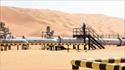
The Trans-Arabian Pipeline (Tapline) played a key role in strengthening Saudi Arabia’s position in global energy markets, while laying the foundations for cities and communities that grew along its route.
Stretching across the northern Saudi desert, the vast 1,648-kilometre-long pipeline was one of the most significant engineering and economic projects undertaken by the Trans-Arabian Pipeline Company, a Saudi Press Agency (SPA) report said.
For decades, it served as a strategic route for transporting crude oil from Abqaiq in Eastern Region to the Mediterranean port of Sidon in Lebanon, passing through Jordan and Syria.
From an idea to a landmark project
The idea for the Tapline dates back to 1944, when Saudi Aramco established the Trans-Arabian Pipeline Company as a joint venture with major international oil companies. Construction began in 1947 and ended on September 25, 1950, when the final section of the pipeline was welded into place, marking the start of official operations.
When it entered service, the Tapline was among the largest and longest oil transport systems in the world.
The pipeline stretched 1,648 kilometres and was equipped with six main pumping stations. Five were located in Saudi Arabia, at Nariya, Qaisumah, Rafha, Badanah, and Turaif, while the sixth was in Jordan.
The stations were designed to keep the oil moving toward the highest point along the route, 907 metres above sea level near the Saudi-Jordanian border, before the pipeline gradually descended toward the Lebanese coast.
Building the massive project required more than 35,000 tonnes of steel pipe and around 16,000 workers. Its total cost reached about US$230 million, making it one of the largest privately financed construction projects of its time.
In 1951, the pipeline’s first full year of operation, Saudi Aramco produced 278 million barrels of oil, most of which was transported through the Tapline. The pipeline thus became an important part of Saudi Arabia’s oil export system as global demand for energy continued to rise.
While oil tankers travelling from the Persian Gulf to the Mediterranean through the Suez Canal took more than nine days, the Tapline offered a faster route that shortened the journey and reduced transportation costs.
More than a pipeline
The Tapline’s impact extended beyond the economic and industrial spheres. Its pumping stations helped drive urban and social development deep into the Saudi desert.
New communities emerged around the stations, initially providing housing, schools and dining halls for workers and their families. By the mid-1960s, these communities expanded to include mosques, shops, recreational facilities, theaters and playgrounds, eventually becoming home to thousands of residents.
The project also became a catalyst for development in northern Saudi Arabia. It contributed to creating transportation routes, communications networks and logistical services, while attracting skilled professionals and workers to the region.
The end of operations
As giant oil tankers capable of carrying 500,000 tonnes emerged and proved more efficient than cross-border pipeline transport, oil pumping through the Tapline gradually declined.
Oil shipments through the pipeline to Lebanon stopped in 1976, and the line became almost entirely inactive by 1983.
In 1990 during the Persian Gulf crisis, the Tapline’s transportation operations ended completely, and in 2001, the remaining oil was drained from the pipeline, formally marking the end of its operational role.
From oil artery to industrial heritage
After decades of economic and developmental significance, the Tapline has become a testament to the kingdom’s industrial and energy history.
In December 2020, the Heritage Commission selected the Tapline as Saudi Arabia’s first industrial heritage site. The designation recognised its historical significance and its developmental and economic importance during the early years of the kingdom’s oil industry.
Today, the Tapline is more than an old oil pipeline. It stands as an enduring record of an engineering project that crossed 1,648 kilometres of desert, connected energy resources, and helped create communities and spur urban development in the heart of the desert.
Its operational life has ended, but its economic, industrial and social legacy remains visible in the northern Saudi cities.
01/10/2026
Capricorn’s Egypt Assets See Significant Rise in H1 2026 Profits

Capricorn Energy’s Egyptian operations reported a 300% year‑on‑year increase in the first half of 2026, with profits rising to US$36 million on US$100 million in revenue. Overall, the company also swung to a US$24.1 million profit, compared with a US$6.5 million loss in the same period of 2025.
Capricorn is a cash flow-focused energy producer with a portfolio of onshore development and production assets in Egypt’s Western Desert. The company’s Egyptian assets are operated through Badr El Din Petroleum Company (BAPETCO), a joint venture with the Egyptian General Petroleum Corporation (EGPC) and Cheiron.
“The ratification of the consolidated concession agreement in Egypt creates an improved framework for long-term investment, extends the life of key producing assets and supports our resource conversion funnel. Working closely with our partner and operator, Cheiron, we have progressed development plans designed to grow production and unlock value.”Capricorn Chief Executive Randy Neely commented on the results.
In July 2025, Capricorn Energy and Cheiron signed a merged concession agreement in Egypt’s Western Desert consolidating eight separate concessions into one integrated framework with improved fiscal terms and a potential 20‑year lifespan.
According to Capricorn’s press release, the company drilled 18 development wells and two near-field exploration wells in Egypt during the period, with working-interest production averaging 19,337 barrels of oil equivalent per day (boepd). The company said the drilling established new areas of the Abu Roash Gharadig reservoir and supported production above expectations.
The company expects full-year production to exceed the midpoint of its 18,000-22,000 boepd guidance range, while development and production capital spending reached US$52 million during H1.
On Friday, September 25, Genel Energy raised its takeover bid for Capricorn Energy to US$436 million, valuing shares at US$5.74 each and outpacing Norwegian rival DNO’s US$396 million offer by about 10%. Capricorn’s board has now withdrawn support for DNO and backed Genel’s revised proposal.
01/10/2026