Sanctions Slow Iran’s 5G Expansion despite Growth in Network Rollout

A senior official at Iran’s telecommunications regulator (CRA) says foreign sanctions have affected the country’s ability to expand its fifth-generation (5G) internet infrastructure.
CRA Deputy Head Mohammad Hassan Javadzadeh said on Monday that Iran has made efforts in recent years to expand the use of 5G technology, while noting that sanctions have restricted the country’s access to modern equipment.
“The cost of launching the network has increased significantly, and the expansion process has been disrupted due to restrictions on the purchase of advanced radio equipment from authorized international vendors,” Javadzadeh said.
The official added that the number of 5G masts in Iran has nonetheless increased, reaching a total of 2,408 this month, nearly double the figure reported in early 2024.
He said most of the masts are concentrated in large and densely populated provinces, including Tehran, Razavi Khorasan, Khuzestan, Fars, and Qazvin.
Iran’s Ministry of Communications and Information Technology says expanding the country’s 5G network is among its main priorities, with officials estimating that a 10% increase in 5G penetration could boost Iran’s gross domestic product by nearly 3%.
This comes as mobile broadband internet is currently available to more than 112 million subscriptions in Iran, giving the country a penetration rate of about 130%, one of the highest rates in the region.
Iran launched its first limited 5G network covering parts of the capital Tehran and the country’s second-largest city, Mashhad, in the summer of 2020.
Javadzadeh said that despite the sanctions, Iran will continue investing in 5G projects by allocating additional frequency bands.
He also said the CRA and the telecommunications ministry have held negotiations with global mobile phone manufacturers so that the companies would enable 5G connectivity for users of their devices in Iran. - Press TV
07/01/2026
Fight against Fuel Smuggling Must Start at Source, Iran's President Says
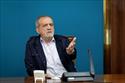
President Masoud Pezeshkian said designing and implementing a coherent system to monitor the fuel supply chain is the most effective way to manage consumption and prevent smuggling. He emphasized that priority should be given to targeting those within the system who facilitate the diversion of fuel from official channels.
Speaking Monday at a meeting with heads and representatives of relevant agencies reviewing last year’s outcomes of the Anti-Smuggling of Goods and Currency Headquarters, Pezeshkian said, “The fight against fuel smuggling is only effective when it addresses the origin of the violations.”
He added that cracking down on small-scale offenders not only fails to solve the problem but can also create social tensions. “Action must focus on the primary actors and main sources, regardless of any affiliations, and especially on those inside the system who intervene in removing fuel from the official distribution network,” he said.
The president noted that advances in technology and monitoring equipment now make it possible to track production, distribution, and consumption accurately. “Designing and implementing a proper structure is the most effective way to manage consumption and prevent smuggling. Organizing existing mechanisms for managing the road transport fleet is also essential,” he said.
According to reports presented at the meeting by officials from the Anti-Smuggling Headquarters, the Ministries of Oil, Intelligence, Energy, and Roads and Urban Development, since the directive was issued and implemented, physical discoveries of smuggled fuel have increased by 764 million liters. This not only halted the 4% annual growth in fuel consumption but also reduced total consumption by 4%, bringing it back to 1402 (March 2023-24) levels. The achievement has also eliminated the country’s need to import diesel in 1404 (March 2025-26). - Shana
07/01/2026
Parliament Committee Reviews Iran's Oil Provisions in Upcoming Budget
The spokesperson for the Parliament’s Energy Committee announced that the oil portion of next year’s budget bill was reviewed by the commission and stated: The amount of oil sales in the 1405 budget (March 2026-27) is roughly similar to this year.
Esmaeil Hosseini, describing the Monday meeting of the Parliament’s Energy Commission, said: The meeting was held with officials from the Ministry of Oil, the Plan and Budget Organization, the Parliament Research Center and members of the Energy Commission, and the provisions and requirements of the country’s overall budget bill for 1405 regarding oil were reviewed.
He noted that the report from the Planning and Budget Organization to the Combined Commission mentions a 5% budget dependency on oil, but when accounting for borrowing from the National Development Fund, targeted subsidy resources and collective resources and expenditures, oil’s share in the budget is estimated to be more than 35%. He added: Also, if tax revenues related to the performance of the National Iranian Oil Company, gas, value-added tax, domestic sales of petroleum products, petrochemical industries and energy-intensive industries – which are indirectly dependent on oil and gas – are considered, it becomes clear that the country’s overall budget remains directly and indirectly dependent on oil.
The spokesperson for the Parliament’s Energy Committee stressed: The amount of oil sales in the 1405 budget is nearly the same as in 1404, but it is predicted that the price of oil in 1405 will decrease compared to 1404, which could reduce revenues from oil and petroleum product exports. In this regard, the estimate of oil revenues in the budget bill for 1405 is more realistic compared to this year’s projections. - Shana
07/01/2026
Armenia to Access Iran’s Railway via Nakhchivan: Azeri President

Azerbaijan’s President Ilham Aliyev said on Monday that Armenia will gain access to Iran’s railway network through the autonomous republic of Nakhchivan, as part of broader plans to connect the region’s railways, according to Azerbaijan’s Azertaj news agency.
Aliyev said that Baku intends to connect the regions of Karabakh and Eastern Zangazur to Nakhchivan, noting that Armenia would also benefit from the project. “Roads between Armenia and Azerbaijan and between Armenia and Turkey will be opened, and Armenia will have access to Iran’s railway through Nakhchivan and to Russia’s railway through Azerbaijan,” he said in an interview with Azerbaijani media, IRNA reported.
Back on August 8, Aliyev and Armenian Prime Minister Nikol Pashinyan signed the US-mediated peace deal at the White House. The accord includes the creation of a transit corridor through Armenia to connect Azerbaijan to its exclave of Nakhchivan – a longstanding demand of Baku.
“Currently, travel from Azerbaijan’s main territory to Nakhchivan requires a longer route through Bilasuvar, – the capital of the Bilasuvar District of Azerbaijan,” Aliev added.
In the future, the journey will cover only 45–50 kilometers through Iranian territory, creating two connections from the main part of Azerbaijan to Nakhchivan; one via Iran and the other via Armenia, Aliyev said.
The Azerbaijani president also emphasized the need for a railway line connecting Nakhchivan to Turkey. - Iran Daily
07/01/2026
Oman's OETC Powers Ahead with Grid Expansion & Green Growth
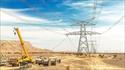
The Oman Electricity Transmission Company (OETC) closed 2025 with a strong set of operational, financial and sustainability milestones, underscoring its central role in supporting national development and advancing Oman Vision 2040.
During the year, OETC made solid progress across 35 strategic projects aimed at expanding and strengthening the national electricity transmission network, with investments exceeding RO 250 million (~US$650 million). Key achievements included more than 60 percent completion of the second phase of the Strategic Interconnection Project (Rabt), valued at around RO 295 million (~US$767 million) and over 90 per cent completion of network expansion works in Dhofar Governorate at a cost of about RO 65 million (~US$169 million).
Among the landmark initiatives was the Masirah Island connection project, Oman’s first of its kind, which reached over 50 per cent completion using advanced transmission technologies, with a total investment of RO 70 million (~US$182 million). OETC also commissioned the Fault Current Limitation System for the 132 kV network to enhance system protection and reliability; and energised the main grid station serving the polysilicon plant in Suhar.
By the end of 2025, the number of grid stations had reached 116, compared to just 29 in 2005, while transmission line length exceeded 10,400 kilometres. During the year, OETC awarded nine new projects worth more than RO 250 million (~US$650 million), supporting the integration of three wind farms with a combined capacity of 1,220 MW and a 500 MW solar project, contributing to annual carbon emission reductions of over 1.9 million tonnes.
Renewable energy accounted for 9.46 per cent of electricity supplied to the grid by the end of November 2025, equivalent to more than 4.26 million MWh, sourced from major solar and wind projects including Ibri, Manah 1 and 2 and the Dhofar Wind Farm. This marks a sharp rise from just 0.71 per cent in 2019.
Network reliability reached 99.9999 per cent, despite rising demand. Peak load on the Main Interconnected System climbed to 8,059 MW in 2025, compared to 2,495 MW in 2005. OETC also recorded more than 67 million safe working hours without a lost-time injury.
Financially, the company maintained strong credit ratings from Moody’s and Fitch, completed full repayment of US$1 billion in bonds, launched its Green Financing Framework and became the first Omani entity to issue Green Sukuk, raising US$750 million. Its asset base expanded to RO 1.8 billion (~US$4.7 billion).
OETC continued to invest heavily in human capital, achieving an Omanisation rate of 97 per cent, delivering over 8,300 training programmes and supporting local companies through contracts exceeding RO 259 million (~US$677 million). The year also saw the company receive several national awards for ESG practices, smart technology and clean energy leadership, reinforcing its position as a key enabler of Oman’s sustainable energy future.
07/01/2026
Oil Down as Well-Supplied Market Shrugs Off Venezuela Upheaval
Oil prices slipped on Monday as ample global supplies offset concerns about the impact on oil flows from the U.S. capture of President Nicolas Maduro of Venezuela, home of the biggest global oil reserves.
Brent crude futures were down 23 cents, or 0.4%, to US$60.52 a barrel at 0940 GMT, while U.S. West Texas Intermediate crude was 21 cents, or 0.4%, lower at US$57.11 a barrel. The benchmarks were volatile in early Asian trade as investors assessed the situation in Venezuela, an OPEC member whose crude exports had been under a U.S. embargo, and the potential impact on oil supply.
U.S. President Donald Trump said Washington would take control of the country and that the embargo remained in place, after Maduro was detained in a New York jail on Sunday. In a global market with plentiful oil supply, analysts said any further disruption to Venezuela's exports would have little immediate impact on prices.
Oil output in the country has plummeted in recent decades amid mismanagement and a lack of investment from foreign firms after Venezuela nationalised oil operations in the 2000s.
Output averaged about 1.1 million bpd last year, or just 1% of global production. Kazuhiko Fuji, consulting fellow at Japan's Research Institute of Economy, Trade and Industry, noted also that U.S. strikes had not damaged the South American country's oil industry.
"Even if Venezuelan exports are temporarily disrupted, over 80% are destined for China, which has built up ample reserves," Fuji said. Venezuela's acting president offered on Sunday to collaborate with the U.S.
"This reduces the risk for an extended embargo on Venezuelan oil exports with oil potentially flowing freely out of Venezuela in not too long," said SEB analysts. Trump also raised the possibility of further U.S. interventions, suggesting Colombia and Mexico could face military action if they did not reduce the flow of illicit drugs.
Analysts are also watching Iran's reaction after Trump threatened on Friday to intervene in a crackdown on protests in the OPEC producer. Elsewhere, the Organization of the Petroleum Exporting Countries and its allies decided to maintain their output on Sunday.
07/01/2026
SDAIA Starts Work on World’s Largest Govt. Data Center in Riyadh

Saudi Data and Artificial Intelligence Authority (SDAIA) has announced that it has laid the foundation stone for the ‘Hexagon’ Data Centre on a 30 million sq ft area in Riyadh, thus marking the official start of construction of the key facility.
Designed to the highest international standards, the centre will provide maximum availability, security, and operational readiness for government data centres, said a statement from SDAIA.
Classified as Tier IV and holding the highest data centre rating by the global Uptime Institute, the facility, on completion, with a total capacity of 480 megawatts, will be the world’s largest government data centre by MW capacity.
It will meet the growing needs of government entities and support the increasing reliance on electronic services. The project will contribute to strengthening the national economy and reinforce the Kingdom’s position as a key player in the future of the global digital economy, it stated.
The foundation laying ceremony was attended by senior officials from various government entities who were received at the venue by President of SDAIA Dr Abdullah bin Sharaf Alghamdi and other SDAIA officials.
The event kicked off with an introductory presentation delivered by Dr Issam bin Abdullah Alwagait, the Director of the National Information Center at SDAIA.
He outlined the project’s details, technical and engineering specifications, and the operational architecture ensuring the highest levels of readiness and availability.
He also reviewed the international accreditations obtained for the center’s solutions and engineering design in line with recognised global standards.
Speaking on the occasion, Dr Alghamdi said the landmark national project comes as part of the continued support of His Royal Highness Prince Mohammed bin Salman bin Abdulaziz Al Saud, Crown Prince, Prime Minister and Chairman of SDAIA’s Board of Directors.
“This support enables the Authority, as the kingdom’s competent body for data - including big data - and artificial intelligence and the national reference for their regulation, development and use to contribute to advancing the Kingdom toward leadership among data- and AI-driven economies.
“The kingdom will continue to strengthen its presence in advanced technologies with the ongoing support of HRH the Crown Prince,” he added.
According to him, SDAIA will pursue pioneering projects that reflect its ambitious path toward building an integrated digital ecosystem, strengthening national enablers in data and artificial intelligence, and developing world-class technical infrastructure that enhances the competitiveness of the national economy and attracts investment.
This aligns with Saudi Vision 2030’s objectives of building a sustainable knowledge-based economy and achieving global leadership in advanced technologies, he added.
07/01/2026