Pasargad Solar Farm Opens in Iran's Rey to Ease Power Shortages
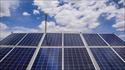
Iran inaugurated the 6-megawatt Pasargad solar power plant in the city of Rey, south of Tehran, a step the government says demonstrates its commitment to addressing electricity shortages and boosting national production through private sector involvement and support from executive agencies.
Speaking to reporters at the inauguration ceremony, Vice President for Executive Affairs Mohammad Jafar Qaempanah described the project as “a symbol of the serious resolve of the government and industrialists to overcome electricity shortages and revitalize national production,” according to the Tasnim news agency.
He added that the development of solar power plants plays a fundamental role in reducing the country’s electricity imbalance. Noting the ceremonial nature of the plant’s inauguration, he described the power plant as a practical step toward addressing the country’s energy shortages.
Qaempanah said the power plant had already been connected to the national power grid for several months. He explained that in addition to the plant’s current capacity, around 1,500 megawatts of power are under construction through similar initiatives, reflecting Iran’s serious shift toward clean energy. “Today, across Iran, industrialists and all those dedicated to national development are increasingly turning to solar power,” he said.
At the inauguration ceremony, Hamidreza Azimi, deputy head of Iran’s Renewable Energy and Energy Efficiency Organization (SATBA), said the country’s installed renewable energy capacity has reached 3,500 megawatts, with plans to expand it to 11,000 megawatts by next summer. Despite recent growth, clean energy sources still account for about 3.6% of Iran’s total electricity generation capacity of approximately 97,909 megawatts. - Iran Daily
01/01/2026
Iran's Petchem Projects under 7th Development Plan about 60% Complete

The managing director of the National Petrochemical Company (NPC) said petrochemical projects under Iran’s Seventh Development Plan are about 60% complete and that all targets set for the plan’s first year were fully achieved in 1403 (March 2024-25).
Speaking Sunday at the first Petrochemical Industry Investors Conference at the Oil Industry Conference Center in Tehran, Hassan Abbasszadeh said the petrochemical sector’s production capacity is expected to reach 131.5 million tons by the end of the Seventh Development Plan.
He said the plan calls for US$26 billion in investment, about US$13 billion of which has already been made, adding that projects covered by the plan are progressing at roughly 60%.
Abbasszadeh said 44 petrochemical projects have also been planned under the Eighth Development Plan, noting that securing financing for those projects is one of the industry’s top priorities.
The deputy oil minister said the petrochemical sector also posted strong performance in the first six months of the current year and expressed hope that new projects coming online by year’s end will add about 7 million tons to national production capacity. - Shana
01/01/2026
Eguptian Officials Inspect EDC-11 Rig to Review Safety & Operational Performance
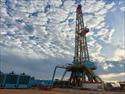
A high-level field inspection was conducted at the EDC-11 drilling rig within the North Bahariya Petroleum Company (Norpetco) concession to evaluate operational efficiency and safety performance. The visit follows directives from Karim Badawi, Minister of Petroleum and Mineral Resources, regarding the necessity of direct leadership engagement at production sites to ensure sustainable output.
The inspection focused on the technical readiness of equipment, routine maintenance activities, and the rigorous application of occupational health, safety, and environment (HSE) standards. Officials assessed the rig’s adherence to operating plans and examined safety systems designed to protect personnel while meeting production targets.
The Egyptian Drilling Company (EDC) currently operates a modern fleet of onshore and offshore rigs as a key contractor supporting Egypt’s exploration and production activities.
The delegation was led by Ehab Ragaee, First Undersecretary for Production Affairs at the Ministry of Petroleum and Mineral Resources (MoPMR), and Wael Lotfy, Undersecretary for Projects at MoPMR, according to a statement by MoPMR.
They were joined by members of the EDC Board of Directors, headed by Chairman and Managing Director Osama Kamel, in the presence of Norpetco Chairman Khaled El Sheshtawy.
During the site visit, Ragaee and Lotfy held discussions with rig personnel regarding performance levels and operational challenges. The officials emphasized that strict compliance with HSE standards remains a top priority, equal in importance to achieving production goals. Protecting personnel was underscored as the foundation for the sector’s operational success.
EDC, a joint venture between the Egyptian General Petroleum Corporation (EGPC) and international partners, continues to provide critical services to the oil and natural gas sector. This field visit reinforces the Ministry’s commitment to maintaining high safety standards across all Western Desert concessions while supporting the technical readiness required for future exploration.
01/01/2026
flynas Starts Direct Jeddah–Moscow Flights
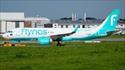
Saudi Arabia’s low-cost airline flynas has launched direct flights between Jeddah and Moscow, expanding air links between the Kingdom and Russia as Saudi carriers add international capacity to support tourism growth.
The service, which began on Dec. 23, will operate three times a week between King Abdulaziz International Airport and Vnukovo International Airport, flynas said in a statement. The airline becomes the first Saudi carrier to operate scheduled flights on the Jeddah–Moscow route.
The move aligns with the airline’s growth and expansion plan and supports the Kingdom’s national objectives for the tourism and aviation sectors.
Strengthening tourism and aviation is a key pillar of the Vision 2030 program, as Saudi Arabia continues efforts to diversify its economy and reduce reliance on oil revenues.
Having already surpassed its initial target of attracting 100 million visitors ahead of schedule, Saudi Arabia’s National Tourism Strategy now aims to draw 150 million travelers by the end of the decade.
“The inauguration ceremonies for the new route were held at King Abdulaziz International Airport in Jeddah and Vnukovo International Airport in Moscow, where passengers on the inaugural flight were welcomed with commemorative gifts,” said flynas.
The Jeddah–Moscow route is being operated in collaboration with the Saudi Tourism Authority and the Air Connectivity Program, the airline added.
Launched in 2021, the Air Connectivity Program aims to develop new air routes to support the Kingdom’s tourism sector and aligns with the National Civil Aviation Strategy, which seeks to connect Saudi Arabia with 250 international destinations through national carriers.
An official reception ceremony was held upon the aircraft’s arrival at Vnukovo International Airport, attended by representatives from the Saudi Embassy in Moscow, flynas, the Russian Tourism Authority, and Vnukovo Airport.
In August, flynas launched its first regular direct flights between Riyadh and Moscow, operating four weekly services between the two capitals.
“The airline remains committed to further expanding its destinations and routes to provide more reliable and convenient travel options for its guests, as part of its efforts to strengthen relations between the two countries,” said flynas.
It added: “This expansion in the Russian aviation market aligns with flynas’ growth and expansion strategy launched under the title We Connect the World to the Kingdom.”
01/01/2026
Qatar Sets Stage for Next Phase of Energy Growth in 2026
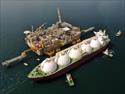
Qatar is poised to reinforce its position as a global energy powerhouse in the coming year, as analysts note that a sharp increase in liquefied natural gas (LNG) production capacity comes on stream through the North Field expansion, strengthening export volumes, boosting market flexibility, and expanding the country’s influence in long-term contracts.
A recent report by Oxford Business Group highlighted that while hydrocarbon profits may ease, Qatar’s medium to long-term outlook remains strong. Several major LNG export agreements with long-term buyers, including Japan and South Korea, are nearing their final year and will reshape the country’s export profile.
“2025 represents a noteworthy year for Qatar’s energy sector,” said Fransisco, a Doha-based energy market analyst. “The country is managing the transition between legacy LNG contracts and a much larger wave of supply that will come on stream from 2026.”
That next phase will be driven by the North Field expansion, with the first stage expected to come next year. Once operational, the project is set to reinforce Qatar’s position as one of the world’s largest gas exporters and increase its influence on the global LNG spot market, supported by substantial uncontracted capacity.
“Qatar’s ability to supply both long-term and spot LNG volumes will significantly enhance its flexibility and market power,” Fransisco stressed. “This is especially important as global buyers seek security of supply alongside pricing optionality.”
The data also highlighted that the upcoming initiatives are expected to position Qatar as a major LNG trader, the owner of the world’s largest LNG shipping fleet, and an increasingly influential player in the ammonia and carbon capture markets.
“QatarEnergy’s transformation goes beyond production,” the industry expert said. “Its expanding trading capabilities and investments in low-carbon fuels signal a clear ambition to compete across the entire energy value chain.”
On the domestic front, the report pointed to vital opportunities for sustainable development, particularly in energy and water consumption.
The report highlighted that renewable energy capacity is steadily increasing, while existing clean energy targets leave room for further expansion.
Analysts remark that with continued investment and supportive policy frameworks, Qatar is well-positioned to emerge as a regional leader in sustainable energy.
He said, “Few countries have Qatar’s combination of financial capacity, existing energy infrastructure, and strategic vision."
He added, “If renewable deployment accelerates alongside LNG growth, Qatar could set a benchmark for balancing energy security with decarbonisation in the region.”
As the year comes to a close, researchers expect the country’s energy strategy to increasingly reflect this “dual focus”, managing a mature hydrocarbon sector while laying the foundations for long-term growth through LNG expansion and cleaner energy development in the years ahead.
01/01/2026